https://github.com/ad-archer/rustysound
RustySound is a music player for subsonic api applications such as navidrome using native OS features for Web, Desktop and Mobile devices. Its built dioxus and tailwind css
https://github.com/ad-archer/rustysound
dioxus dioxus-desktop dioxus-web navidrome navidrome-client opensubsonic opensubsonic-client rust subsonic-client tailwindcss
Last synced: 3 months ago
JSON representation
RustySound is a music player for subsonic api applications such as navidrome using native OS features for Web, Desktop and Mobile devices. Its built dioxus and tailwind css
- Host: GitHub
- URL: https://github.com/ad-archer/rustysound
- Owner: AD-Archer
- License: gpl-3.0
- Created: 2026-01-12T22:10:14.000Z (7 months ago)
- Default Branch: main
- Last Pushed: 2026-04-27T17:32:40.000Z (3 months ago)
- Last Synced: 2026-04-27T18:32:12.644Z (3 months ago)
- Topics: dioxus, dioxus-desktop, dioxus-web, navidrome, navidrome-client, opensubsonic, opensubsonic-client, rust, subsonic-client, tailwindcss
- Language: Rust
- Homepage: http://rustysound-demo.adarcher.app/
- Size: 6.11 MB
- Stars: 8
- Watchers: 0
- Forks: 1
- Open Issues: 7
-
Metadata Files:
- Readme: README.md
- Funding: .github/FUNDING.yml
- License: LICENSE
- Agents: AGENTS.md
Awesome Lists containing this project
README
# RustySound
A lightweight cross-platform music streaming client for Navidrome and Subsonic-compatible servers, built with Rust and Dioxus, < 15mb
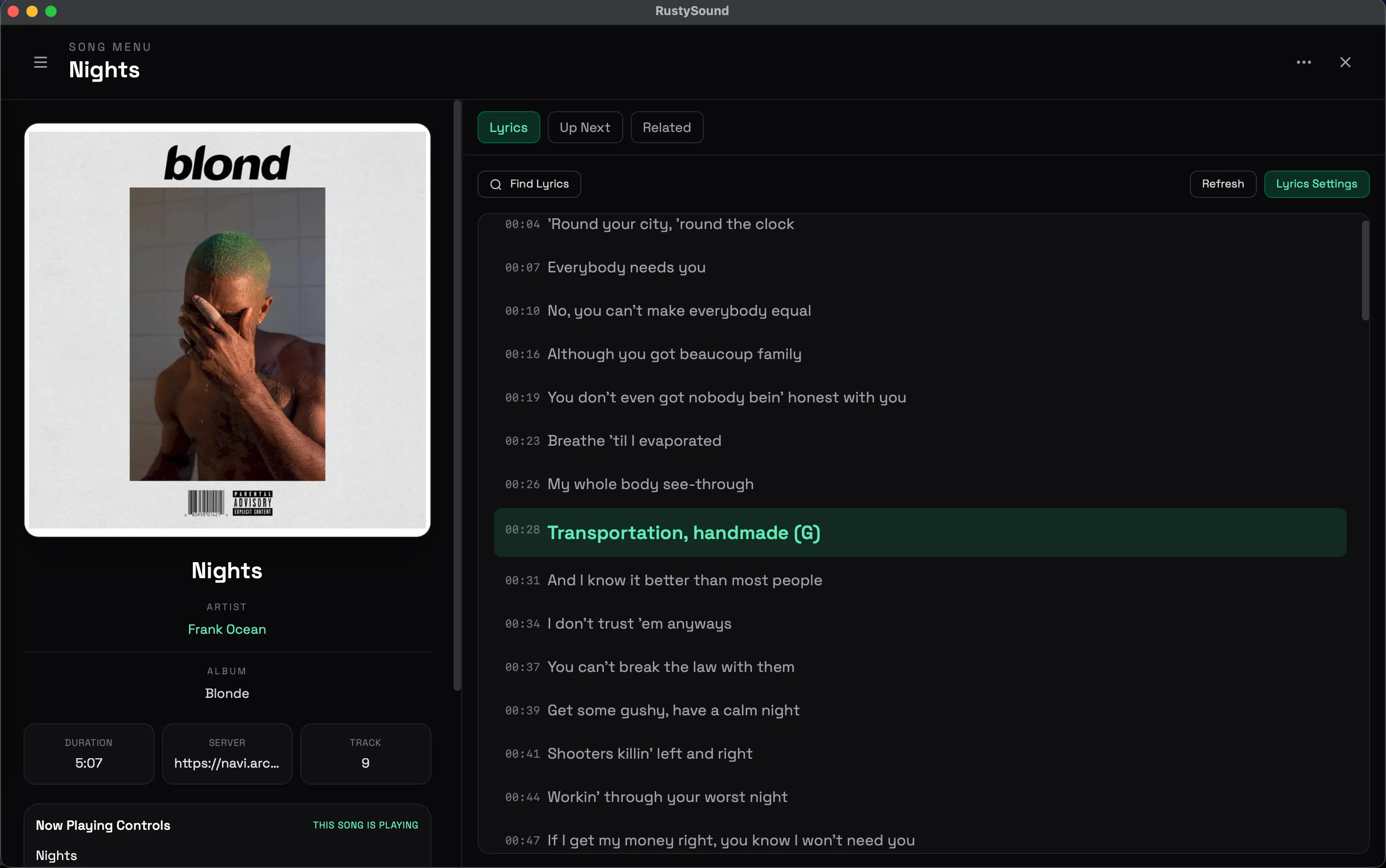
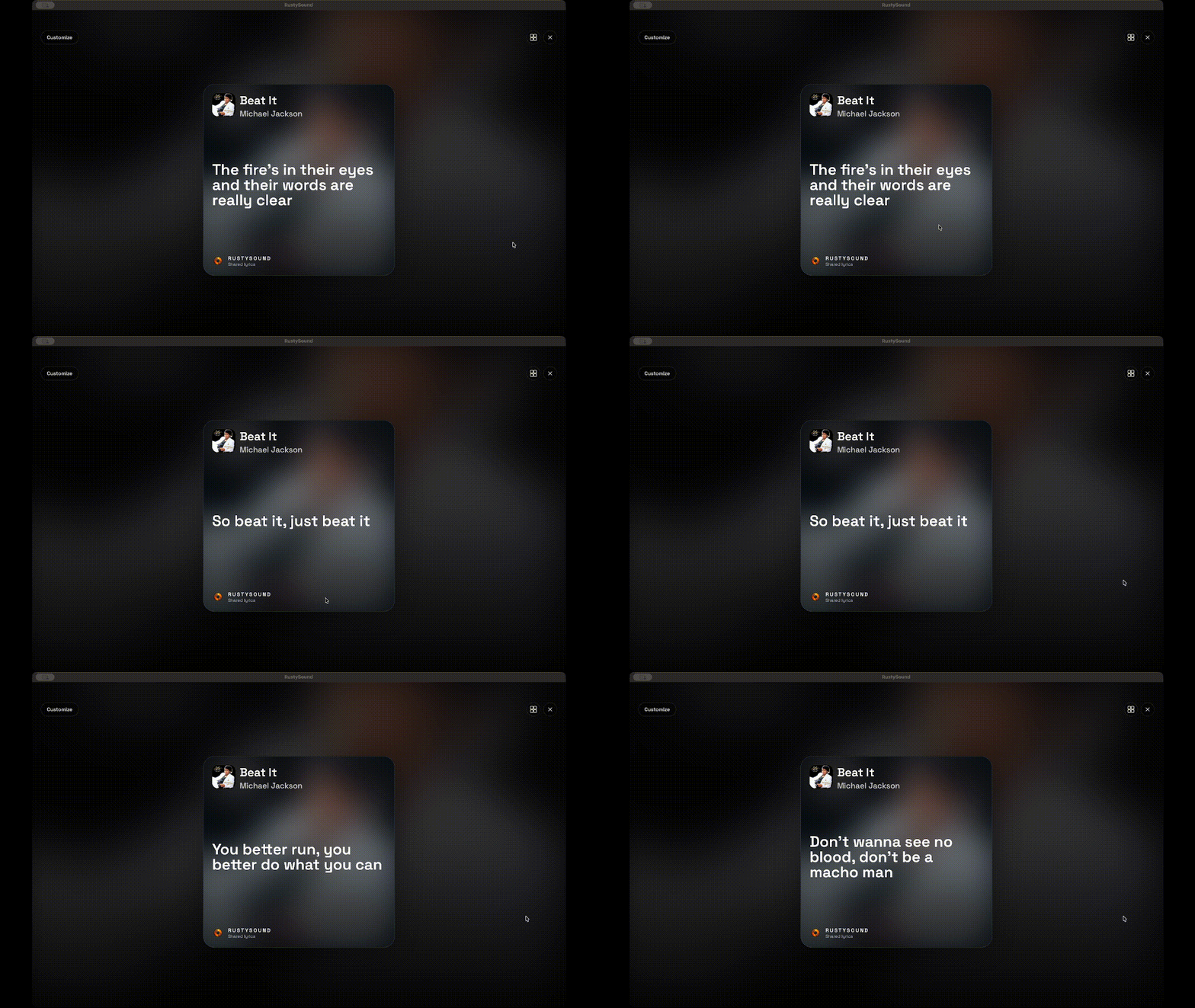
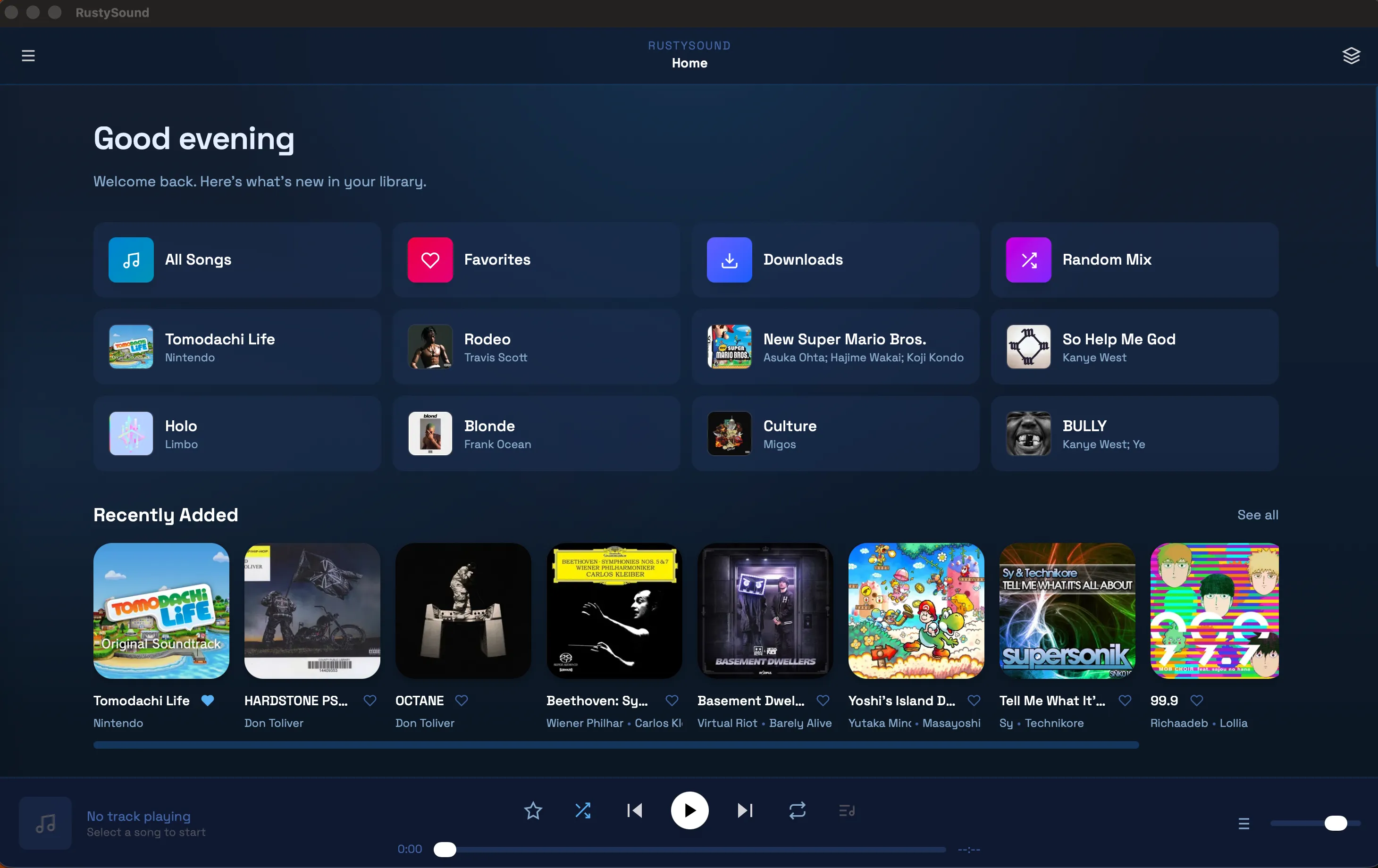
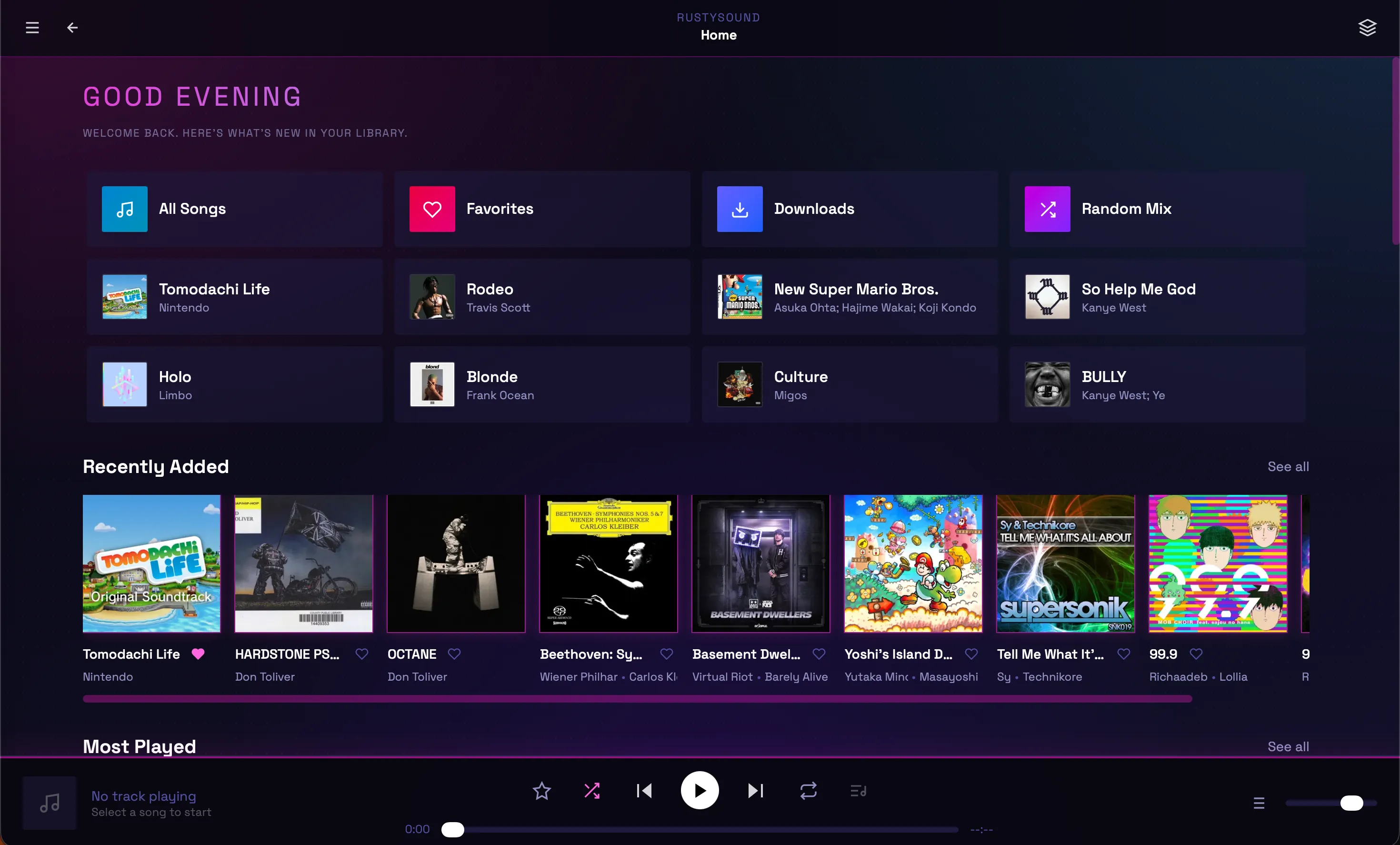
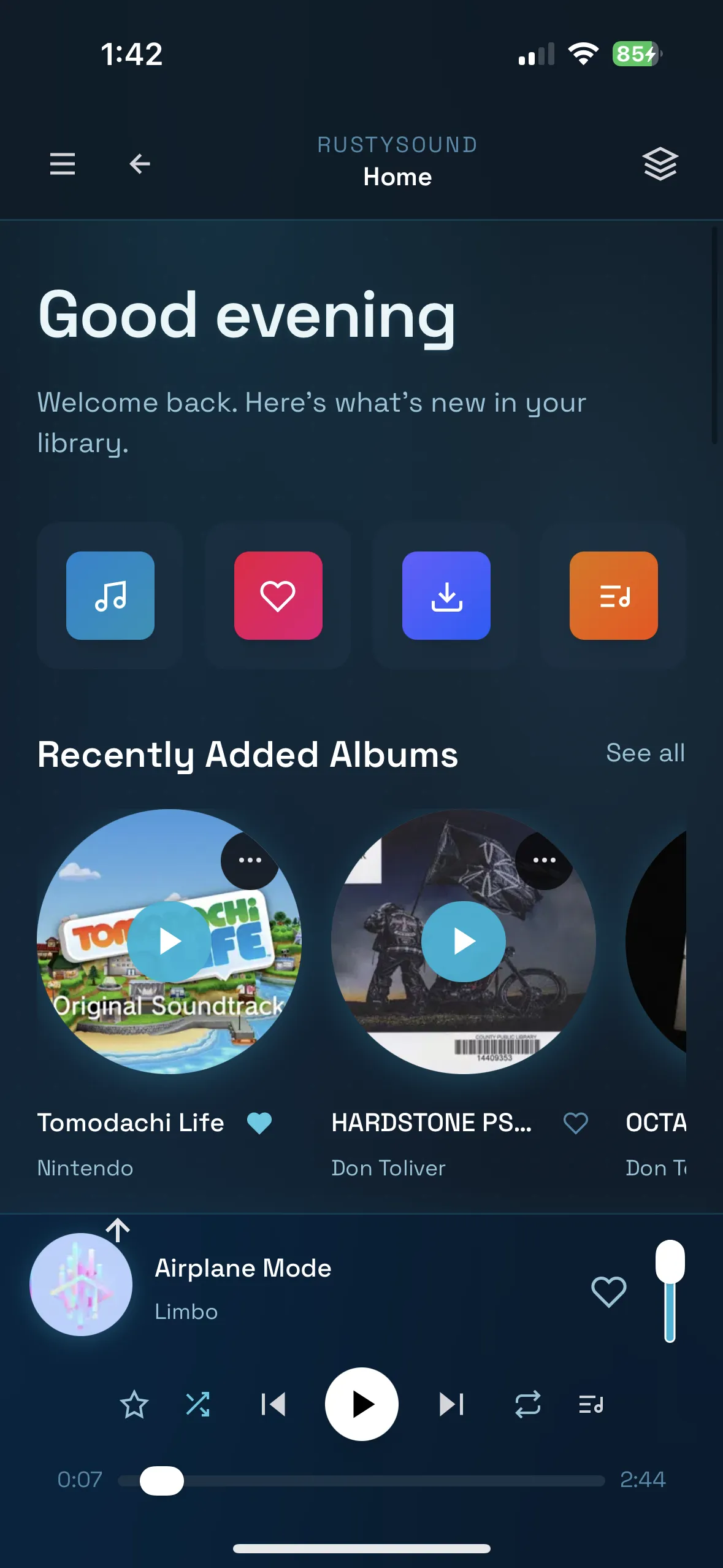

## Features
- **Multi-platform**: Desktop (macOS, Windows, Linux), Mobile (iOS, Android), and Web
- **Audio streaming**: High-quality playback with queue management
- **Server integration**: Connect to Navidrome and Subsonic-compatible servers
- **Offline support**: Local storage, downloads, persistent settings and playback state
- **Playlist management**: Create and organize playlists
- **Browse and search**: Find music by artist, album, or track
- **Full controls**: Play, pause, skip, shuffle, repeat, and more
- **Modern UI**: Clean, responsive Tailwind CSS interface
- **Customizable themes**: Multiple built-in themes with CSS overrides
## Supported Platforms
| Platform | Installation |
| ----------- | ---------------------------------------------------------- |
| **iOS** | AltStore (recommended), manual sideloading, or source feed |
| **Android** | APK from Releases |
| **macOS** | Homebrew, DMG installer |
| **Windows** | Scoop, standalone EXE |
| **Linux** | Flatpak |
| **Web** | Browser + PWA, Docker |
> **Note**: Android is feature-aligned but not under active day-to-day development and may have platform-specific issues.
## Installation
### iOS
#### AltStore Installation (Recommended)
This is the easiest way to install and keep RustySound updated on iOS.

Or manually add `https://ad-archer.github.io/packages/source.json` as a source in:
- [AltStore](https://altstore.io/) or [AltServer](https://altstore.io/) for Mac/Windows
- [LiveContainer](https://github.com/LiveContainer/LiveContainer) on iOS
#### Manual Sideloading
1. Download the latest `.ipa` file from [Releases](https://github.com/AD-Archer/RustySound/releases)
2. Use [AltStore](https://altstore.io/), [Sideloadly](https://sideloadly.io/), or [Xcode](https://developer.apple.com/xcode/) to install
### Android
1. Download the latest `.apk` file from [Releases](https://github.com/AD-Archer/RustySound/releases)
2. Enable "Installation from unknown sources" in Settings
3. Install the APK and launch RustySound
### Desktop
#### macOS
##### Homebrew (Recommended)
```bash
brew tap ad-archer/homebrew-tap
brew install --cask rustysound
```
To update:
```bash
brew upgrade rustysound
```
##### DMG Installer
1. Download the latest `.dmg` file from [Releases](https://github.com/AD-Archer/RustySound/releases)
2. Open the DMG and drag RustySound to your Applications folder
**Troubleshooting**: If macOS says the app is damaged or won't open:
```bash
# Option 1: Right-click in Finder and choose Open, then confirm
# Option 2: Run this command
xattr -dr com.apple.quarantine /Applications/RustySound.app
open /Applications/RustySound.app
```
#### Windows
##### Scoop (Recommended)
```powershell
scoop bucket add ad-archer https://github.com/ad-archer/scoop
scoop install ad-archer/rustysound
```
##### Portable Executable
1. Download the latest `.exe` file from [Releases](https://github.com/AD-Archer/RustySound/releases)
2. Open the exe and install RustySound
> **Note**: Antivirus may flag the installer since it is not verified by Windows. This is safe to ignore for builds from the official repository.
#### Linux
##### Flatpak (Recommended)
```bash
flatpak remote-add --if-not-exists --user adarcher-rustysound https://ad-archer.github.io/packages/rustysound.flatpakrepo
flatpak install --user adarcher-rustysound app.adarcher.rustysound//stable
flatpak run app.adarcher.rustysound
```
To update:
```bash
flatpak install --user adarcher-rustysound app.adarcher.rustysound//stable
```
To remove:
```bash
flatpak uninstall --user app.adarcher.rustysound
flatpak remote-delete --user adarcher-rustysound
```
**Troubleshooting — missing GNOME runtime**
If you see an error like:
```
error: The application app.adarcher.rustysound/x86_64/master requires the runtime org.gnome.Platform/x86_64/49 which was not found
```
Install the runtime from Flathub:
```bash
# Add Flathub (if not already present)
flatpak remote-add --if-not-exists flathub https://flathub.org/repo/flathub.flatpakrepo
# Install the GNOME 49 runtime
flatpak install --user flathub org.gnome.Platform//49
# Reinstall the app
flatpak install --user adarcher-rustysound app.adarcher.rustysound//stable
```
For system-wide install, omit `--user` from the commands.
### Web
Visit [rustysound](https://rustysound-demo.adarcher.app) to try the web version.
#### Docker Deployment
##### Docker Compose (Recommended)
1. Ensure you have Docker and Docker Compose installed
2. Clone this repository or copy [`docker-compose.yml`](https://raw.githubusercontent.com/AD-Archer/RustySound/refs/heads/main/docker-compose.yml)
3. Run:
```bash
docker-compose up -d
```
The web interface will be available at `http://localhost:8080`.
To stop:
```bash
docker-compose down
```
##### Manual Docker Run
```bash
docker run -d -p 8080:80 --name rustysound ghcr.io/ad-archer/rustysound:latest
```
## Development
### Prerequisites
- Rust 1.70+ ([install here](https://rustup.rs/))
- Dioxus CLI: `curl -sSL https://dioxus.dev/install.sh | sh`
### Setup
1. Clone the repository:
```bash
git clone https://github.com/AD-Archer/RustySound.git
cd RustySound
```
2. Install dependencies:
```bash
cargo build
```
### Running Locally
#### Web
```bash
dx serve --platform web
```
#### Desktop
```bash
dx serve --platform desktop
```
#### Mobile
##### iOS Simulator
```bash
./scripts/serve-ios.sh
```
You can pass `dx serve` options:
```bash
./scripts/serve-ios.sh --device "iPhone 16 Pro"
```
##### Android Emulator
```bash
dx serve --platform android
# or with auto-setup (NixOS):
just serve-android
```
### Quick Commands
Use `just` for common tasks:
```bash
just # list all recipes
just serve # dx serve (web)
just serve-ios # iOS simulator dev (safe linker env)
just serve-android # Android dev/debug (auto-create/start emulator)
just check # cargo check
just bundle # macOS + iOS + unsigned IPA
just bundle-android-release # Android release APK
```
### Building for Release
#### Desktop
```bash
dx bundle --platform desktop --release
```
#### iOS
```bash
dx bundle --platform ios --release
```
Or use the Apple bundling script:
```bash
./scripts/bundle-apple.sh
```
Outputs:
- macOS `.app`: `dist/apple/macos`
- iOS `.app`: `dist/apple/ios`
- Unsigned iOS `.ipa`: `dist/apple/ios/*-unsigned.ipa`
To build for simulator:
```bash
IOS_TARGET=aarch64-apple-ios-sim ./scripts/bundle-apple.sh
```
If your shell exports compiler flags (e.g., `LDFLAGS`), use the script to avoid linking issues.
Customize the icon and app name:
```bash
APP_NAME="RustySound" IOS_ICON_SOURCE="/absolute/path/to/icon-1024.png" ./scripts/bundle-apple.sh
```
#### Android
```bash
./scripts/bundle-android.sh
# or
just bundle-android-release
```
This exports release `.apk` to `dist/android`.
Optional signing environment variables:
- `ANDROID_KEYSTORE_BASE64` or `ANDROID_KEYSTORE_PATH`
- `ANDROID_KEYSTORE_PASSWORD`
- `ANDROID_KEY_ALIAS`
- `ANDROID_KEY_PASSWORD` (optional)
## Project Structure
```
rustysound/
├── assets/ # Static assets (icons, styles, etc.)
├── src/
│ ├── main.rs # Application entry point
│ ├── components/ # Reusable UI components
│ │ ├── app.rs # Main app component
│ │ ├── player.rs # Audio player controls
│ │ ├── sidebar.rs # Navigation sidebar
│ │ └── views/ # Page components
│ │ ├── home.rs # Home/dashboard
│ │ ├── albums.rs # Album browser
│ │ ├── artists.rs # Artist browser
│ │ ├── queue.rs # Playback queue
│ │ └── settings.rs # App settings
│ ├── api/ # Server API integration
│ ├── db/ # Local database/storage
│ └── components.rs # Component exports
├── Cargo.toml # Rust dependencies
├── Dioxus.toml # Dioxus configuration
└── tailwind.css # Tailwind CSS styles
```
## Contributing
1. Fork the repository
2. Create a feature branch: `git checkout -b feature/your-feature`
3. Make your changes and test thoroughly
4. Submit a pull request
### Development Guidelines
- Follow Rust best practices
- Use Dioxus component patterns
- Test on multiple platforms when possible
- Update documentation for new features
## License
Licensed under the GNU General Public License v3.0 (GPL-3.0-or-later).
See [LICENSE](./LICENSE) for full terms.
## Acknowledgments
- Built with [Dioxus](https://dioxuslabs.com/) - A Rust UI framework
- Audio playback powered by Web Audio API and native platform APIs
- Icons and UI design inspired by modern music streaming applications