https://github.com/anonrig/microservices-example
Example architecture using GRPC and MQ on node.js
https://github.com/anonrig/microservices-example
Last synced: about 1 year ago
JSON representation
Example architecture using GRPC and MQ on node.js
- Host: GitHub
- URL: https://github.com/anonrig/microservices-example
- Owner: anonrig
- Created: 2021-04-13T15:17:49.000Z (about 5 years ago)
- Default Branch: main
- Last Pushed: 2021-04-14T19:13:18.000Z (about 5 years ago)
- Last Synced: 2025-04-15T12:52:46.930Z (about 1 year ago)
- Language: JavaScript
- Size: 1.52 MB
- Stars: 32
- Watchers: 2
- Forks: 2
- Open Issues: 0
-
Metadata Files:
- Readme: README.md
Awesome Lists containing this project
README
# Microservices with GRPC and Kafka on Node.js
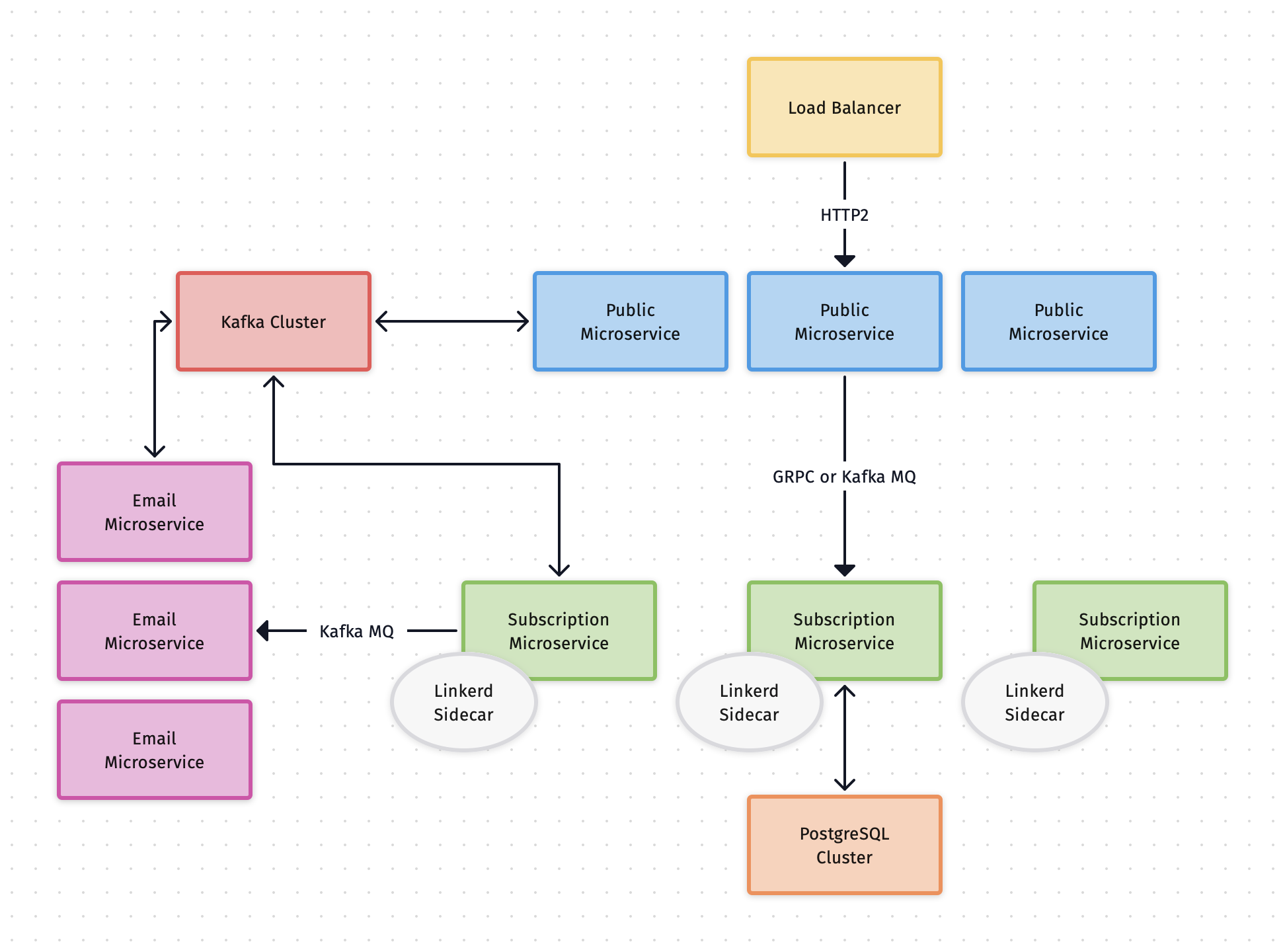
This is an example microservices architecture which uses GRPC communication between microservices for requests that need instant reply, and uses fault-tolerant messaging queue for HA.
Each microservice supports both GRPC communication and consumption through Kafka topics. If you need to get a response from a certain microservice, GRPC is recommended. If the task can be done asyncronously, please do it within Kafka's boundaries.
## Architecture Overview
## Requirements
- Node (preferably >= 15, since ESM is enabled by default)
- PostgreSQL (preferably >= 12)
- Kafka
## Development
1. Install dependencies using `npm install` on the root directory
2. Run `docker-compose up` on the root directory
3. Prepare database using the directions in `packages/subscription`
## Deployment
Public:
- has `/metrics` endpoint where it exposes certain memory and cpu consumption metrics for Prometheus support.
- has `/health` endpoint for readiness and liveliness probe checks.
GRPC microservices:
- supports `grpc.health.v1.Health` grpc health checks
For further information regarding Kubernets deployment, please look into the k8s folder.
### Security
- inter microservice communication
- In general all communications between microservices should be encrypted, preferably using SSL. Right now, all of the requests are signed but have insecure SSL configuration.
- All microservices hide stacktraces and error messages from client by default.
- _Rate limiting_ is enabled on public microservice. the default configuration is max 100 requests per minute.
- Right now we're using memory based rate limiting which is bad for production since it will reset on deployment, and work be suitable if you have scale to more than 1 horizontal pods.
- Exposes `x-ratelimit-limit`, `x-ratelimit-remaining`, `x-ratelimit-reset` and `retry-after` headers to client.
- _CORS configuration_: Before using this code on production make sure that the necessary CORS headers should only allow requests from your owned domains to disallow unwanted requests from browsers and websites.
### OpenAPI 3 Specification
You can access OpenAPI 3 based documentation generated by `public` microservice using `docs` next.js project which consumes the OpenAPI specification and creates a developer friendly website.
### Privacy Issues
- Subscription microservice is not GDPR friendly. We shouldn't store any personal information unless we particularly need it. Since some of the issues regarding personal information was inside the task itself, I left it there, but in order comply with the regulations, I didn't soft delete a subscription but removed it completely upon cancellation.
### Development Issues
- Lerna npmClientArgs does not work for Node 15 & NPM 7. Please refer to https://github.com/n8n-io/n8n/issues/1149. In order to solve installation issues you need to run `npm config set legacy-peer-deps true`. By default using `npm install` triggers `prepare-build.js` command which handles this error.