https://github.com/fedora-python/pyp2rpm
Tool to convert a package from PyPI to RPM SPECFILE or to generate SRPM.
https://github.com/fedora-python/pyp2rpm
Last synced: 9 months ago
JSON representation
Tool to convert a package from PyPI to RPM SPECFILE or to generate SRPM.
- Host: GitHub
- URL: https://github.com/fedora-python/pyp2rpm
- Owner: fedora-python
- License: mit
- Created: 2015-07-13T15:03:09.000Z (almost 11 years ago)
- Default Branch: main
- Last Pushed: 2023-10-04T04:13:45.000Z (over 2 years ago)
- Last Synced: 2025-03-29T07:48:40.440Z (about 1 year ago)
- Language: Python
- Size: 3.05 MB
- Stars: 130
- Watchers: 12
- Forks: 42
- Open Issues: 59
-
Metadata Files:
- Readme: README.md
- Changelog: CHANGELOG
- License: LICENSE
Awesome Lists containing this project
README

pyp2rpm
=======
A tool to convert a PyPI package to an RPM `SPECFILE` or to generate an SRPM.
Under heavy development, see the TODO file for a list of planned features.
pyp2rpm currently ships with Fedora and Mageia specific templates.
## Usage
The simplest use case is to run:
```sh
pyp2rpm package_name
```
This downloads the package from PyPI and outputs the RPM `SPECFILE`.
Or:
```sh
pyp2rpm package_name --srpm
```
This downloads the package from PyPI and creates a SRPM file.
All of the `pyp2rpm` options are:
$ pyp2rpm -h
usage: pyp2rpm [-h] [-v VERSION] [-d SAVE_DIR] [-r RPM_NAME]
[-t TEMPLATE] [-o DISTRO] [-b BASE_PYTHON]
[-p PYTHON_VERSION] [--srpm] [--proxy PROXY] PACKAGE
Convert PyPI package to RPM specfile or SRPM.
Arguments:
PACKAGE Provide PyPI name of the package or path to compressed
source file.
Options:
-t TEMPLATE Template file (jinja2 format) to render
(default: "fedora").Search order is 1)
filesystem, 2) default templates.
-o [fedora|epel7|epel6|mageia|pld]
Default distro whose conversion rules to use
(default:"fedora"). Default templates have
their rules associated and ignore this.
-b BASE_PYTHON Base Python version to package for (fedora
default: "3").
-p PYTHON_VERSIONS Additional Python versions to include in the
specfile (e.g -p2 for python2 subpackage).
Can be specified multiple times. Specify
additional version or use -b explicitly to
disable default.
-s Spec file ~/rpmbuild/SPECS/python-package_name.spec
will be created (default:
prints spec file to stdout).
--srpm When used pyp2rpm will produce srpm instead
of printing specfile into stdout.
--proxy PROXY Specify proxy in the form proxy.server:port.
-r RPM_NAME Name of rpm package (overrides calculated
name).
-d SAVE_PATH Specify where to save package file, specfile
and generated SRPM (default:
"/home/mcyprian/rpmbuild").
-v VERSION Version of the package to download (ignored
for local files).
--venv / --no-venv Enable / disable metadata extraction from
virtualenv (default: enabled).
--autonc / --no-autonc Enable / disable using automatic provides
with a standardized name in dependencies
declaration (default: disabled).
--sclize Convert tags and macro definitions to SCL-style
using `spec2scl` module. NOTE: SCL
related options can be provided alongside
this option.
-h, --help Show this message and exit.
SCL related options:
--no-meta-runtime-dep Don't add the runtime dependency on the scl
runtime package.
--no-meta-buildtime-dep Don't add the buildtime dependency on the scl
runtime package.
--skip-functions FUNCTIONS Comma separated list of transformer functions to
skip.
--no-deps-convert Don't convert dependency tags (mutually
exclusive with --list-file).
--list-file FILE_NAME List of the packages/provides, that will be in
the SCL (to convert Requires/BuildRequires
properly). Lines in the file are in form of
"pkg-name %%{?custom_prefix}", where the prefix
part is optional.
To run the unit tests, cd into the checked out directory and run:
```sh
PYTHONPATH="$(pwd)" py.test
```
or run:
```sh
python setup.py test
```
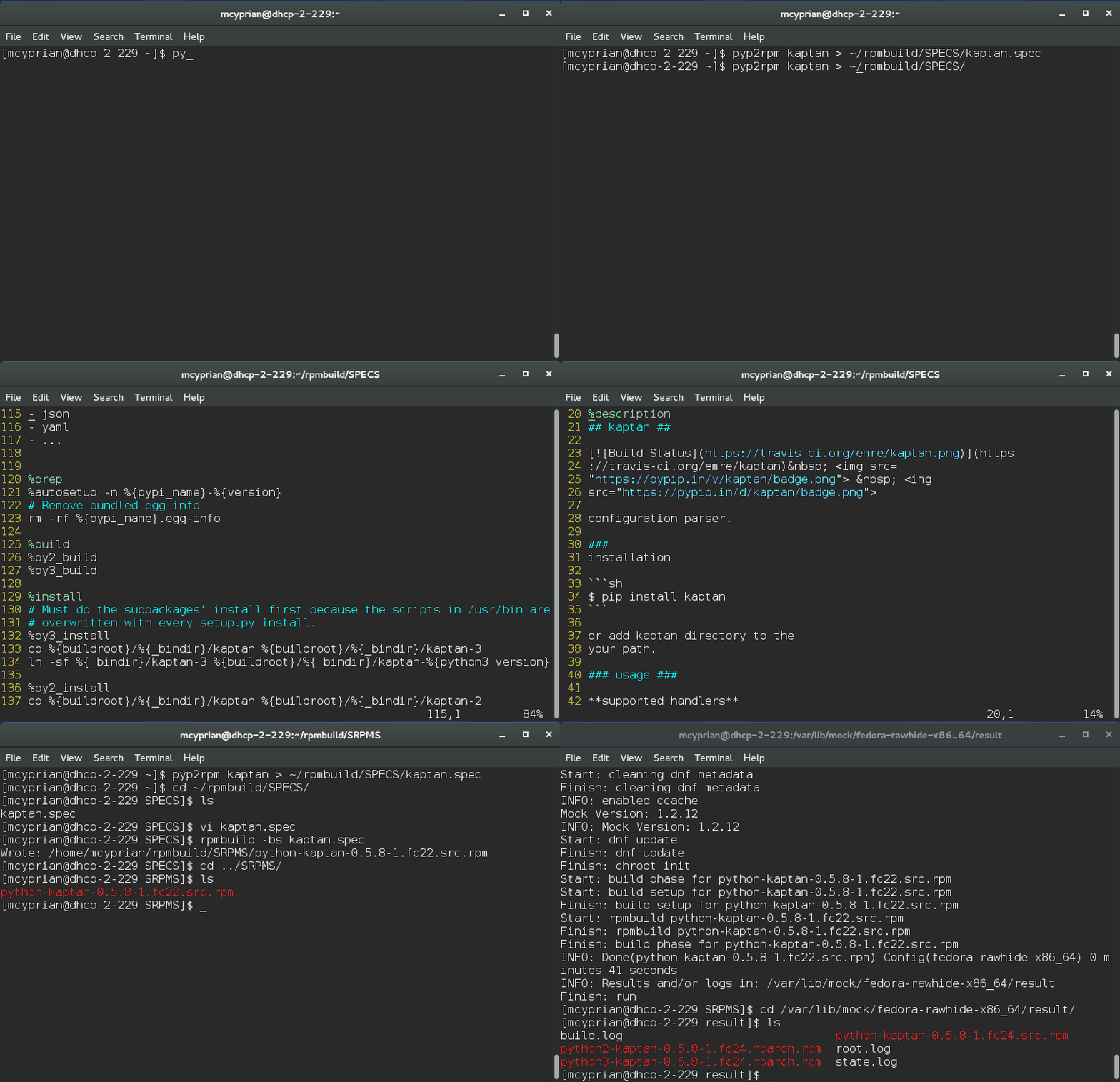
## Example usage
## Contributing
We will gladly accept any pull request or feature request.
With complex pull requests, please include unit tests in *pytest* and use *flexmock* if you need mocking.
Tests can be run in a local container:
```sh
docker build -t pyp2rpm-test .
docker run -v "$(pwd):$(pwd):z" -w "$(pwd)" -it pyp2rpm-test
```
pyp2rpm is licensed under the MIT/Expat license.