https://github.com/felixvo/event-sourcing-test-app
sample event sourcing application using go and redis
https://github.com/felixvo/event-sourcing-test-app
event-sourcing go redis
Last synced: 7 months ago
JSON representation
sample event sourcing application using go and redis
- Host: GitHub
- URL: https://github.com/felixvo/event-sourcing-test-app
- Owner: felixvo
- Created: 2019-11-28T05:36:23.000Z (over 6 years ago)
- Default Branch: master
- Last Pushed: 2022-06-15T14:29:22.000Z (about 4 years ago)
- Last Synced: 2024-11-21T10:39:02.273Z (over 1 year ago)
- Topics: event-sourcing, go, redis
- Language: Go
- Homepage:
- Size: 2.09 MB
- Stars: 21
- Watchers: 2
- Forks: 2
- Open Issues: 0
-
Metadata Files:
- Readme: README.md
Awesome Lists containing this project
README
# Event Sourcing with Go and Redis
NOTE: This code is not tested, just an experiment
I thought you already heard about Event Sourcing in the past recent year.
But let's go through the definition again.
> Capture all changes to an application state as a sequence of events.
> Event Sourcing ensures that all changes to application state are stored as a sequence of events. - [Martin Fowler](https://martinfowler.com/eaaDev/EventSourcing.html)
If you know bitcoin/blockchain you will know it's quite similar with Event Sourcing.
> Your current balance (Application State) is calculated from a series of events in history (in the chain)
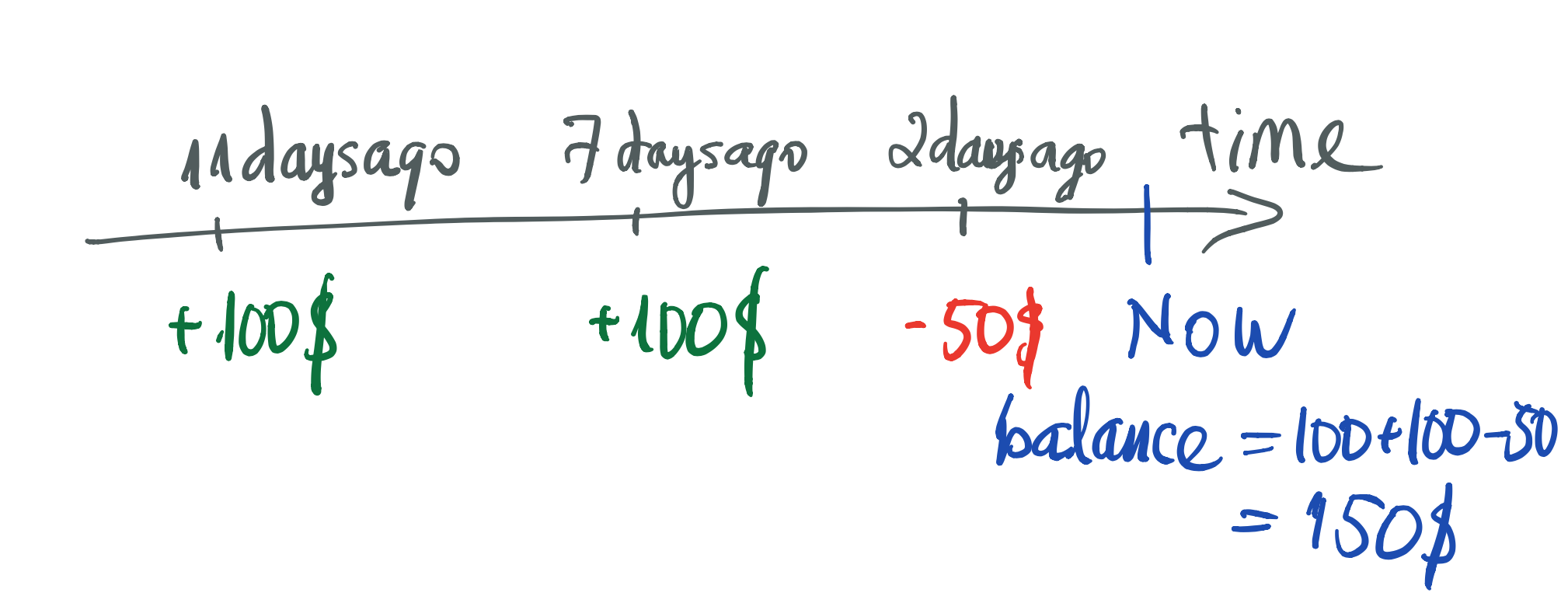
so you don't have a table like this in database
|user_id|balance|
|----|----|
| 10 | 100$|
| 7 | 200$|
now you have
|events|
|------|
|user x top-up event|
|user buy 5 items event|
|user y top-up event|
I've read many articles/blog posts about Event Sourcing so I try to make once.
## What we will build?
Let's say you have an e-commerce website and users can buy items from your website.
Source: https://github.com/felixvo/lmax
Entities:
- `User` will have `balance`.
- `Item` will have `price` and number of `remain` items in the warehouse.
Events:
- `Topup`: increase user balance
- `AddItem`: add more item to warehouse
- `Order`: buy items
## Directory Structure
```
├── cmd
│ ├── consumer # process events
│ │ ├── handler # handle new event base on event Type
│ │ └── state
│ └── producer # publish events
└── pkg
├── event # event definition
├── snapshot # snapshot state of the app
├── user # user domain
└── warehouse # item domain
```
## Architecture
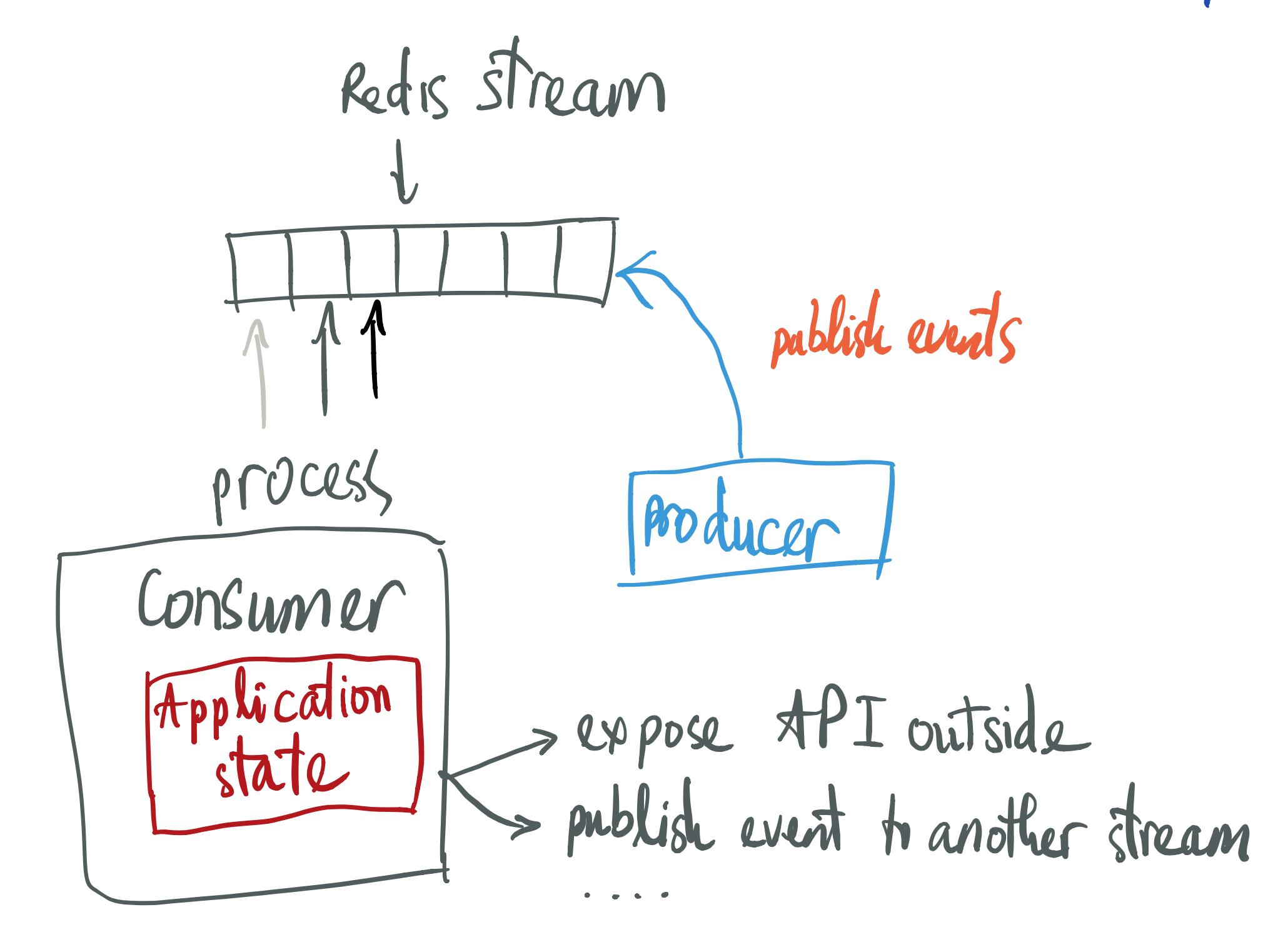
- Event storage: [Redis Stream](https://redis.io/topics/streams-intro)
>Entry IDs
>The entry ID returned by the XADD command, and identifying univocally >each entry inside a given stream, is composed of two parts:
>`-`
> I use this `Entry ID` to keep track of processed event
- The consumer will consume events and build the application state
- `snapshot` package will take the application state and save to redis every 30s. Application state will restore from this if our app crash
## Run
### Producer
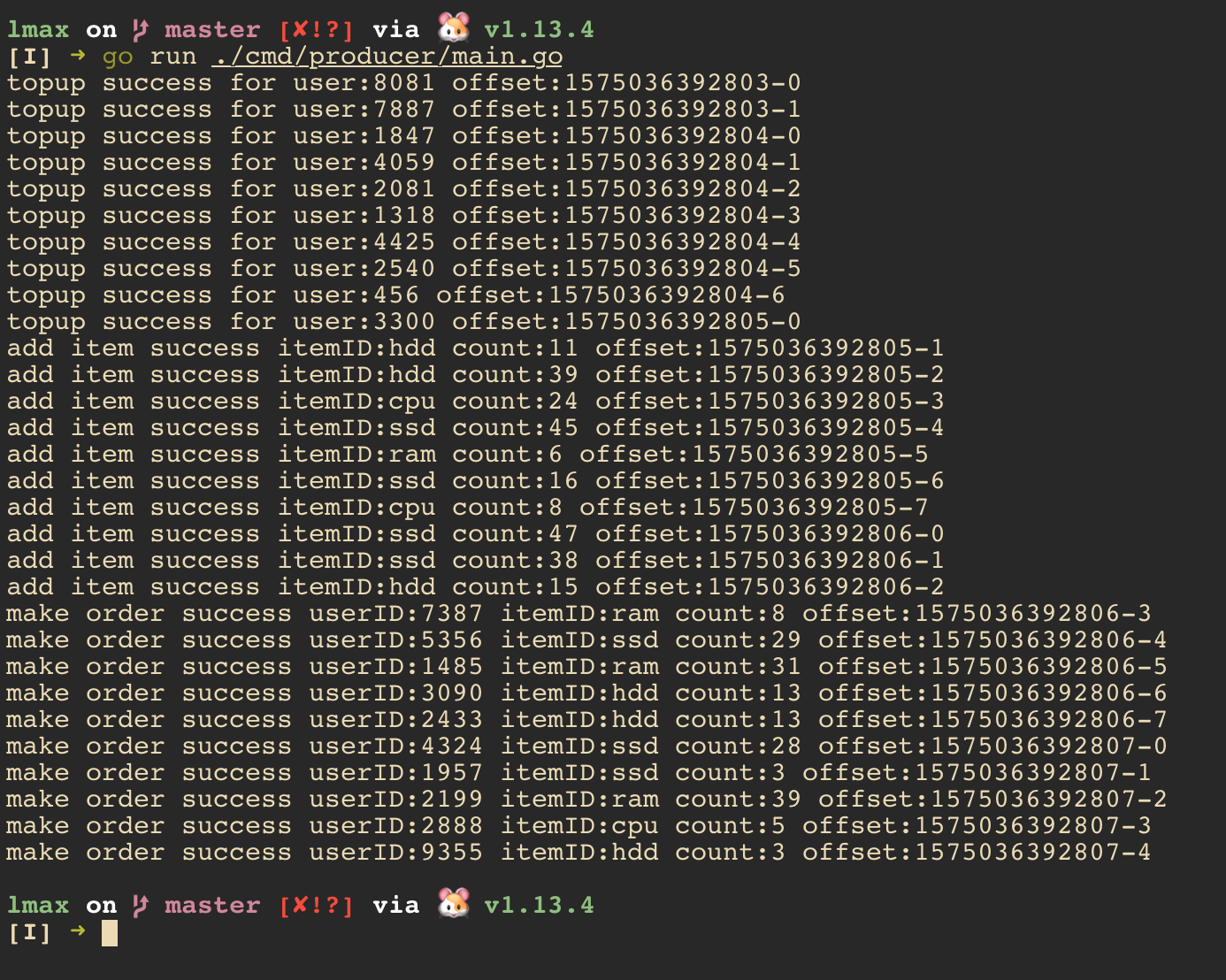
First, start the producer to insert some events to `redis stream`
### Consumer
Now start the consumer to consume events
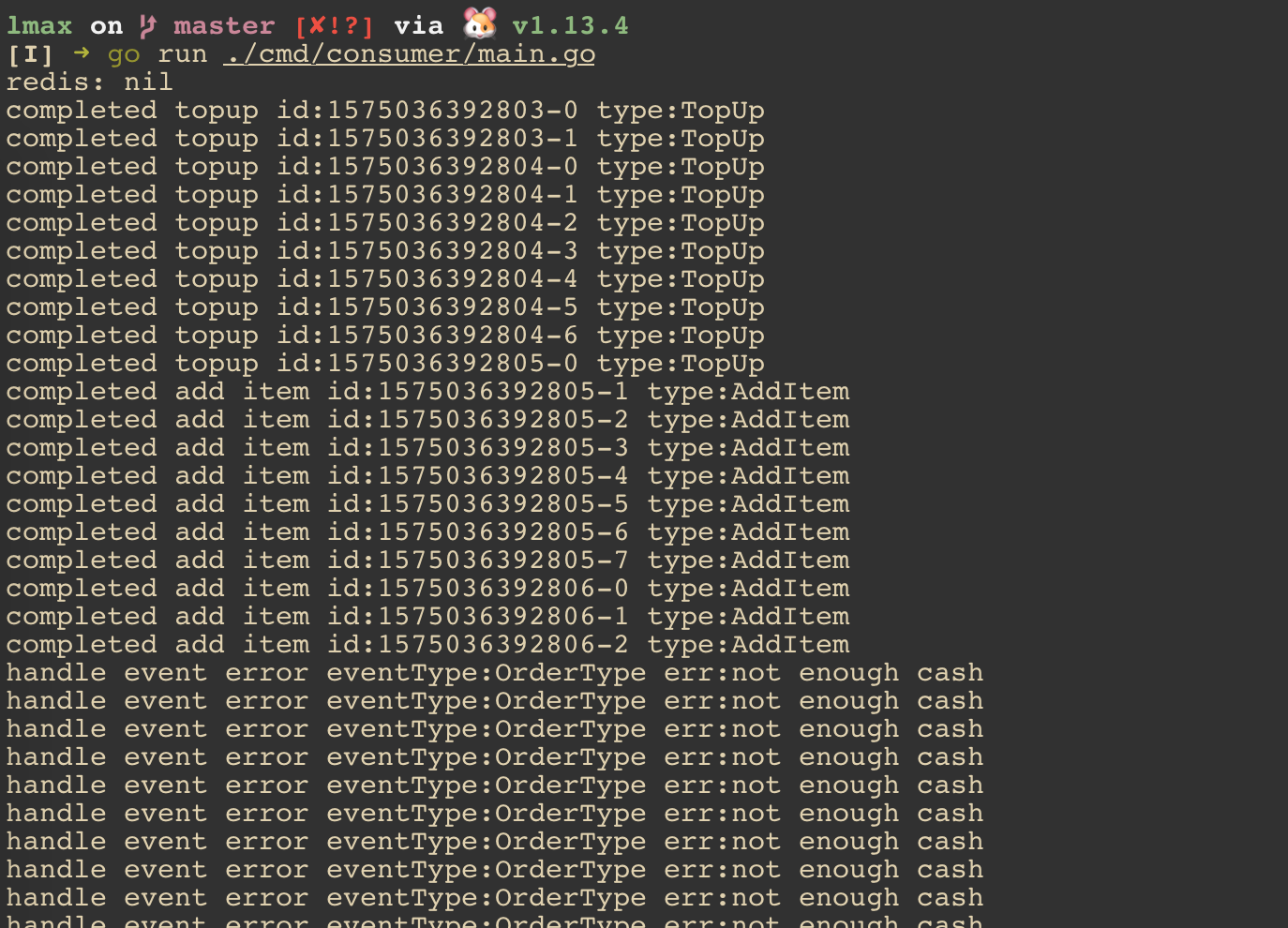
Because the consumer consumes the events but not backup the state yet.
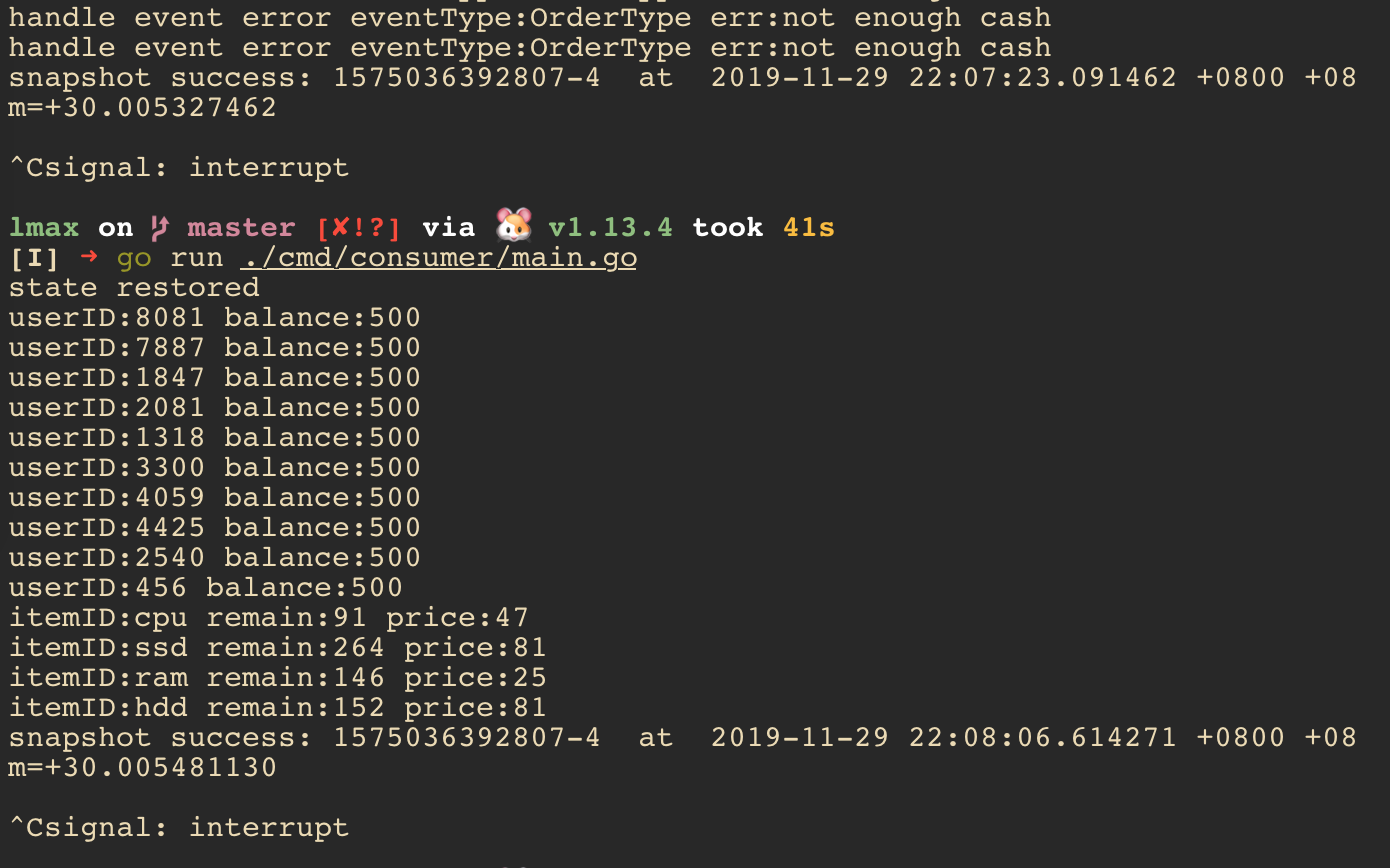
If you wait for more than 30s, you will see this message from console

Now if you stop the app and start it again, the application state will restore from the latest snapshot, not reprocess the event again
Thank you for reading!
I hope the source code is clean enough for you to understand :scream:
## Thoughts