https://github.com/heaven-waves/peripheral-node
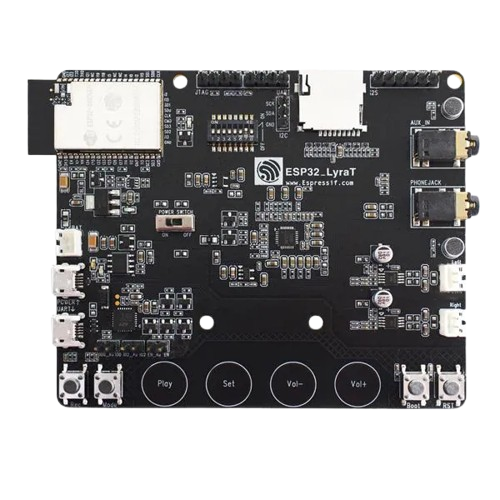
Code to be run on ESP32-LyraT V4.3 boards as periheral nodes 🕹️
https://github.com/heaven-waves/peripheral-node
audio c-language esp-adf esp32 peripheral streaming
Last synced: 5 months ago
JSON representation
Code to be run on ESP32-LyraT V4.3 boards as periheral nodes 🕹️
- Host: GitHub
- URL: https://github.com/heaven-waves/peripheral-node
- Owner: Heaven-Waves
- Created: 2024-09-02T05:27:49.000Z (almost 2 years ago)
- Default Branch: main
- Last Pushed: 2024-09-20T18:26:00.000Z (over 1 year ago)
- Last Synced: 2025-03-13T23:44:14.389Z (over 1 year ago)
- Topics: audio, c-language, esp-adf, esp32, peripheral, streaming
- Language: C
- Homepage:
- Size: 43 KB
- Stars: 0
- Watchers: 1
- Forks: 0
- Open Issues: 0
-
Metadata Files:
- Readme: README.md
Awesome Lists containing this project
README
# Peripheral Node 🕹️
Real-time Opus audio streaming receiver for the [ESP32-LyraT V4.3](https://docs.espressif.com/projects/esp-adf/en/latest/design-guide/dev-boards/get-started-esp32-lyrat.html) development board. This peripheral node receives Opus-encoded audio streams over UDP multicast and plays them through the I2S audio output.
## Features
- **Real-time Audio Streaming**: Receives UDP multicast audio packets with low latency
- **Opus Audio Decoding**: Hardware-accelerated Opus codec decoding (48kHz stereo)
- **RTP Protocol Support**: Parses RTP headers to extract audio payload
- **Robust WiFi Handling**: Automatic reconnection and event-driven network management
- **Dual-Core Utilization**: UDP receiver on core 1, I2S playback on core 0
- **Memory Optimized**: Uses external PSRAM for extended memory allocation
- **Configurable Parameters**: WiFi, network, and audio settings via menuconfig
## Architecture
```
UDP Multicast (224.1.1.1:5005)
↓
RTP Packet Reception
↓
RTP Header Parsing
↓
Opus Payload Extraction
↓
Opus Decoder (48kHz Stereo)
↓
PCM Audio Buffer
↓
Ring Buffer (8KB)
↓
I2S Writer Element
↓
ES8388 Audio Codec
↓
Speaker/Headphone Output
```
## Hardware Requirements
- **Board**: ESP32-LyraT V4.3
- **Microcontroller**: ESP32 (dual-core Xtensa)
- **Audio Codec**: ES8388
- **Memory**: 520KB SRAM + 4MB PSRAM
- **Flash**: 8MB
- **Network**: WiFi 802.11 b/g/n
## Software Requirements
- **ESP-IDF**: v5.3.1 (Espressif IoT Development Framework)
- **ESP-ADF**: v2.7 (Audio Development Framework)
- **Build Tools**: CMake, Make
- **Compiler**: xtensa-esp32-elf-gcc (esp-13.2.0)
## Getting Started
### 1. Install Prerequisites
Follow the [ESP-IDF installation guide](https://docs.espressif.com/projects/esp-idf/en/latest/esp32/get-started/index.html) to set up ESP-IDF v5.3.1.
Install ESP-ADF v2.7:
```bash
cd ~/esp
git clone --recursive https://github.com/espressif/esp-adf.git
cd esp-adf
git checkout v2.7
```
### 2. Clone Repository
```bash
git clone
cd peripheral-node
```
### 3. Configure the Project
```bash
idf.py menuconfig
```
Navigate to configure:
**WiFi Configuration**:
- SSID: Your WiFi network name
- Password: Your WiFi password
**Audio Streaming Configuration**:
- Multicast IP: Default `224.1.1.1`
- UDP Port: Default `5005`
- Sample Rate: Default `48000` Hz
- Bits per Sample: Default `16`
- Channels: Default `2` (stereo)
**Opus Configuration**:
- Frame Size: Default `960` samples (20ms at 48kHz)
- Max Packet Size: Default `2048` bytes
- Jitter Buffer Size: Default `2048` bytes
### 4. Build and Flash
```bash
# Build the project
idf.py build
# Flash to the ESP32-LyraT board
idf.py -p /dev/ttyUSB0 flash
# Monitor output (optional)
idf.py -p /dev/ttyUSB0 monitor
```
Press `Ctrl+]` to exit the monitor.
### 5. Flash and Monitor in One Command
```bash
idf.py -p /dev/ttyUSB0 flash monitor
```
## Configuration Options
All configuration options are accessible via `idf.py menuconfig`:
### WiFi Settings
- `WIFI_SSID`: WiFi network name (default: "YourWiFiSSID")
- `WIFI_PASSWORD`: WiFi password (default: "YourWiFiPassword")
### Network Settings
- `MULTICAST_IP`: Multicast group address (default: "224.1.1.1")
- `UDP_PORT`: UDP port number (default: 5005)
### Audio Settings
- `AUDIO_SAMPLE_RATE`: Sample rate in Hz (default: 48000)
- `BITS_PER_SAMPLE`: Bits per sample (default: 16)
- `AUDIO_CHANNELS`: Number of channels 1-2 (default: 2)
### Opus Decoder Settings
- `OPUS_FRAME_SIZE`: Frame size in samples (default: 960)
- `MAX_PACKET_SIZE`: Maximum packet size (default: 2048)
- `JITTER_BUFFER_SIZE`: Jitter buffer size (default: 2048)
## Project Structure
```
peripheral-node/
├── main/
│ ├── main.c # Main application logic
│ ├── Kconfig.projbuild # Configuration menu definitions
│ └── idf_component.yml # Component dependencies
├── components/
│ ├── logs/ # Custom logging component
│ │ ├── logs.h
│ │ └── logs.c
│ └── pipeline/ # Audio pipeline wrapper component
│ ├── pipeline.h
│ └── pipeline.c
├── partitions.csv # Flash partition table
├── sdkconfig.defaults # Default build configuration
├── CMakeLists.txt # Root CMake file
├── dependencies.lock # Locked component versions
└── README.md # This file
```
## Key Components
### Main Application (main/main.c)
The main application orchestrates:
- WiFi connection and management
- UDP multicast socket setup
- RTP packet reception and parsing
- Opus audio decoding
- I2S audio output via ring buffer
**Key Functions**:
- `wifi_init_sta()`: Initialize WiFi in station mode
- `setup_udp_multicast()`: Create UDP socket and join multicast group
- `get_rtp_payload()`: Parse RTP headers and extract Opus payload
- `udp_receiver_task()`: Main receiver task (runs on core 1)
- `setup_audio_pipeline()`: Initialize I2S audio output with ring buffer
### Custom Components
**logs**: Simplified logging interface
- `logi()`, `loge()`, `logw()` functions
- Consistent "PERIPHERAL_NODE" tag
**pipeline**: Audio pipeline wrapper (ESP-ADF)
- Simplified API for pipeline management
- Functions for init, deinit, register, link, run, stop
## Hardware Configuration
### I2S Configuration
- **Port**: I2S_NUM_0
- **Sample Rate**: 48000 Hz (configurable)
- **Channels**: 2 (Stereo, configurable)
- **Bits per Sample**: 16-bit (configurable)
- **Mode**: Slave mode, normal I2S format
### Audio Codec (ES8388)
- **Input**: LINE1
- **Output**: All outputs enabled
- **Mode**: Decode only (playback)
- **Volume**: 100%
### Memory Configuration
- **PSRAM**: Enabled with malloc support
- **Ring Buffer**: 8KB for I2S input
- **Static Buffers**: PCM (8KB), UDP receive (512B)
- **Stack**: Allocated in external memory
### Network Configuration
- **WiFi Buffers**: 10 static, 32 dynamic RX/TX
- **LWIP Receive Buffer**: 8KB
- **Multicast**: Enabled
## Performance
- **CPU Frequency**: 240 MHz
- **FreeRTOS Tick Rate**: 1000 Hz
- **Task Watchdog**: 10 seconds
- **Latency**: Optimized for real-time streaming
- **Memory Usage**: Monitored with heap tracking
## Monitoring and Debugging
The application provides detailed logging:
- Packet reception statistics
- Ring buffer fill levels
- Memory usage (heap monitoring)
- Packet content inspection (first 8 bytes)
- I2S element state tracking
Set log level in menuconfig:
```
Component config → Log output → Default log verbosity
```
## Troubleshooting
### WiFi Connection Issues
- Verify SSID and password in menuconfig
- Check WiFi signal strength
- Monitor logs for connection events
### No Audio Output
- Verify multicast IP and port match sender
- Check audio codec initialization in logs
- Ensure ring buffer is receiving data
- Verify I2S configuration matches sender format
### Memory Issues
- Monitor heap usage in logs
- Adjust ring buffer size if needed
- Check PSRAM is properly initialized
### Packet Loss
- Increase WiFi buffer sizes in sdkconfig.defaults
- Adjust jitter buffer size
- Check network congestion
## Development
### VSCode Setup
The project includes VSCode configuration for ESP-IDF extension:
- C/C++ IntelliSense configured
- Build and flash tasks available
- Serial monitor integration
### Adding Custom Components
1. Create component directory under `components/`
2. Add `CMakeLists.txt` with `idf_component_register()`
3. Implement your component logic
4. Include in main application
### Modifying Audio Pipeline
The audio pipeline can be customized in `setup_audio_pipeline()` in main/main.c:
- Change sample rate/channels
- Add audio effects
- Modify ring buffer size
- Add additional audio elements
## Future Enhancements
- Forward Error Correction (FEC) support
- Multiple codec support (AAC, MP3)
- Adaptive bitrate streaming
- Web-based configuration interface
- OTA (Over-The-Air) firmware updates
- Multi-room synchronization
## License
Part of a thesis project on distributed audio systems.
## References
- [ESP-IDF Documentation](https://docs.espressif.com/projects/esp-idf/en/latest/esp32/)
- [ESP-ADF Documentation](https://docs.espressif.com/projects/esp-adf/en/latest/)
- [ESP32-LyraT V4.3 Guide](https://docs.espressif.com/projects/esp-adf/en/latest/design-guide/dev-boards/get-started-esp32-lyrat.html)
- [Opus Codec](https://opus-codec.org/)
- [RTP Protocol (RFC 3550)](https://datatracker.ietf.org/doc/html/rfc3550)