https://github.com/pancsta/secai
Reasoning AI Workflows (devtools included)
https://github.com/pancsta/secai
agents ai asyncmachine bots context diagrams graph instructor llm management reasoning repl sqlite workflows
Last synced: 4 months ago
JSON representation
Reasoning AI Workflows (devtools included)
- Host: GitHub
- URL: https://github.com/pancsta/secai
- Owner: pancsta
- License: gpl-3.0
- Created: 2025-04-13T19:06:36.000Z (over 1 year ago)
- Default Branch: main
- Last Pushed: 2026-03-09T20:15:37.000Z (4 months ago)
- Last Synced: 2026-03-10T00:41:04.619Z (4 months ago)
- Topics: agents, ai, asyncmachine, bots, context, diagrams, graph, instructor, llm, management, reasoning, repl, sqlite, workflows
- Language: Go
- Homepage: https://ai-gents.work
- Size: 350 KB
- Stars: 86
- Watchers: 2
- Forks: 1
- Open Issues: 0
-
Metadata Files:
- Readme: README.md
- License: LICENSE
- Roadmap: ROADMAP.md
Awesome Lists containing this project
README
# secai
**secai** is a Golang framework for _Reasoning AI Workflows_, implemented using a unique state machine which thrives in
complexity. It's a solid foundation for complex, proactive, and **long-lived AI Agents** with deep and structured
memory. Each bot ships with embedded devtools and several UIs. The execution flow is graph-based, which allows for
precise behavior modeling of agents, including interruptions, concurrency, and fault tolerance.
It's a sophisticated replacement for frameworks like LangGraph and offers deeply relational consensus of state.
* Demos
* [v0.5 - Fully Embedded](#v05---fully-embedded)
* [v0.4 - Local One](#v04---catch-up)
* [v0.2 - User Demo](#v02---user-demo)
* [v0.1 - Platform Demo](#v01---platform-demo)
* [Features](#features)
* [Implementation](#implementation)
* [Try It](#try-it)
* [Schema Examples](#schema-examples)
* [Documentation](#documentation)
* [Getting Started](#getting-started)
* [Differences](#differences)
* [Scripting](#bash-scripts)
## v0.5 - Fully Embedded
[Live debugger](https://ai-gents.work/devtools) | [Live SQL](https://ai-gents.work/data-cook) | [Read logs](https://ai-gents.work/demo/cook.html)
| [Browse files](https://ai-gents.work/demo)

Debugger
REPL
DB
DB
Log


Dashboard

Click to see the diagram

## v0.4 - Local One
AI-gent Cook on _qwen3-vl-30b_

Click to see the diagram

## v0.2 - User Demo
Screenshots and [YouTube](https://youtu.be/rbwXg64poBE) are also available.
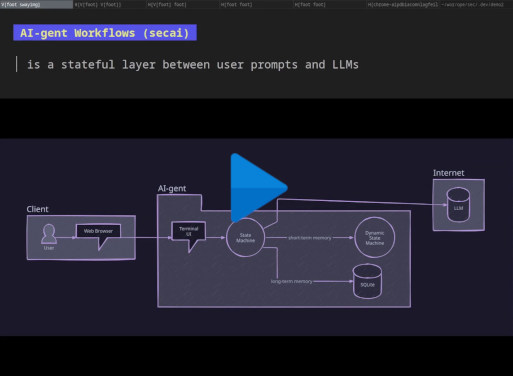
> [!NOTE]
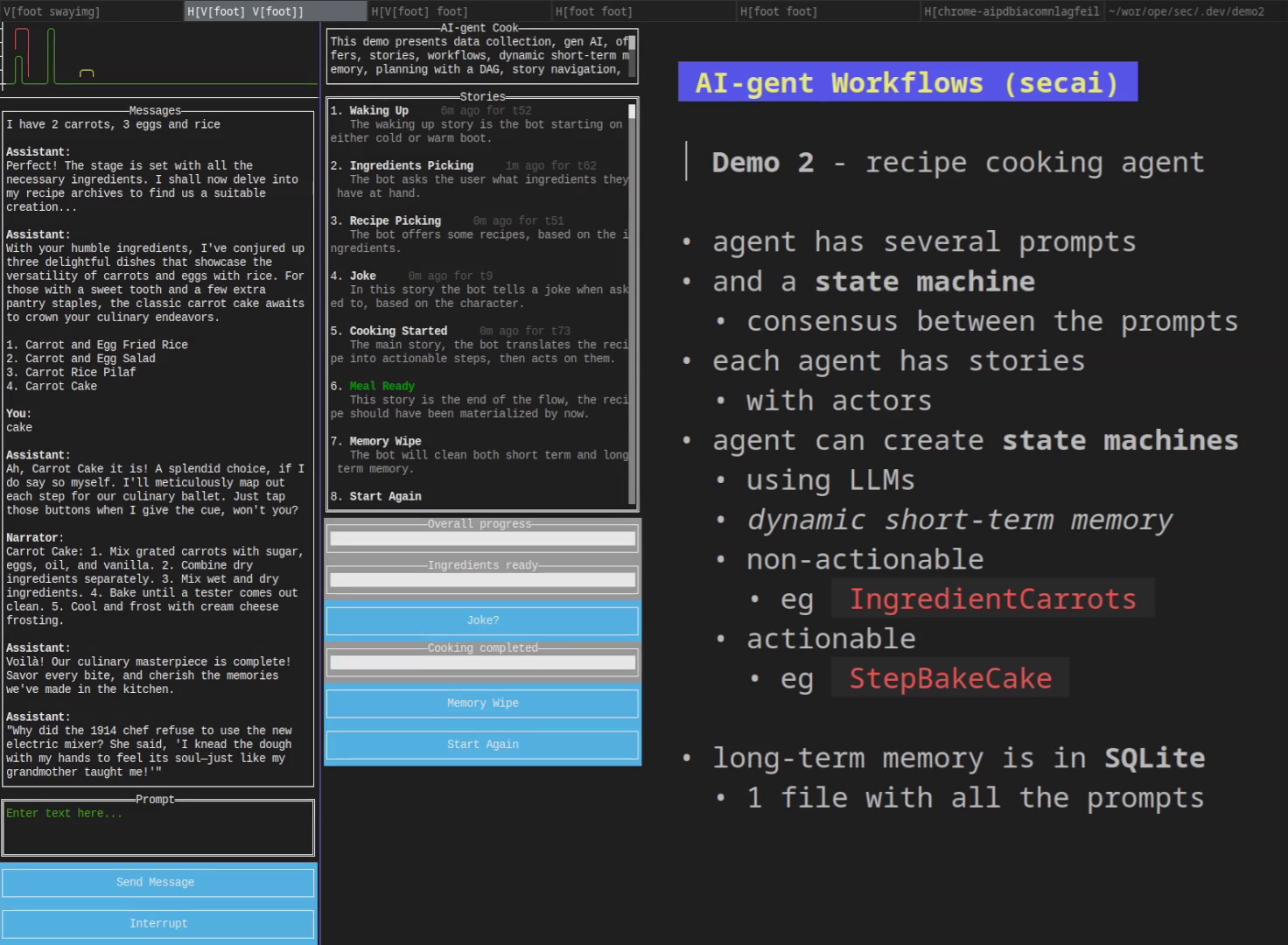
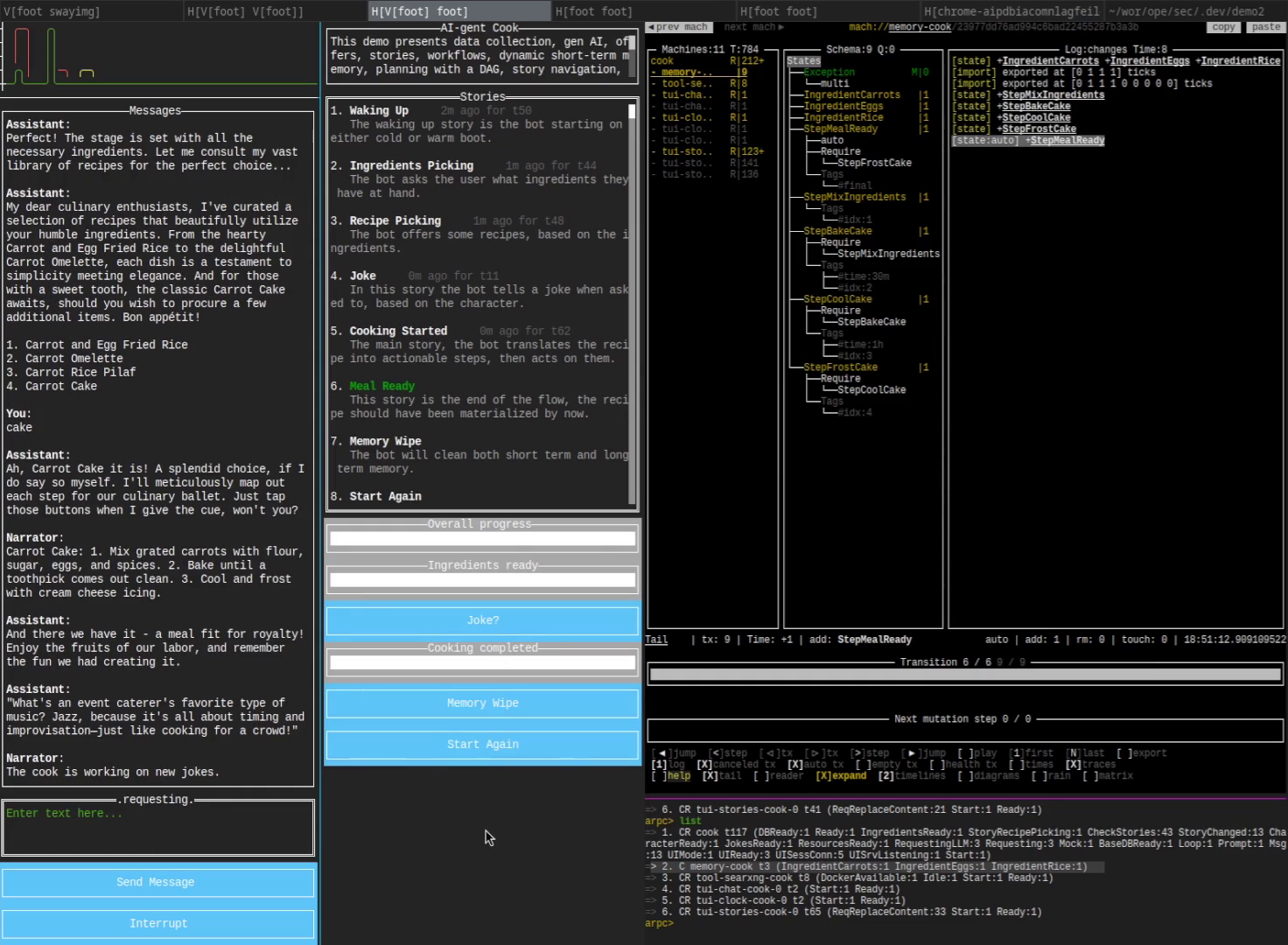
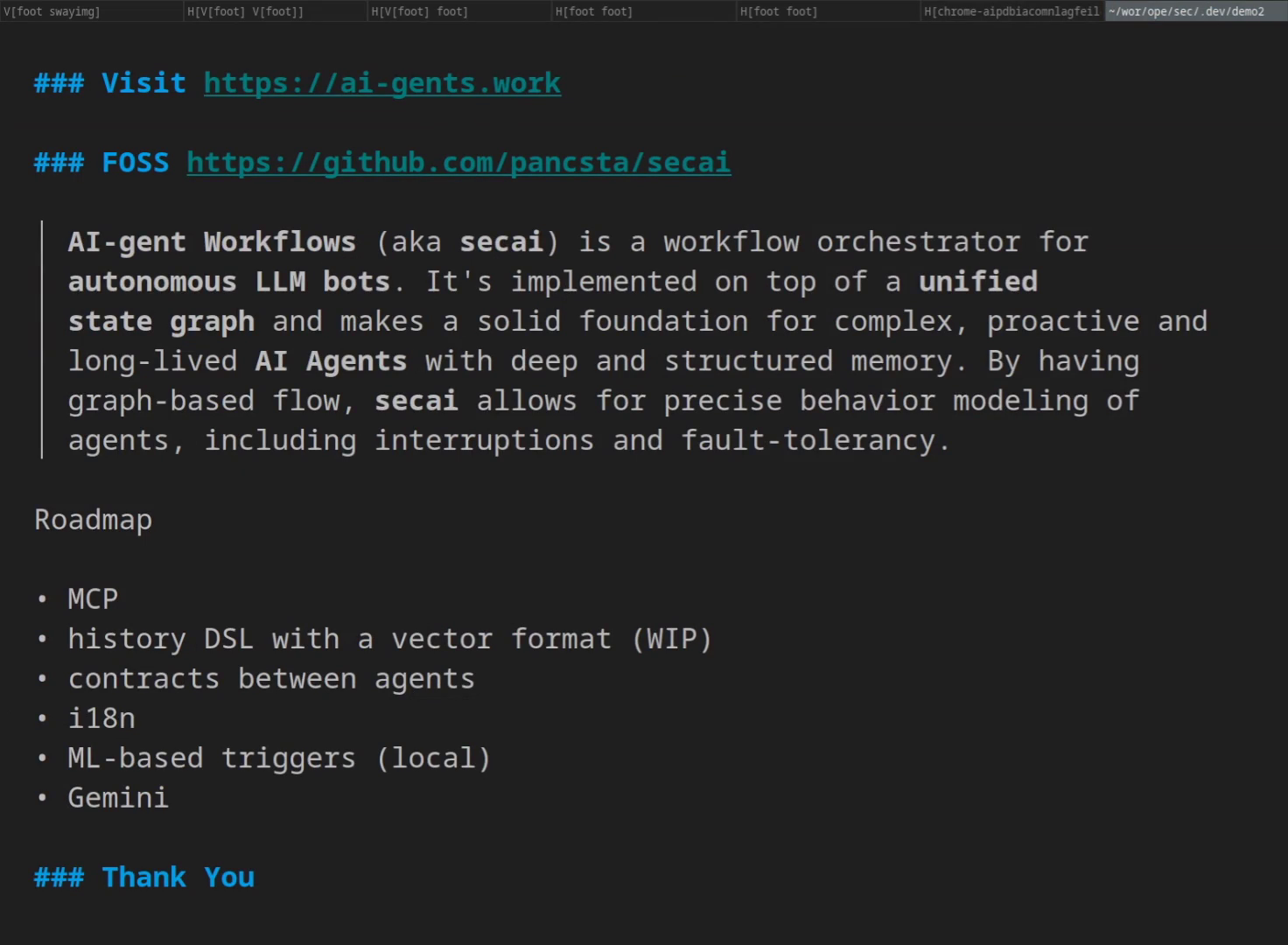
> User demo (7m captions-only) showcasing a cooking assistant which helps to pick a recipe from ingredients AND cook it.
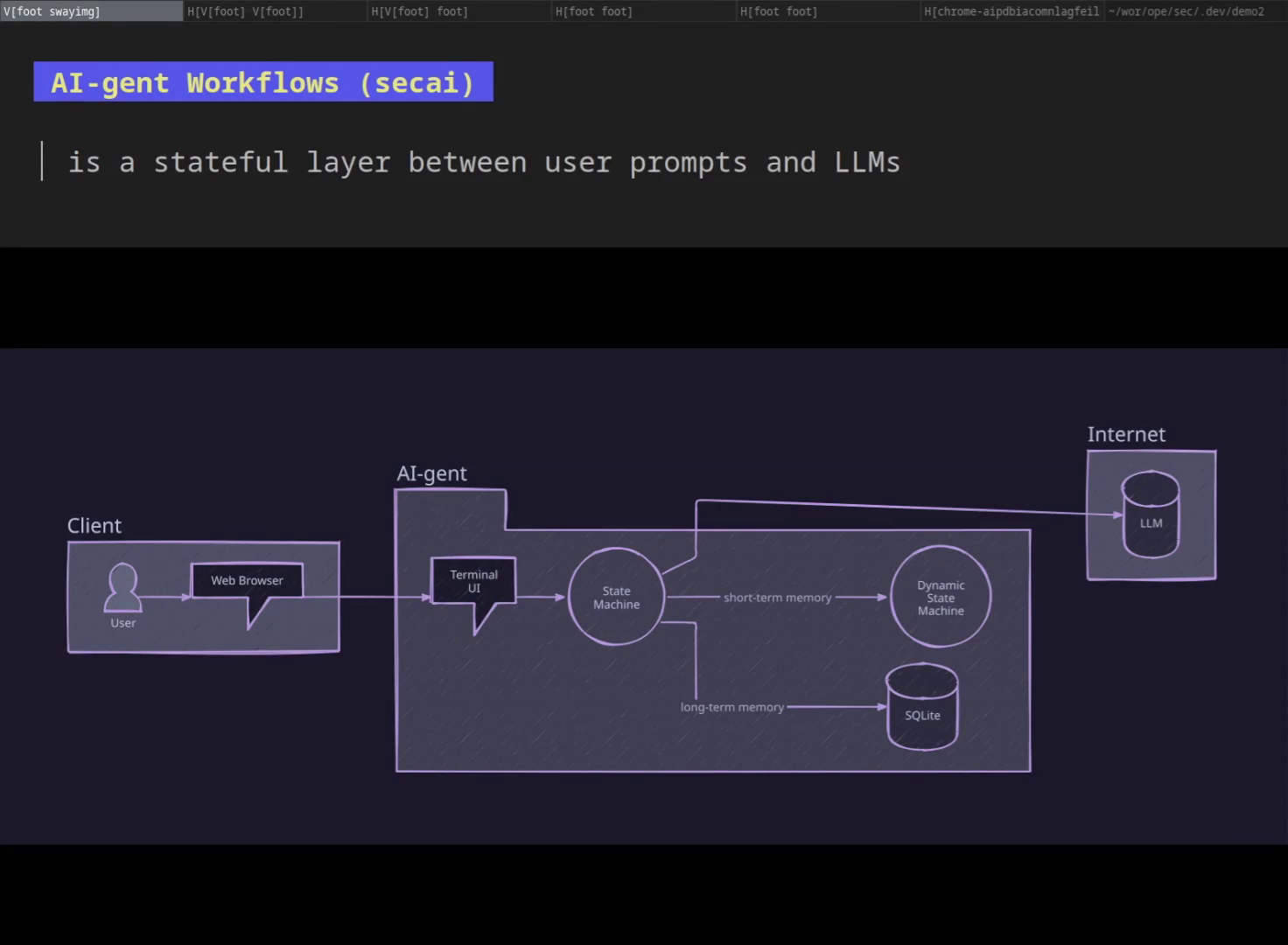
Click to see screenshots
Intro
AI-gent Cook
Debugger 1
Debugger 2
Memory & Stories
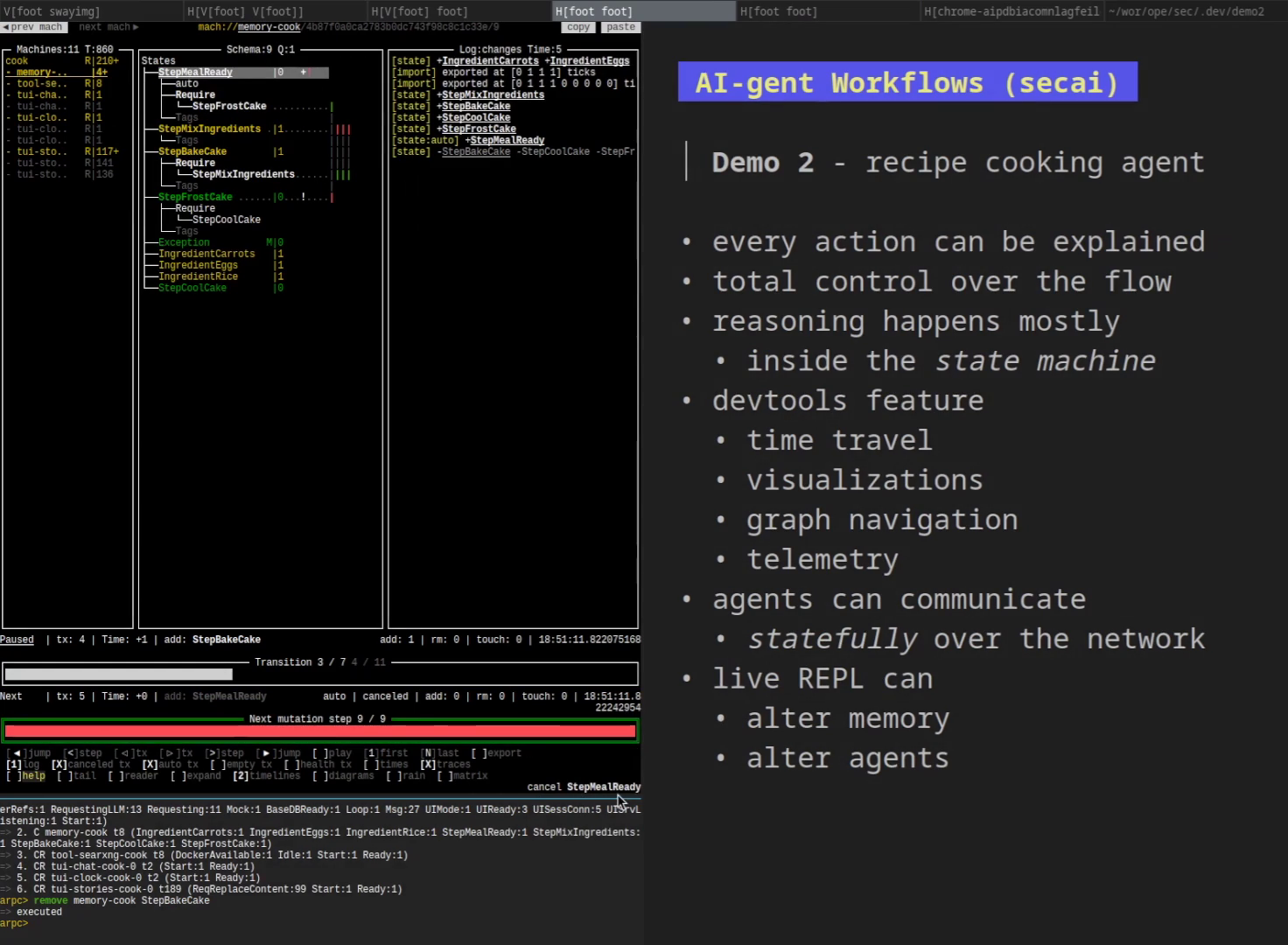
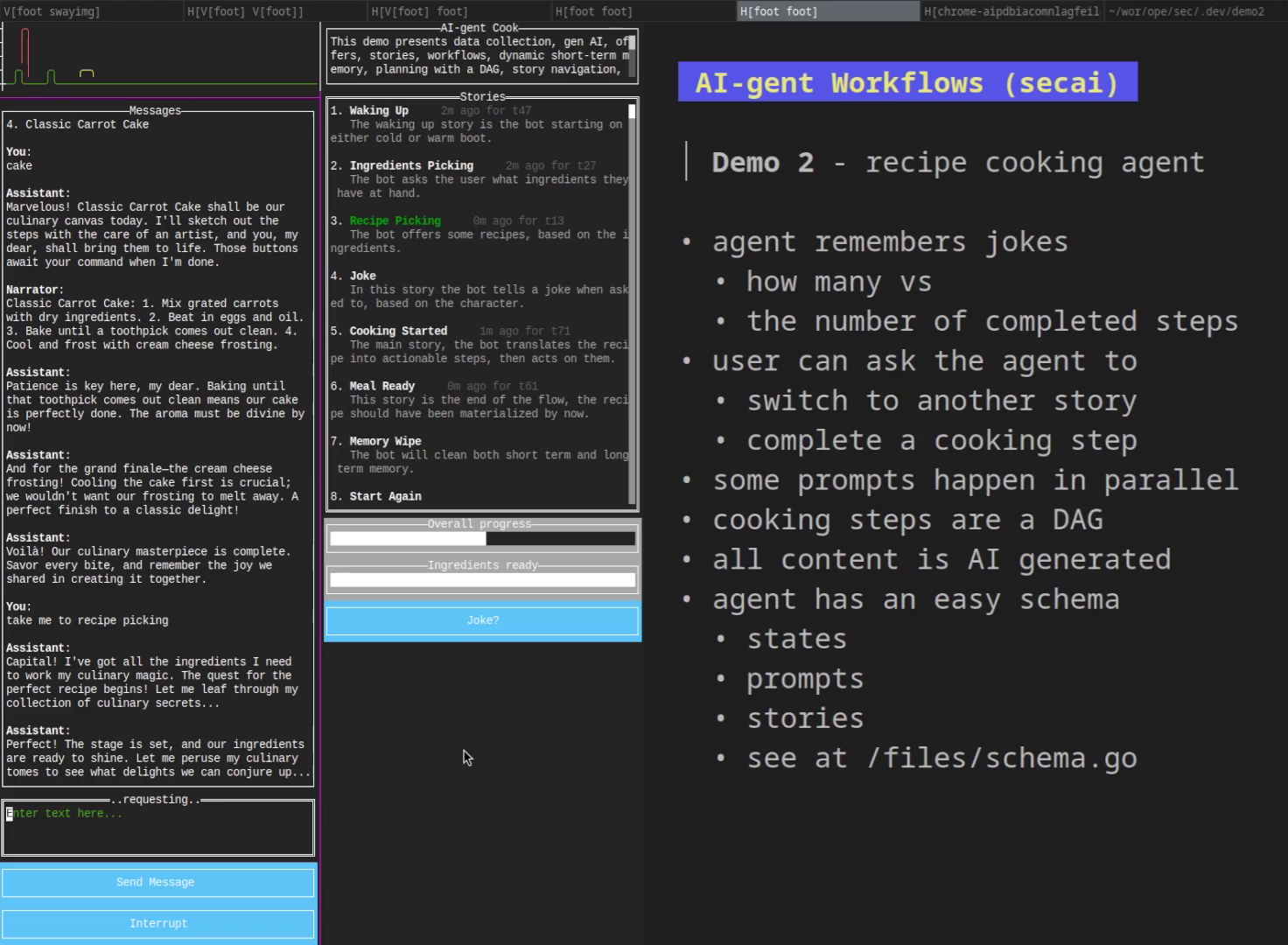
User Interfaces
Outro

Diagram

## v0.1 - Platform Demo
Screenshots and [YouTube](https://youtu.be/0VJzO1S-gV0) are also available.
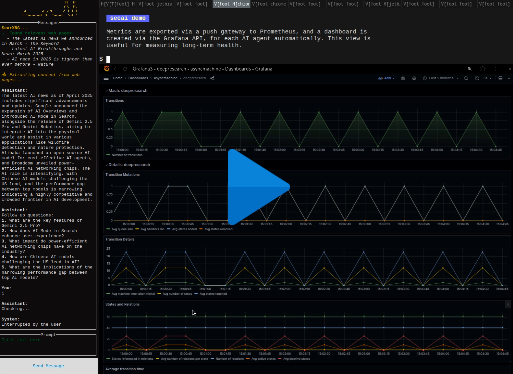
> [!NOTE]
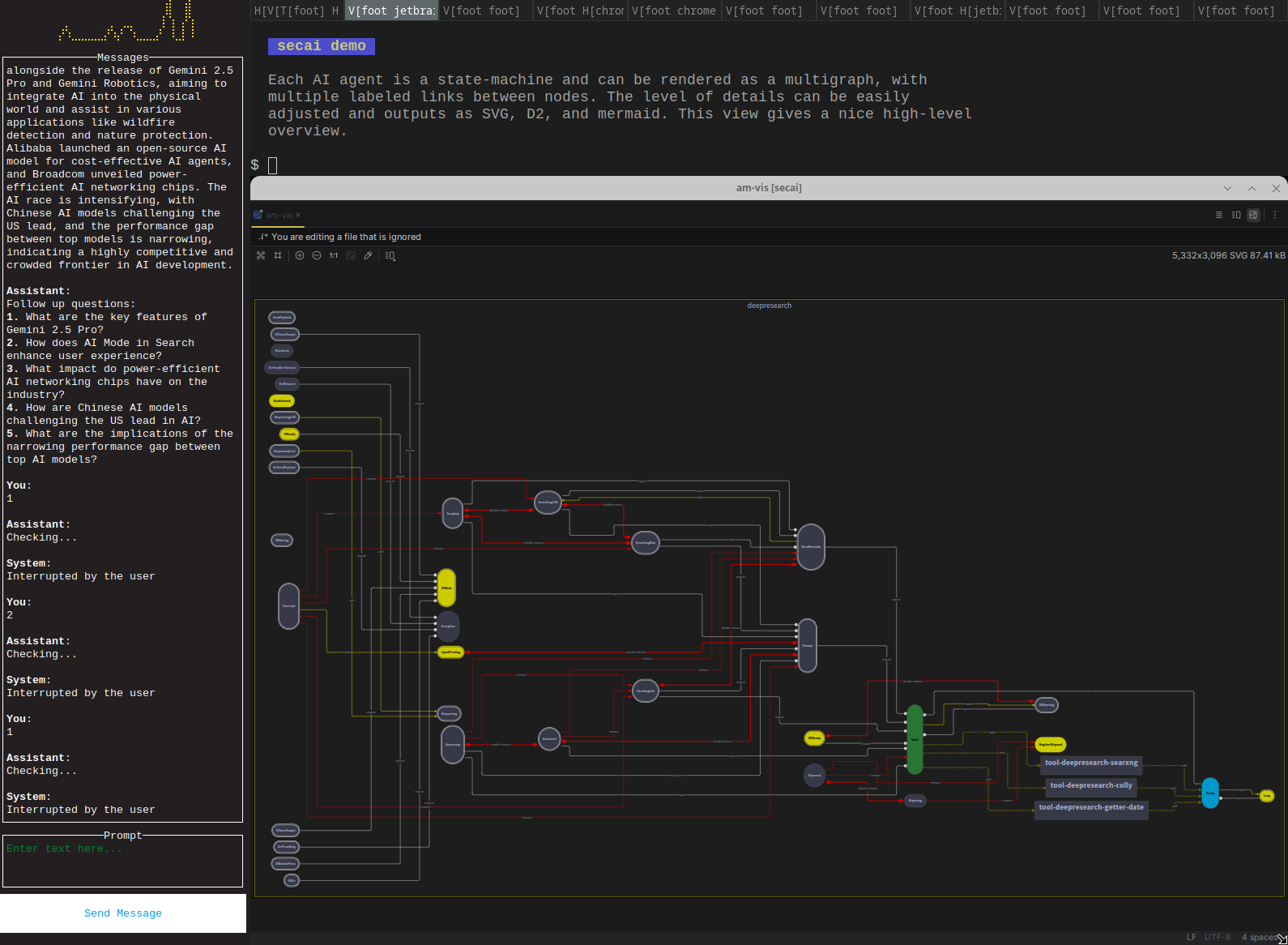
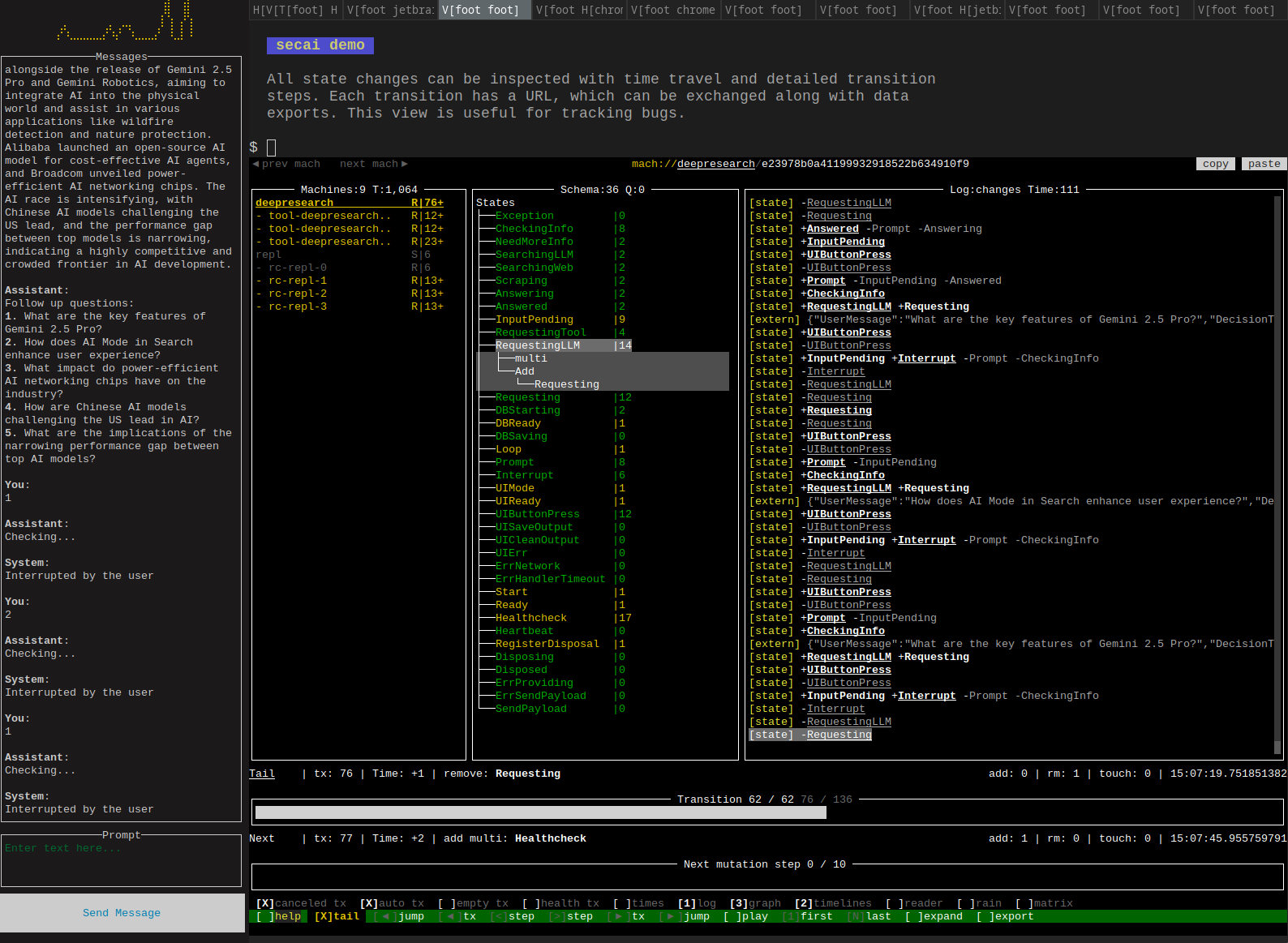
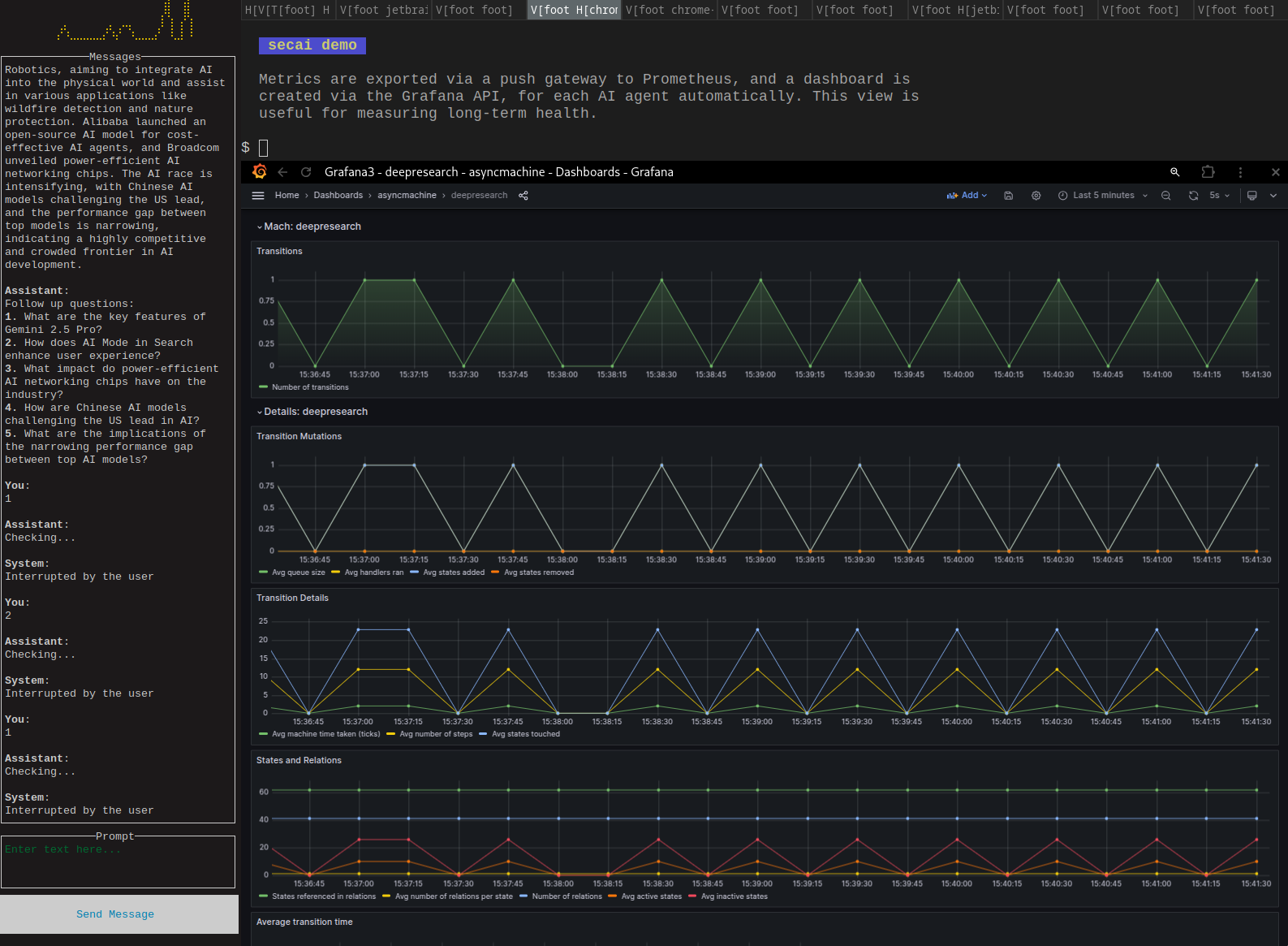
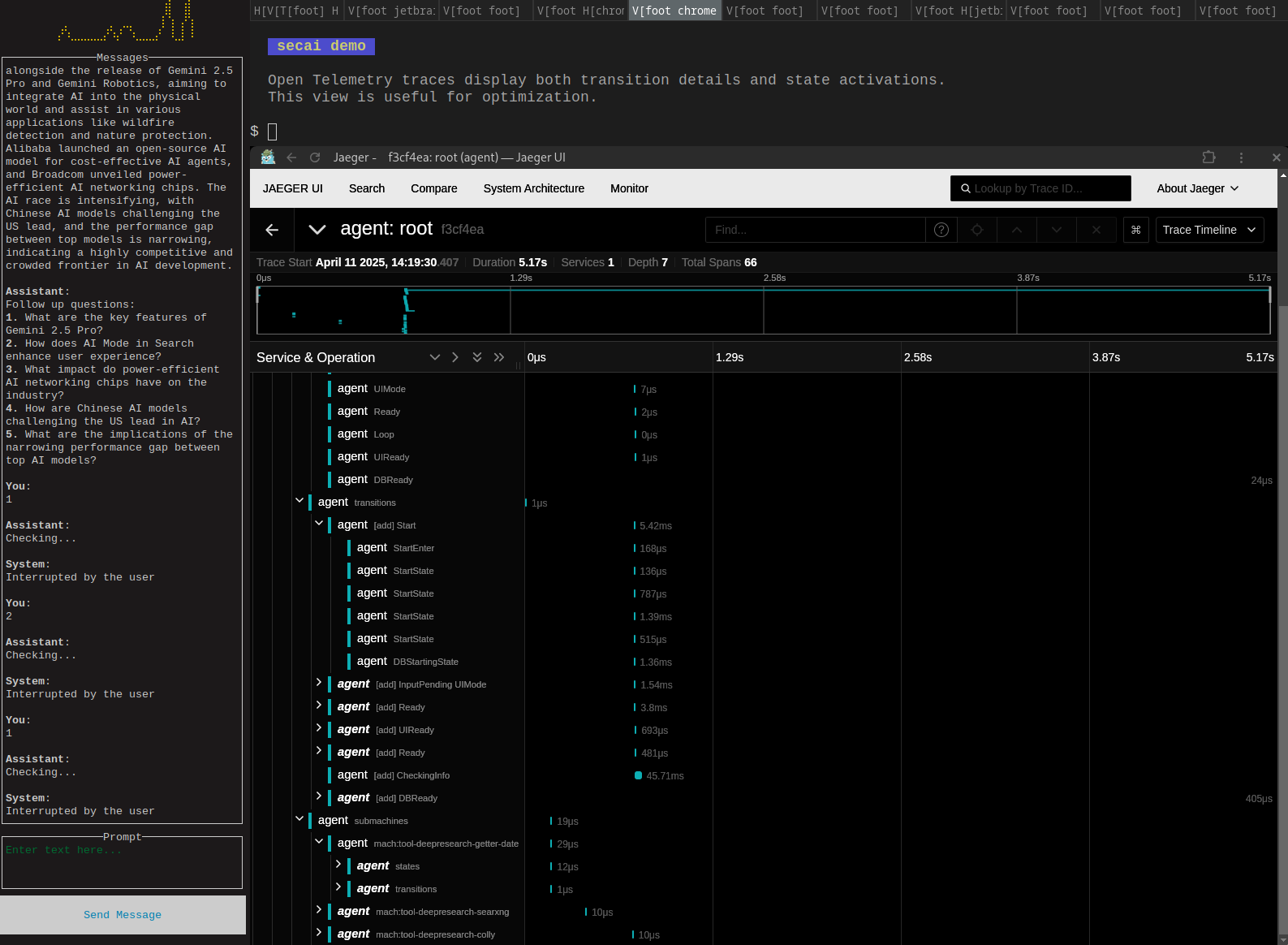
> Platform demo (5m captions-only), showcasing all nine ways an agent can be seen, in addition to the classic chat view.
Click to see screenshots
SVG graph
am-dbg
Grafana
Jaeger
REPL
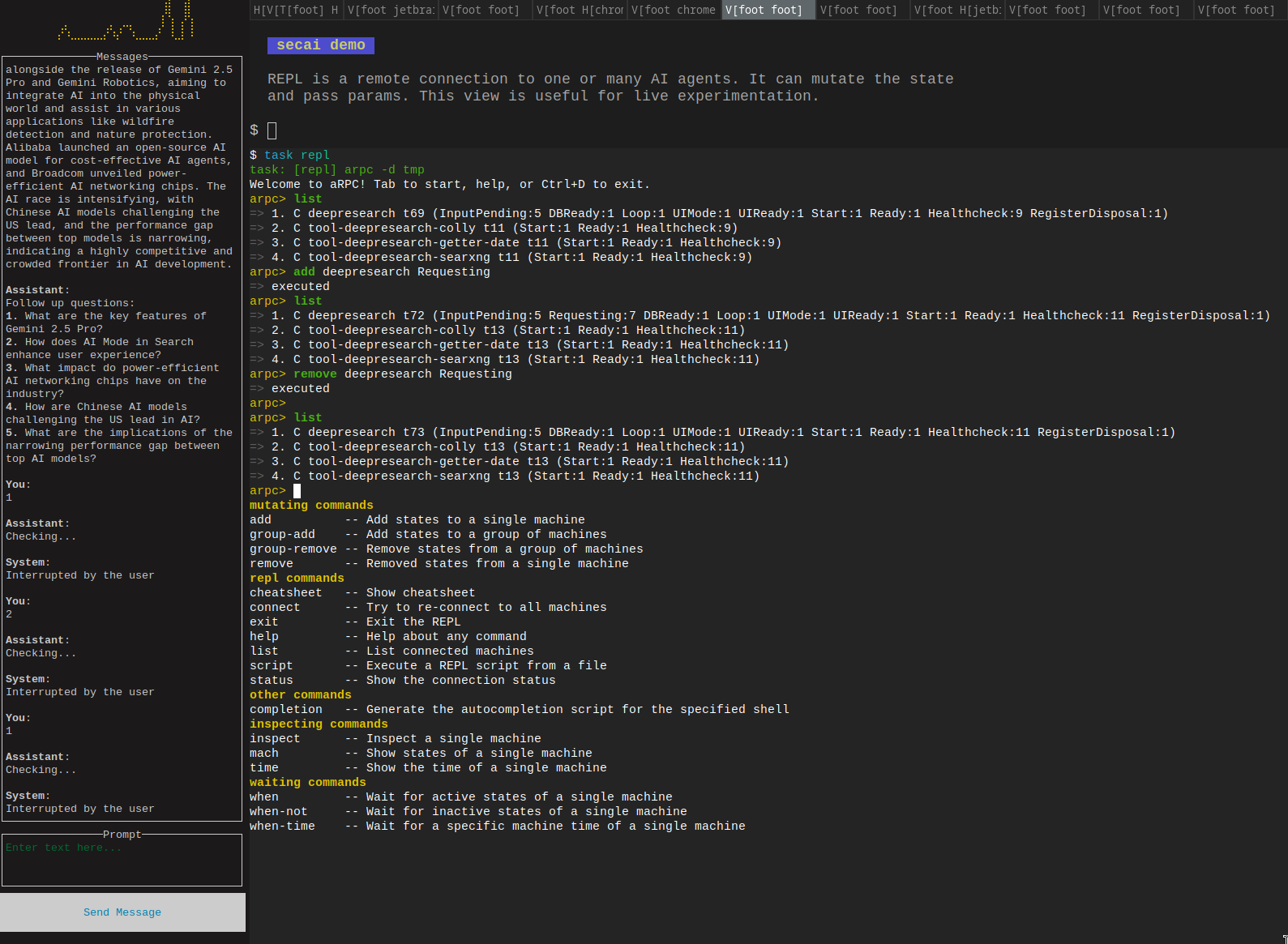
SQL
IDE
Bash
Prompts
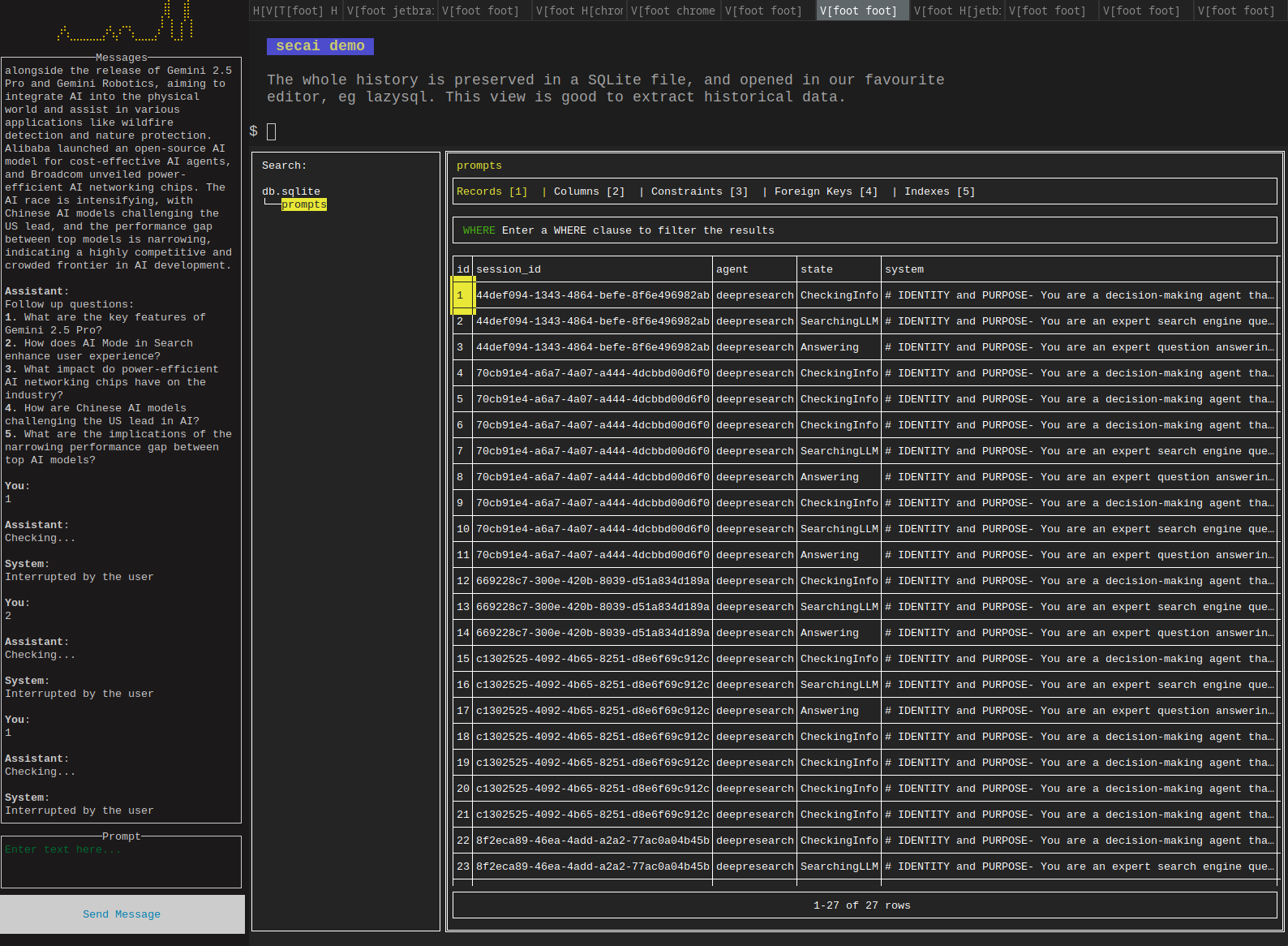
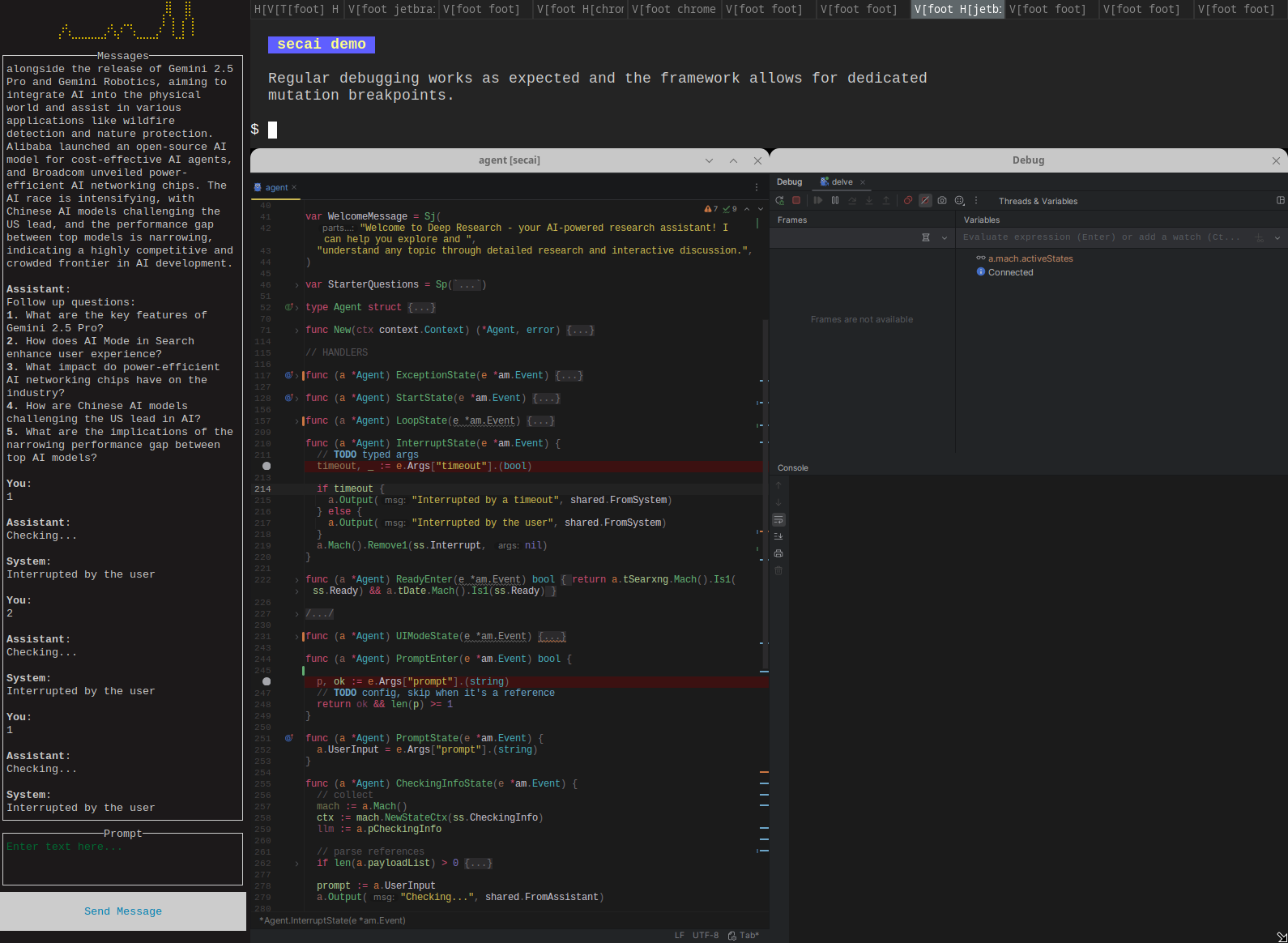
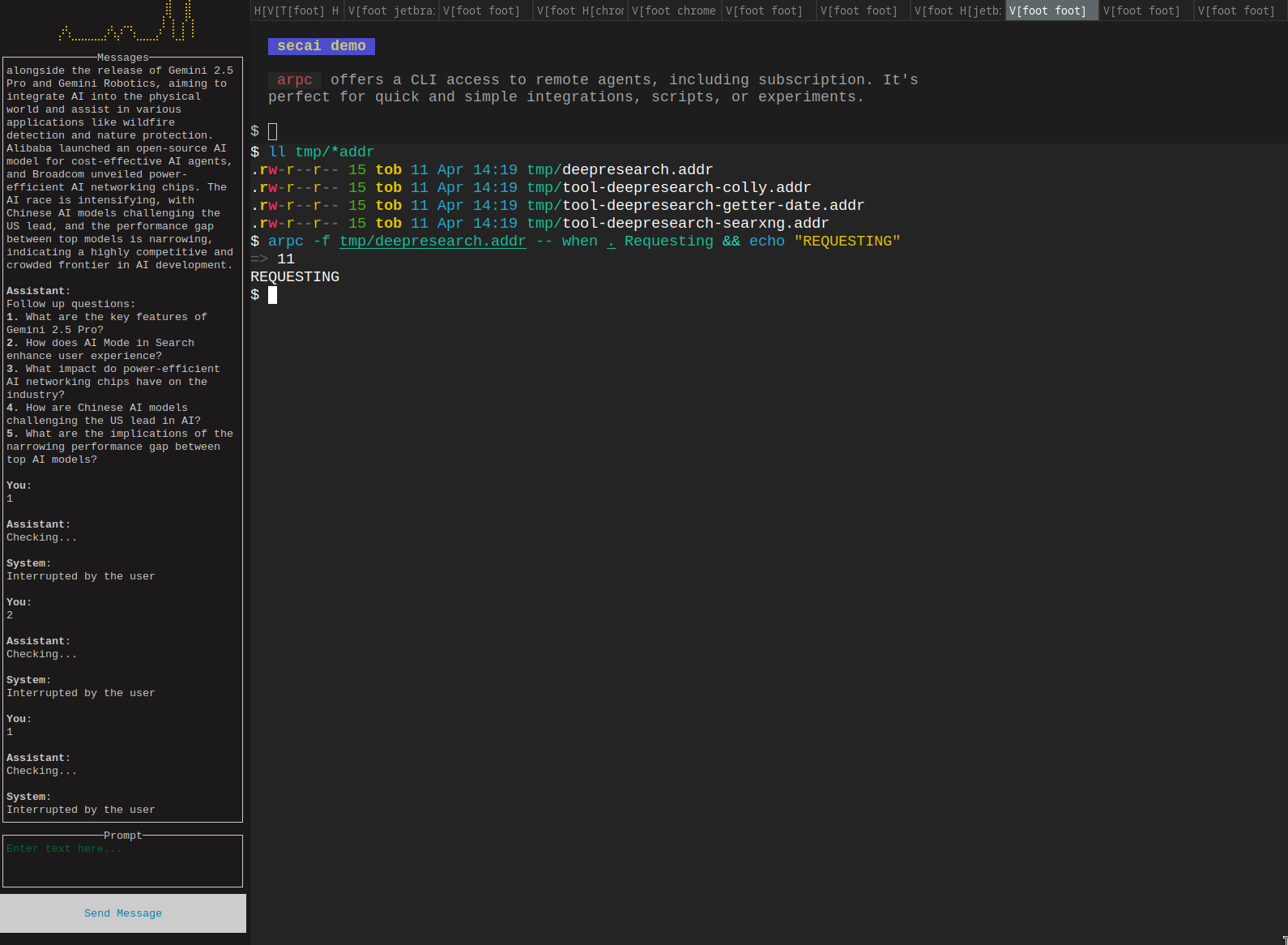
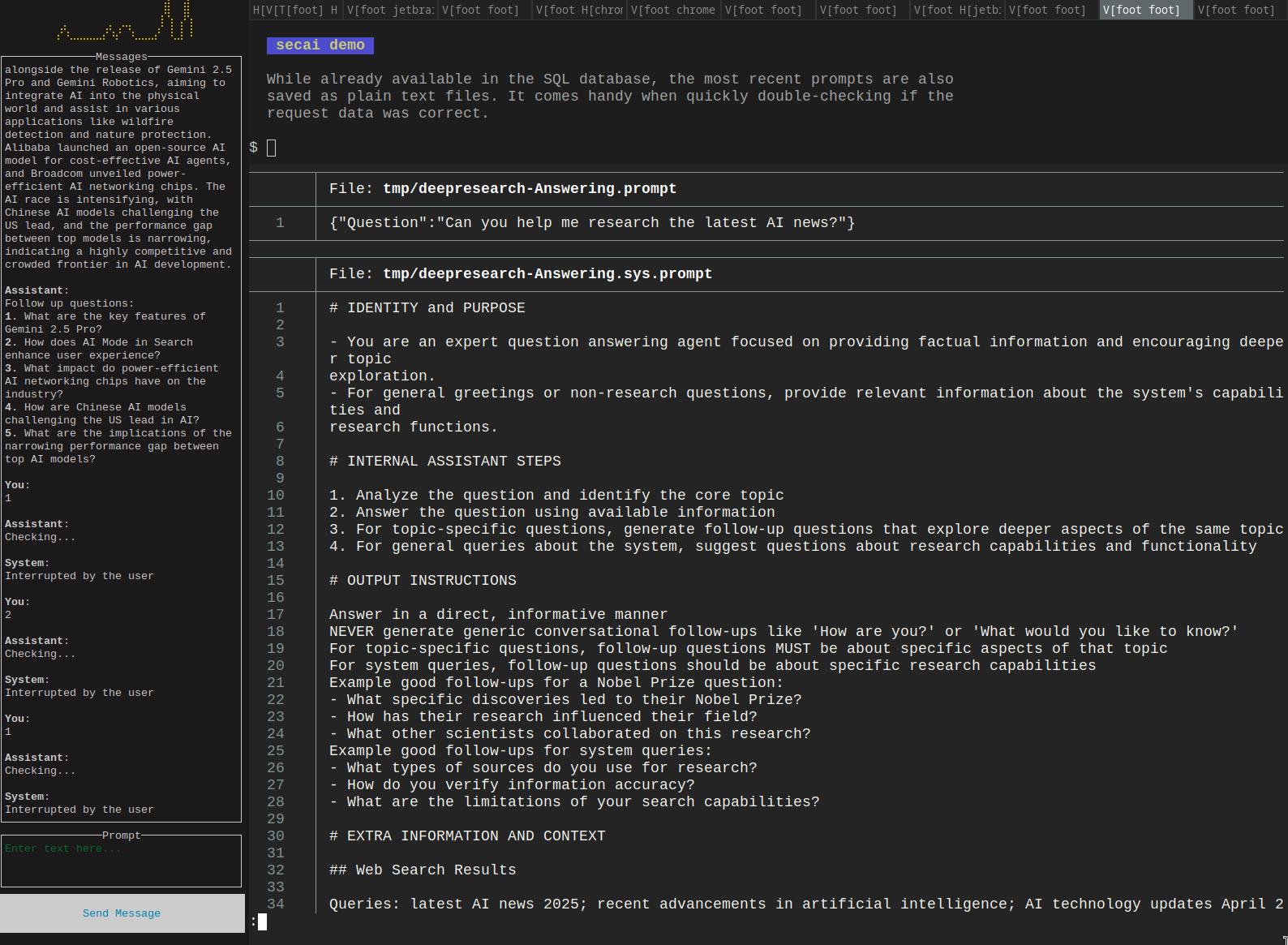
Diagram
## Features
- multi-prompt agency
- a single agent/bot is built of several AI prompts
- each state can have a prompt bound to it, with dedicated history and documents
- atomic consensus with relations and negotiation
- eg states excluding each other can't be active simultaneously
- dedicated DSL layer for bot schema
- suitable for non-coding authors
- structured prompt input/output via JSON schemas
- declarative flow definitions for non-linear flows
- cancellation support (interrupts)
- choice menu (list of offers)
- prompt history
- embedded SQLite
- JSONL log
- "latest prompt" files
- proactive stories with actors
- stories have actions and progress
- LLM-sourced story switching (orienting)
- on prompts and timeouts
- dynamic flow graph for the memory
- LLM creates an actionable state-machine
- TUIs and WebAssembly PWAs for user interfaces
### Goals
- precision
- correctness
- granular debugging
### Devtools
All devtools are available on the web, some also as TUIs, and some as regular files. Everything is shipped as a single
file.
- debugger
- REPL
- diagrams (D2 SVGs)
- DB browser
- log viewer
- observability (OpenTelemetry, Prometheus, Loki)
### Tools
- websearch (dockerized [searxng](https://github.com/searxng/searxng))
- HTML scrape (embedded [colly](https://github.com/gocolly/colly))
## Implementation
- Golang & WASM
- [asyncmachine-go](https://asyncmachine.dev) for graph control flow
- [instructor-go](https://github.com/instructor-ai/instructor-go) for AI APIs
- [invopop/jsonschema](https://github.com/invopop/jsonschema) for prompt schemas
- [aRPC](https://asyncmachine.dev/rpc) for network transparency
- a single agent can span across multiple servers and browsers
- [cview](https://codeberg.org/tslocum/cview) for TUIs
- [go-app](https://go-app.dev/) for web UIs
- [ncruces](https://github.com/ncruces/go-sqlite3) for SQLite
### Architecture
- Agent (actor)
- state-machine schema
- prompts
- tools
- Tool (actor)
- state-machine schema
- Memory
- state-machine schema
- Prompt (state)
- params schema
- result schema
- history log
- documents
- Stories (state)
- actors (state machines)
- actions
- progress
- Document
- title
- content
## Try It
- [Download a binary release](https://github.com/pancsta/secai/releases/latest) of AI-gent Cook (Linux, macOS, Windows)
```markdown
$ ./ai-gent-cook
AI-gent Cook v0.5.0
Web:
- http://localhost:12854
- http://localhost:12854/agent
Files:
- config: config.kdl
- log: tmp-cook/cook.jsonl
TUI:
- http://localhost:7856
- ssh localhost -p 7955 -o UserKnownHostsFile=/dev/null -o StrictHostKeyChecking=no
REPL:
- http://localhost:13179
- ./cook repl
Log:
- http://localhost:12858
- ./cook log --tail
- tail -f tmp-cook/cook.jsonl -n 100 | fblog -d -x msg -x time -x level
Debugger:
- http://localhost:13178
- files: http://localhost:13171
- ssh localhost -p 13172 -o UserKnownHostsFile=/dev/null -o StrictHostKeyChecking=no
DB:
- Base: http://localhost:13180
- Agent: http://localhost:13181
- History: http://localhost:13182
https://AI-gents.work
```
## Schema Examples
Code snippets from state and prompt schemas of `examples/cook`. Both schemas are pure and debuggable Golang code.
### State Schema
```go
// CookStatesDef contains all the states of the Cook state machine.
type CookStatesDef struct {
*am.StatesBase
// ...
// prompts
RestoreJokes string
GenJokes string
JokesReady string
GenSteps string
// StepsReady implies the steps have been translated into actionable memory.
StepsReady string
GenStepComments string
StepCommentsReady string
// inherit from AgentLLM
*ssllm.AgentLLMStatesDef
}
// ...
// CookSchema represents all relations and properties of CookStates.
var CookSchema = SchemaMerge(
// inherit from AgentLLM
ssllm.LLMAgentSchema,
am.Schema{
// gen AI
ssC.RestoreJokes: {
Auto: true,
Require: S{ssC.DBReady, ssC.CharacterReady},
Remove: sgC.Jokes,
},
ssC.GenJokes: {
Require: S{ssC.CharacterReady, ssC.DBReady},
Remove: sgC.Jokes,
Tags: S{ssbase.TagPrompt},
},
ssC.JokesReady: {Remove: sgC.Jokes},
ssC.GenSteps: {
Auto: true,
Require: S{ssC.StoryCookingStarted},
Remove: S{ssC.StepsReady},
Tags: S{ssbase.TagPrompt},
},
ssC.StepsReady: {
Require: S{ssC.RecipeReady},
Remove: S{ssC.GenSteps},
},
ssC.GenStepComments: {
Auto: true,
Require: S{ssC.StoryCookingStarted, ssC.StepsReady},
Remove: S{ssC.StepCommentsReady},
Tags: S{ssbase.TagPrompt},
},
ssC.StepCommentsReady: {Remove: S{ssC.GenStepComments}},
ssC.Orienting: {
Multi: true,
Tags: S{ssbase.TagPrompt},
},
ssC.OrientingMove: {},
})
```
### Prompt Schema
The comments attached to `Params*` and `Result*` are sent over to AI models.
```go
// RECIPE
type PromptRecipePicking = secai.Prompt[ParamsRecipePicking, ResultRecipePicking]
func NewPromptRecipePicking(agent shared.AgentBaseAPI) *PromptRecipePicking {
return secai.NewPrompt[ParamsRecipePicking, ResultRecipePicking](
agent, ss.StoryRecipePicking, `
- You're a database of cooking recipes.
`, `
1. Suggest recipes based on user's ingredients.
2. If possible, find 1 extra recipe, which is well known, but 1-3 ingredients are missing.
3. Summarize the propositions using the character's personality.
`, `
- Limit the amount of recipes to the requested number (excluding the extra recipe).
- Include an image URL per each recipe
`)
}
type Recipe struct {
Name string
Desc string
Steps string
}
type ParamsRecipePicking struct {
// List of available ingredients.
Ingredients []Ingredient
// The number of recipes needed.
Amount int
}
type ResultRecipePicking struct {
// List of proposed recipes
Recipes []Recipe
// Extra recipe with unavailable ingredients.
ExtraRecipe Recipe
// Message to the user, summarizing the recipes. Max 3 sentences.
Summary string
}
// ...
var StoryRecipePicking = &shared.Story{
StoryInfo: shared.StoryInfo{
State: ss.StoryRecipePicking,
Title: "Recipe Picking",
Desc: "The bot offers some recipes, based on the ingredients.",
},
Agent: shared.StoryActor{
Trigger: amhelp.Cond{
Is: am.S{ss.Ready, ss.IngredientsReady},
Not: am.S{ss.RecipeReady},
},
},
}
```
Read the full [state schema](examples/cook/states/ss_cook.go) and [prompt schema](examples/cook/schema/sa_cook.go).
## Documentation
- secai: [API](https://pkg.go.dev/github.com/pancsta/secai) / [Docs](https://github.com/pancsta/secai/wiki/Developer-Docs)
- [asyncmachine-go](https://asyncmachine.dev): [API](https://pkg.go.dev/github.com/pancsta/asyncmachine-go/pkg/machine) / [Docs](https://github.com/pancsta/asyncmachine-go/blob/main/docs/manual.md)
- [instructor-go](https://github.com/instructor-ai/instructor-go): [API](https://pkg.go.dev/github.com/instructor-ai/instructor-go) / [Docs](https://go.useinstructor.com/)
- [cview](https://codeberg.org/tslocum/cview): [API](https://pkg.go.dev/codeberg.org/tslocum/cview)
## Getting Started
We can use one of the examples as a starting template. It allows for further semver updates of the base framework.
1. Choose the source example
- `export SECAI_EXAMPLE=cook`
- `export SECAI_EXAMPLE=research` (broken since `v0.4.0`)
2. `git clone https://github.com/pancsta/secai.git`
3. install task `./secai/scripts/deps.sh`
4. copy the agent `cp -R secai/examples/$SECAI_EXAMPLE MYAGENT`
5. `cd MYAGENT && go mod init github.com/USER/MYAGENT`
6. get fresh configs
1. `task sync-taskfile`
2. `task sync-configs`
7. start it `task start`
8. look around `task --list-all`
9. configure the bot `$EDITOR config.kdl`
## Differences
**secai** differs from other AI agents / workflows frameworks in the way it treats AI prompts. Most frameworks call each
prompt an "agent", while **secai** treats prompts as simple DB queries with IoC (Inversion of Control). Tool usage
happens manually through typesafe params / results. This approach increases determinism, safety, and overfall control.
This multi-prompt workflow forms an actual **bot** / **agent**. This does not mean agents can't be composed into larger
groups, which happens simply on the state level (via piping / aRPC), as the underlying workflow engine (asyncmachine)
doesn't depend on AI at all.
The flow graph, unlike in regular workflows, is not path-based - each node (state) can be activated anytime (same as calling a function),
and the edges between nodes are meant to resolve the **state consensus**. It's a directed multi-graph of states with a
negotiation phase.
## Scripting
`arpc` offers CLI access to remote agents, including subscription. It's perfect for quick and simple integrations, scripts, or experiments.
Example: `$ arpc -f tmp/research.addr -- when . Requesting && echo "REQUESTING"`
1. Connect to the address from `tmp/research.addr`
2. When the last connected agent (`.`) goes into state `Requesting`
3. Print "REQUESTING" and exit
## License
To help keep AI open, this project migrated to **GPL** starting from `v0.3.0`.
## Acknowledgements
- [AtomicAgents](https://github.com/BrainBlend-AI/atomic-agents)
- [SecretAgent Soma.fm](https://somafm.com/secretagent/)

