https://github.com/potatohd404/py-exceptions
A simple python exception reporter
https://github.com/potatohd404/py-exceptions
aws-lambda python serverless
Last synced: over 1 year ago
JSON representation
A simple python exception reporter
- Host: GitHub
- URL: https://github.com/potatohd404/py-exceptions
- Owner: PotatoHD404
- License: mit
- Created: 2021-08-10T17:08:36.000Z (almost 5 years ago)
- Default Branch: main
- Last Pushed: 2021-08-19T08:43:51.000Z (almost 5 years ago)
- Last Synced: 2025-03-05T01:46:42.172Z (over 1 year ago)
- Topics: aws-lambda, python, serverless
- Language: Python
- Homepage:
- Size: 729 KB
- Stars: 1
- Watchers: 1
- Forks: 0
- Open Issues: 0
-
Metadata Files:
- Readme: README.md
- License: LICENSE.md
Awesome Lists containing this project
README
# py-exceptions [](https://badge.fury.io/py/py-exceptions)
## *A simple python exception reporter*
### Description
This library provides great stacktrace and web request information like Django does It can save it to html, return html
to your code or even response in AWS lambda format
The library nicely covers all your secret variables and request data in its report
### Screenshots
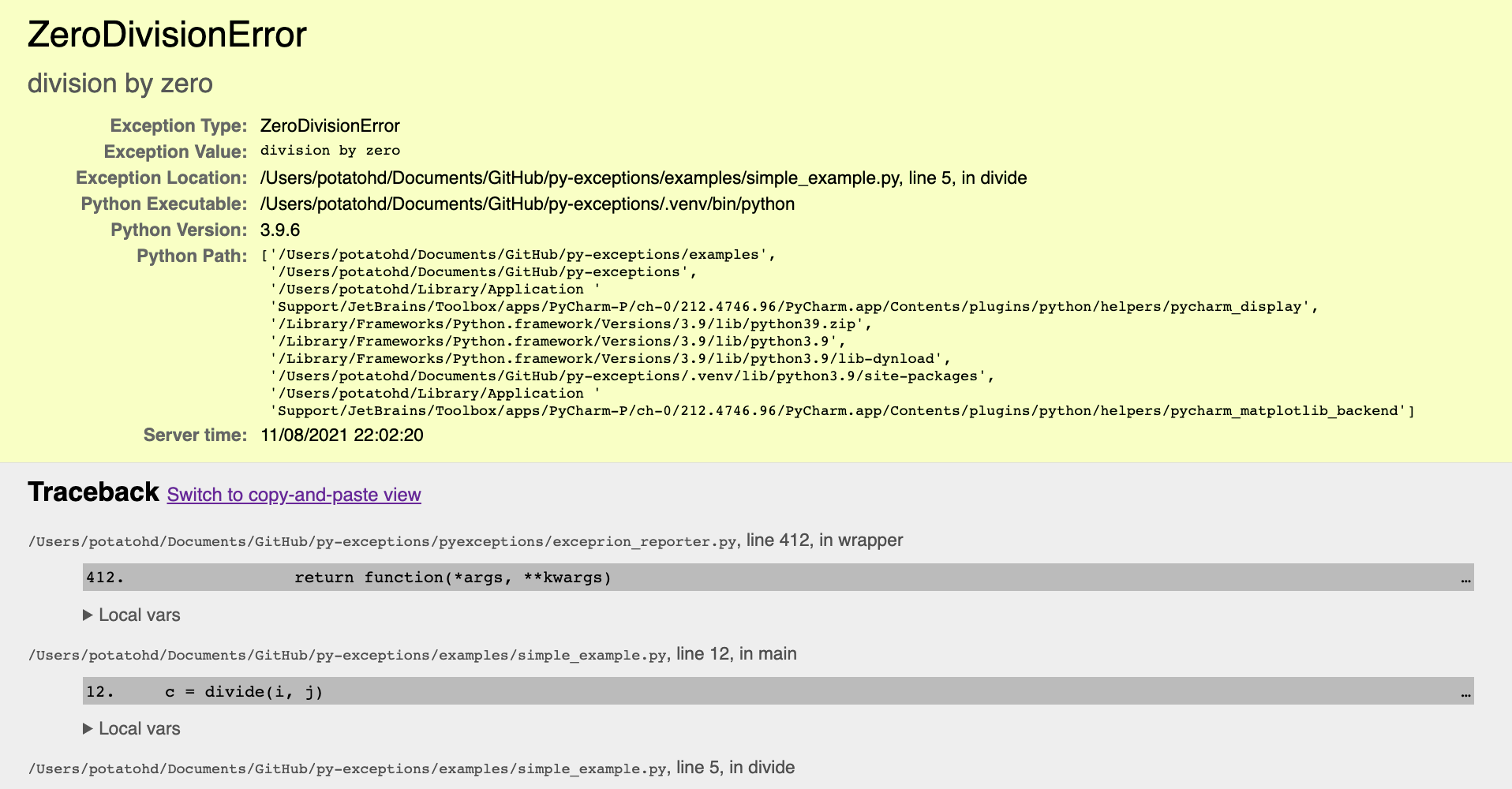
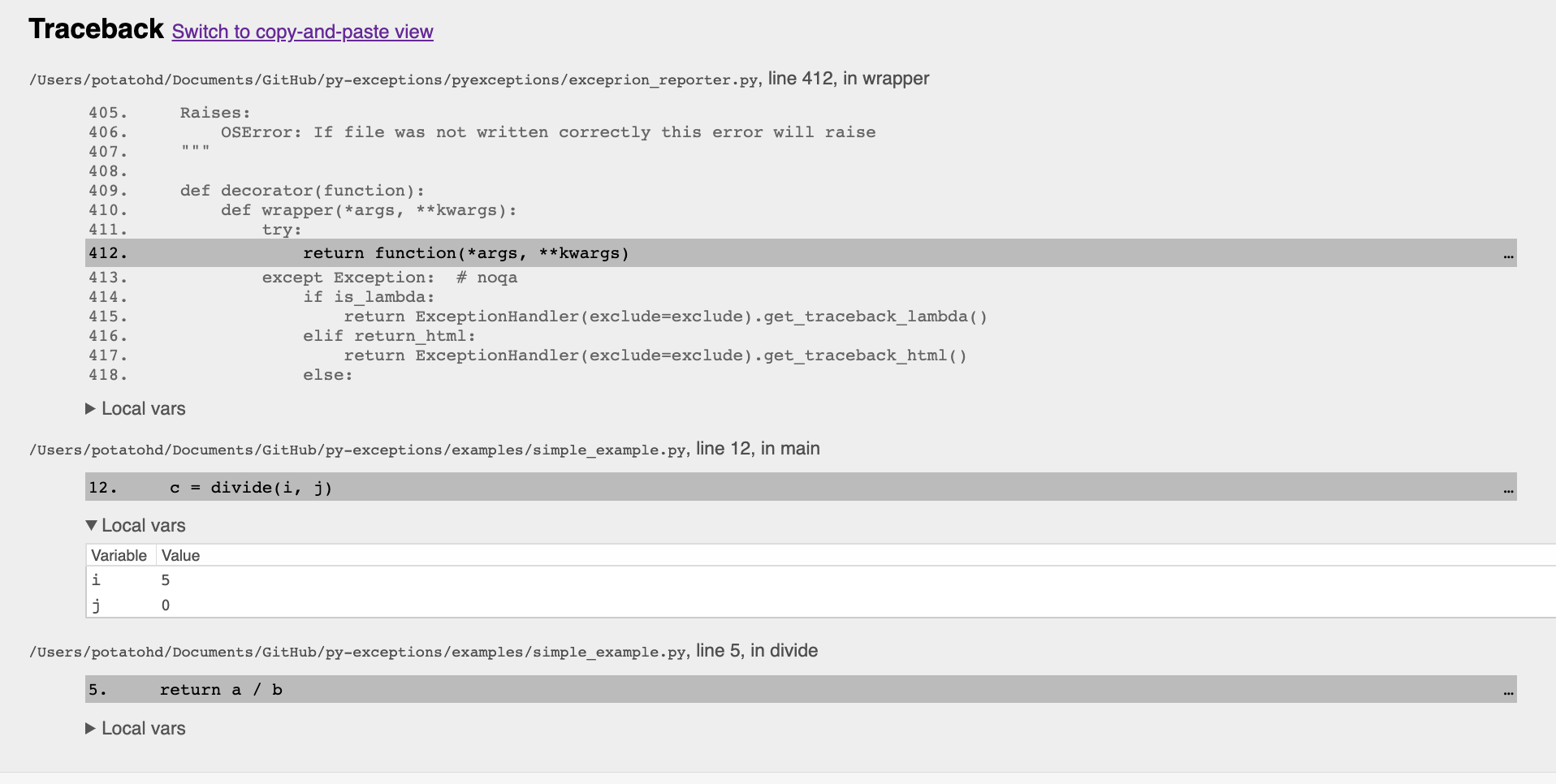
## Quickstart
### Installation
```sh
pip install py-exception
```
### Simple example
Add decorator to function
```python
from pyexceptions import handle_exceptions
def divide(a, b):
return a / b
@handle_exceptions
def main():
i = 5
j = 0
c = divide(i, j)
print(c)
if __name__ == '__main__':
main()
```
You can also override folder for exception reports
```python
from pyexceptions import handle_exceptions
def divide(a, b):
return a / b
@handle_exceptions(exceptions_folder=f'./SomeFolderPath')
def main():
i = 5
j = 0
c = divide(i, j)
print(c)
if __name__ == '__main__':
main()
```
### AWS Lambda example
It is hard to determine what's went wrong when you are using AWS lambda. So you can use the example not only to get full
stacktrace but to get lambda event and context information:
```python
from pyexceptions import handle_exceptions
@handle_exceptions(is_lambda=True)
def lambda_handler(event, context):
message = f"Hello {event['first_name']} {event['last_name']}!"
return {
'message': message
}
```
### Exclude from stacktrace
There may be situations when you don't want to see part of stacktrace
So if your application looks like this:
```python
from pyexceptions import handle_exceptions
def divide(a, b):
return a / b
def real_main():
i = 5
j = 0
c = divide(i, j)
print(c)
def wrapper():
real_main()
@handle_exceptions(exclude = 3)
def main():
wrapper()
if __name__ == '__main__':
main()
```
and you want to exclude all stacktrace from main to wrapper
you need to pass `file_name.function_name` as exclude argument
### Other functions
You can also want to use these functions:
Make function that returns HTML and don't save the result:
```python
from pyexceptions import handle_exceptions
@handle_exceptions(save=False)
def main():
...
```
Make function return production html:
```python
from pyexceptions import handle_exceptions
@handle_exceptions(production=True)
def main():
...
```
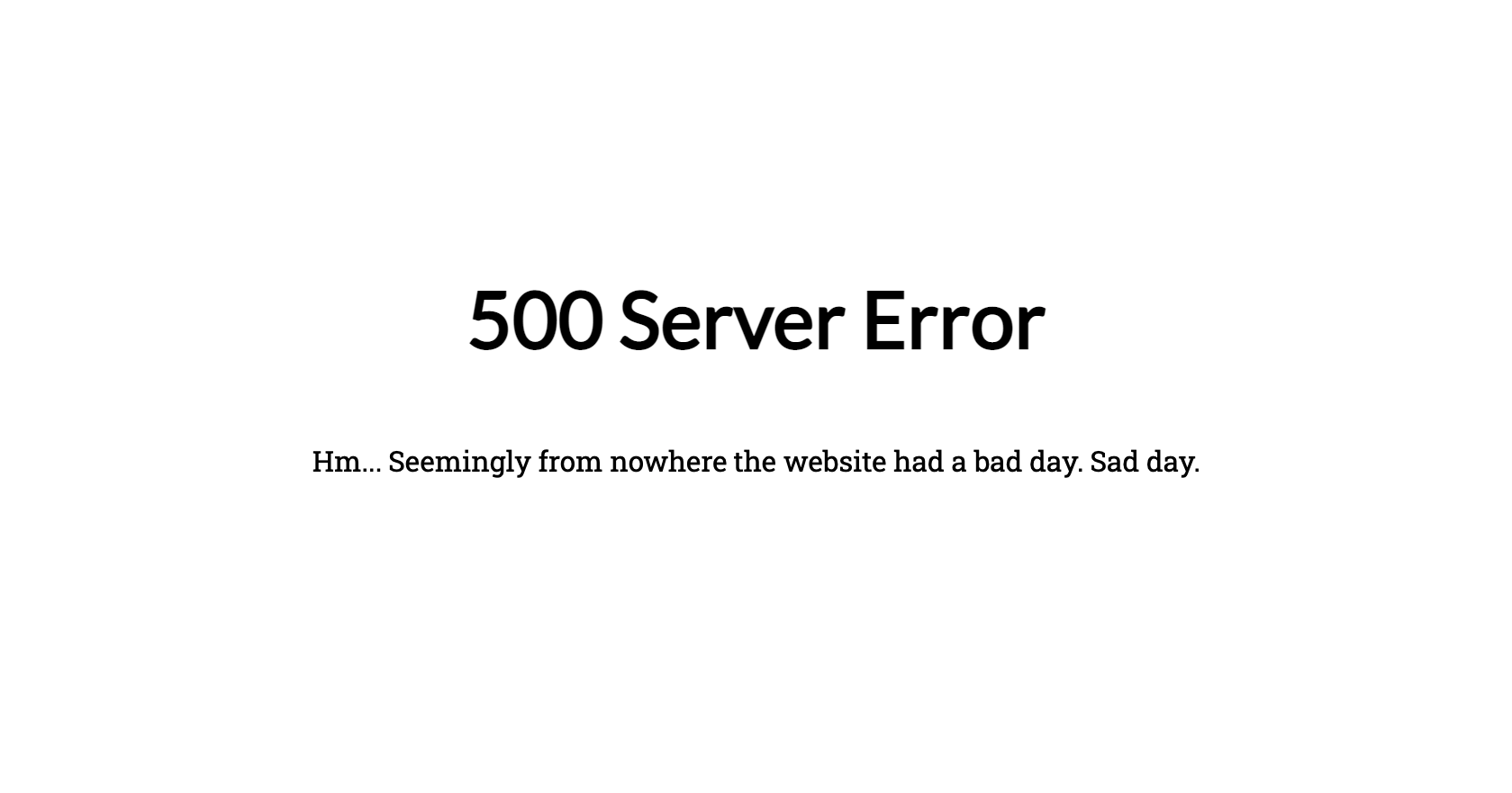
Or you may want to write your own logic To do so you need to import the ExceptionHandler class
```python
from pyexceptions import ExceptionHandler
```
That's how it looks like:
```python
class ExceptionHandler:
"""Organize and coordinate reporting on exceptions."""
def __init__(self, lambda_event: dict = None, context: object = None, exclude: int = 1, production: bool = False):
"""Exception reporter initializer
Args:
lambda_event (dict, optional): AWS lambda event. Defaults to None.
context (object, optional): AWS lambda context. Defaults to None.
exclude (int, optional): Determines how many frames of traceback to exclude. Defaults None.
production (bool, optional): Determines if handler should be enabled. Defaults False.
"""
self.__reporter = ExceptionReporter(lambda_event=lambda_event, context=context, exclude=exclude, # noqa
production=production)
def get_traceback_html(self):
"""Return HTML version of debug 500 HTTP error page."""
return self.__reporter.get_traceback_html()
def get_traceback_lambda(self):
"""Return AWS lambda version of debug 500 HTTP error page."""
return self.__reporter.get_lambda_response()
```
## Attribution
This implementation draws upon work from:
- [Django](https://github.com/django/django)
- [vercel-python-wsgi](https://github.com/ardnt/vercel-python-wsgi)