https://github.com/ratikaewkam/physics-classification
This project was developed as a prototype for future advanced video classification applications in schools or laboratories.
https://github.com/ratikaewkam/physics-classification
neural-networks physics python
Last synced: about 1 month ago
JSON representation
This project was developed as a prototype for future advanced video classification applications in schools or laboratories.
- Host: GitHub
- URL: https://github.com/ratikaewkam/physics-classification
- Owner: ratikaewkam
- License: mit
- Created: 2025-07-29T13:41:50.000Z (11 months ago)
- Default Branch: main
- Last Pushed: 2025-07-31T09:06:07.000Z (11 months ago)
- Last Synced: 2025-08-07T16:48:29.351Z (11 months ago)
- Topics: neural-networks, physics, python
- Language: Jupyter Notebook
- Homepage:
- Size: 826 KB
- Stars: 0
- Watchers: 0
- Forks: 0
- Open Issues: 0
-
Metadata Files:
- Readme: README.md
- License: LICENSE
Awesome Lists containing this project
README
# physics-classification
This project was developed as a prototype for future advanced video classification applications in schools or laboratories.
---
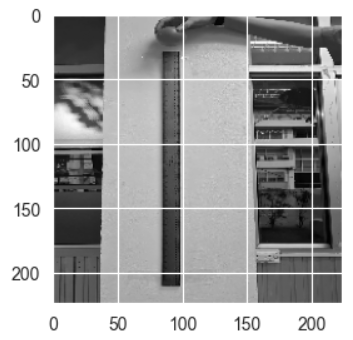
We tested the model using two classification classes:
#### Free Fall
#### Sound vs Fire
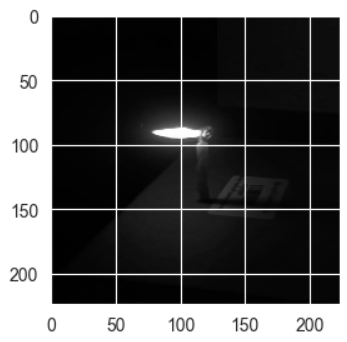
We designed three different neural network models by varying the activation functions, the number of layers, and the number of neurons.
All three models achieved 100% accuracy, but the third model had the fewest parameters, making it the fastest in terms of computation and prediction speed.
### Results
We divided the dataset into four folders: training, testing, validation, and unseen.
- During training and testing, all models performed without any issues.
- However, when we used unseen data—especially videos captured from different camera perspectives (e.g., different zoom levels)—the models struggled to make accurate predictions.
- If the perspective and setup of the unseen video matched the training or testing conditions, the models could still predict correctly, even if that exact video had never been used before.
### Next Steps
In the next phase, I will collaborate with three high school students. I will build the base model, and they will apply it in real-world scenarios. For example, they will integrate the model with a Raspberry Pi.
As for me, if time permits, I plan to explore new approaches to neural network design.
### Credits
- Model Development & Owner of the Sound vs. Fire Dataset: ([Rati Kaewkam](https://github.com/ratikaewkam))
- Raspberry Pi Integration & Owners of the Free Fall Dataset: (Three high school students)