https://github.com/reala10001986/time-circuits-display
Firmware for CircuitSetup's Time Circuits Display kit, known from the Delorean Time Machine
https://github.com/reala10001986/time-circuits-display
bttf circuitsetup clock delorean deloreantimemachine docbrown dtm esp32 mcfly tcd time-machine timecircuits timecircuitsdisplay
Last synced: 4 months ago
JSON representation
Firmware for CircuitSetup's Time Circuits Display kit, known from the Delorean Time Machine
- Host: GitHub
- URL: https://github.com/reala10001986/time-circuits-display
- Owner: realA10001986
- License: other
- Created: 2022-08-04T05:24:49.000Z (almost 4 years ago)
- Default Branch: main
- Last Pushed: 2026-02-16T21:40:10.000Z (5 months ago)
- Last Synced: 2026-02-17T01:13:52.929Z (5 months ago)
- Topics: bttf, circuitsetup, clock, delorean, deloreantimemachine, docbrown, dtm, esp32, mcfly, tcd, time-machine, timecircuits, timecircuitsdisplay
- Language: C
- Homepage: https://circuitsetup.us/product/complete-time-circuits-display-kit/
- Size: 76.6 MB
- Stars: 16
- Watchers: 2
- Forks: 3
- Open Issues: 0
-
Metadata Files:
- Readme: README.md
- License: LICENSE
Awesome Lists containing this project
README
# Time Circuits Display
This [repository](https://tcd.out-a-ti.me) holds the most current firmware for CircuitSetup's wonderful [Time Circuits Display](https://circuitsetup.us/product/complete-time-circuits-display-kit/) ("TCD") kit, a reproduction of an iconic part of the Delorean Time Machine.
The kit is available [here](https://circuitsetup.us/product/complete-time-circuits-display-kit/). This TCD can be used stand-alone or in combination with several [peripherals](#peripherals). If you went for the metal enclosure version, it is perfectly fit for mounting in an actual Delorean.


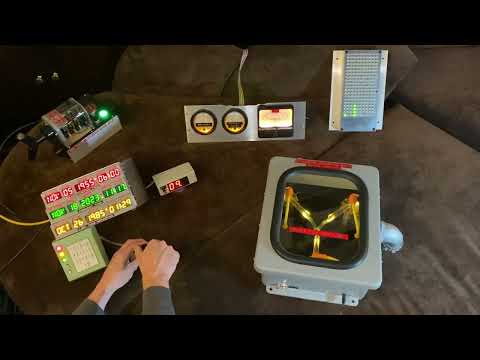
| [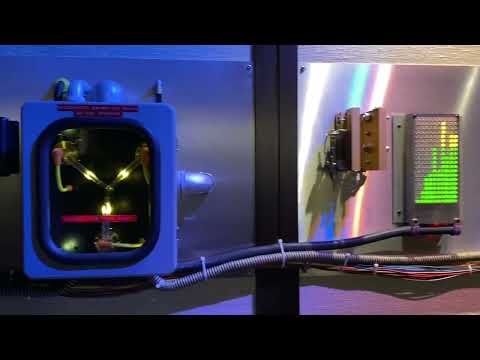](https://youtu.be/1HX0PiZ1YL0) |
|:--:|
| Click to watch the video |
| [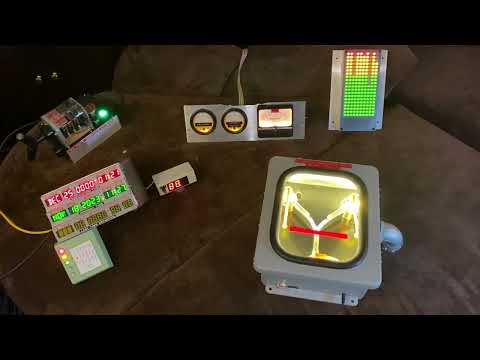](https://youtu.be/u9oTVXUIOXA) |
|:--:|
| Click to watch the video |
Features include
- Clock-related:
- Time keeping for years 1-9999, accurately based on Julian and Gregorian [calendars](#calendar-system)
- Support for time zones and automatic DST (Daylight Saving adjustment)
- Time synchronization through Internet ([NTP](https://en.wikipedia.org/wiki/Network_Time_Protocol)) or [GPS](#gps-receiver)
- [World Clock mode](#world-clock-mode): Show current time in different time zones in *destination time* and/or *last time departed* displays
- [Alarm function](#how-to-set-up-the-alarm): Daily alarms, with weekday selection
- [Count-down timer](#count-down-timer): Count down from up to 99 minutes
- [Yearly/monthly reminder](#yearlymonthly-reminder): Get a yearly or monthly acoustic reminder
- [Sound on the hour](#additional-custom-sounds)
- Movie-related:
- Movie-accurate [Beep](#beep-on-the-second) sound every second (4 modes)
- Movie-accurate [time travel](#time-travel) function
- ["Return from Time Travel"](#time-travel): Return to real present time easily
- ["Decorative mode"](#time-cycling): Movie-accurate time travel times displayed in *destination time* and *last time departed* displays, and cycled in configurable interval
- [Exhibition mode](#exhibition-mode): Show a fixed time in *Present Time* display instead of a running clock. Helpful for filming or museums.
- Network capabilities:
- Advanced network-accessible [Config Portal](#the-config-portal) for setup (http://timecircuits.local, hostname configurable)
- Easy [firmware updates](#firmware-installation--firmware-update) over-the-air
- [Wireless communication](#connecting-props-wirelessly-bttf-network-bttfn) with compatible other props such as CircuitSetup's [Flux Capacitor](https://fc.out-a-ti.me) and [SID](https://sid.out-a-ti.me), as well as the [Dash Gauges](https://dg.out-a-ti.me), [VSR](https://vsr.out-a-ti.me) and modified [Futaba Remote Control](https://remote.out-a-ti.me)
- [Home Assistant](#home-assistant--mqtt) (MQTT) support
- [Night mode](#night-mode): Dim or switch off displays on schedule, manually or sensor-controlled.
- [Music player](#the-music-player): Play mp3 files located on an SD card
- Audio output through [line-out](#audio-output) for time travel sounds and music (requires Control Board 1.4.5 or later), allows connecting your TCD to your (car) stereo for high-quality stereo-sound.
- Support for [SD cards](#sd-card) up to 32GB
- [Keypad-controlled menu](#the-keypad-menu) for adjusting various settings and viewing status through the three displays
- Peripherals:
- Support for [fake "power switch"](#fake-power-switch) (eg. a [TFC drive switch](https://tfc.out-a-ti.me))
- Support for time travel [triggered by external source](#external-time-travel-trigger), with optional delay
- Support for [speedometer](#speedometer) (eg. CircuitSetup's [speedo](https://circuitsetup.us/product/delorean-time-machine-speedometer-kit))
- Support for [GPS receiver](#gps-receiver), used as time source and for actual [speed](#gps-for-speed) to be displayed on speedo
- Support for [rotary encoders](#rotary-encoder) for manual selection of speed to be displayed on speedo, and/or audio volume
- Support for [temperature/humidity sensor](#room-condition-mode-temperaturehumidity-sensor) for [Room Condition mode](#room-condition-mode-temperaturehumidity-sensor) [display temperature and humidity in *destination time* and *last time departed* displays] and for displaying temperature on speedo while idle
- Support for [Futaba remote control prop](#futaba-remote-control): Remote control the speed on the speedo, like in the movie
- Support for signaling other props [connected by wire](#connecting-props-by-wire) (for example flux lights, third party props)
>This [repository](https://tcd.out-a-ti.me) is the upstream source for CircuitSetup's releases. The differences are that both code and documentation [here](https://tcd.out-a-ti.me) might be ahead in development, and in the sound-packs.
For information on updating the firmware on your TCD, see [here](#firmware-installation--firmware-update).
## Initial Configuration
>The following instructions only need to be followed once, on fresh TCDs. They do not need to be repeated after a firmware update.
The first step is to establish access to the TCD's configuration web site ("Config Portal") in order to configure your TCD:
- Power up the TCD and wait until it shows a time (which is probably wrong).
- Connect your computer or handheld device to the WiFi network "TCD-AP".
- Navigate your browser to http://timecircuits.local or http://192.168.4.1 to enter the Config Portal.
#### Time zone and Time
The next step in initial configuration is to set the TCD's time zone. If the time zone isn't properly configured, the TCD will show a wrong time, and DST (daylight saving) will not be switched on/off correctly.
Click on "Settings" on the Config Portal's main page, and specify your [time zone](#-time-zone). Then click "SAVE"; the TCD will reboot.
Setting actual time:
- If the TCD is going to be connected to a WiFi network with internet access as described in the following section, it will receive time information through NTP (network time protocol). No user interaction is required.
- If you are going to keep your TCD in access point mode (in which case it cannot access the internet), please set your local time through the [keypad menu](#how-to-set-the-real-time-clock-rtc).
#### Connecting to a WiFi network
The TCD knows two ways of WiFi operation: Either it creates its own WiFi network, or it connects to a pre-existing WiFi network.
As long as the device is unconfigured, it creates a WiFi network of its own named "TCD-AP". This is called **"Access point mode"**, or **"AP-mode"**. In this mode, other WiFi devices - such as other props or a computer - can connect to the TCD, but the TCD can't access the internet (and therefore not synchronize time through NTP). Also, [HA/MQTT](#home-assistant--mqtt) is not possible.

It is ok to leave the TCD in this mode, especially if it is mounted in a car or places with no WiFi networks available.
More...
>Please do not leave computers/handhelds permanently connected to the TCD's AP. These devices might think they are connected to the internet and therefore hammer the TCD with DNS and HTTP requests which might lead to packet loss and disruptions.
>If you want your device to remain in AP-mode, please choose a suitable WiFi channel on the Config Portal's "WiFi Configuration" page. See [here](#-wifi-channel).
In a typical home setup, however, you might want to connect the TCD to your local WiFi network. This allows for for time synchronization (NTP) and [HA/MQTT](#home-assistant--mqtt):

To connect your TCD to your WiFI network, navigate to the Config Portal and click on "WiFi Configuration". The bare minimum is to select an WiFi network name (SSID) and a WiFi password.
More...
>The TCD requests an IP address via DHCP, unless you entered valid data in the fields for static IP addresses (IP, gateway, netmask, DNS). If the device is inaccessible as a result of incorrect static IPs, hold ENTER when powering it up until the white LED lights up; static IP data will be deleted and the device will return to DHCP.
After saving the WiFi configuration settings, the TCD reboots and tries to connect to your selected WiFi network. If that fails, it will again start in access point mode.
After completing these steps, your TCD is ready for use; you can also continue configuring it to your personal preferences through the Config Portal.
## The Config Portal
The "Config Portal" is the TCD's configuration web site.
|  |
|:--:|
| *The Config Portal's main page* |
It can be accessed as follows:
#### If TCD is in AP mode
- Connect your computer or handheld device to the WiFi network "TCD-AP".
- Navigate your browser to http://timecircuits.local or http://192.168.4.1 to enter the Config Portal.
- (For proper operation, please disconnect your computer or handheld from TCD-AP when you are done with configuring your TCD. These devices can cause high network traffic, resulting in severe performance penalties.)
#### If TCD is connected to WiFi network
- Connect your handheld/computer to the same WiFi network to which the TCD is connected, and
- navigate your browser to http://timecircuits.local
More...
>Accessing the Config Portal through this address requires the operating system of your handheld/computer to support Bonjour/mDNS: Windows 10 version TH2 (1511) [other sources say 1703] and later, Android 13 and later; MacOS and iOS since the dawn of time.
>If connecting to http://timecircuits.local fails due to a name resolution error, you need to find out the TCD's IP address: Hold ENTER on the TCD's keypad for 2 seconds, then repeatedly press ENTER until "NET-WORK" is shown, then hold ENTER for 2 seconds. The device will then show its current IP address. Then, on your handheld or computer, navigate to http://a.b.c.d (a.b.c.d being the IP address as shown on the display) in order to enter the Config Portal.
In the main menu, click on "Settings" to configure your TCD.
| [ ](img/cp_setup.png) |
|:--:|
| *Click for full screenshot* |
A full reference of the Config Portal is [here](#appendix-a-the-config-portal).
## Basic Operation
*Present time* is a clock and normally shows the actual local present time, as received from the network or set up through the [keypad menu](#how-to-set-the-real-time-clock-rtc).
*Destination time* and *Last time departed* are stale. These, by default, work like in the movie: Upon a time travel, *present time* becomes *last time departed*, and *destination time* becomes *present time*. Or in Doc's words: The red one tells you where you're going. The green one tells you where you are. The yellow one tells you where you were.
"REPLACE BATTERY" displayed on boot?
If "REPLACE BATTERY" is shown upon boot, the onboard CR2032 battery is depleted and needs to be replaced. Note that, for technical reasons, "REPLACE BATTERY" will also show up the very first time you power-up the TCD *after* changing the battery. You can, of course, disregard that message in this case.
### Powering down the TCD
The TCD sometimes writes data to either the internal flash file system or the SD card. These write operations should not be interrupted by a power loss.
In general, it is safe to power-down the TCD when it has been idle for 15 seconds, or after it has been fake-powered-down. Try to avoid powering down the TCD
- when it is clearly busy (such as when copying or renaming audio files);
- within 15 seconds after an audio volume change through a Rotary Encoder or changing the display mode (World Clock, Room condition, geolocation),
- if [**_Make time travel persistent_**](#persistent--non-persistent-time-travels) is checked: in the first few seconds after a timetravel.
### Calendar system
The TCD firmware uses the [Julian Calendar](https://en.wikipedia.org/wiki/Julian_calendar) from Jan 1, 1, until Sep 2, 1752, and for later dates the [Gregorian](https://en.wikipedia.org/wiki/Gregorian_calendar) one. Sep 2, 1752, was the last day the Julian calendar was used in the ["First" British Empire](https://en.wikipedia.org/wiki/British_Empire#%22First%22_British_Empire_(1707%E2%80%931783)) (Great Britain and its colonies, including eastern parts of North America, Canada). Other countries stopped using this calendar system way earlier; most of Europe, including Spain plus its colonies worldwide, had switched in 1582 already. DK/NO/NL (except Holland and Zeeland) switched in 1700, Japan in 1872, China in 1912, Russia in 1918.
Since the time machine was built in the USA, using 1752 for the TCD seems appropriate.
So, what does this mean? First off, in the Julian calendar every 4th year is a leap year; in the Gregorian calendar there are some exceptions to this rule. This means, as a result, that the two calendars were drifting apart over time, and dates didn't match. As of 2023, the Julian calendar is 13 days ahead.
Secondly, and as a result of this drift, when countries switched from one to the other calendar system, days were skipped. In case of the switch in 1752, Sep 3 until Sep 13 were skipped, so after Sep 2 came Sep 14. For using the TCD this means that dates entered within that skipped period are corrected to Sep 14.
Neither the Gregorian nor the Julian Calendar know a "year 0"; 1AD followed after 1BC. Nevertheless, it is possible to travel to year 0. In good old Hollywood tradition, I won't let facts and science stand in the way of an authentic movie experience.
### Time-cycling
"Time cycling" is a kind of decorative mode in which the device cycles through a list of pre-programmed *destination* and *last time departed* times. These pre-programmed times match the dates/times of all time-travels that take place in the three movies.
Time-cycling is enabled by setting up a **_Time-cycling Interval_** in the Config Portal or the [keypad menu](#how-to-select-the-time-cycling-interval). The device will then cycle through named list every 5th, 10th, 15th, 30th or 60th minute. The option **_Animate time-cycling_** decides whether the times simply switch, or the cycling event looks like someone entered a new destination date.
Time-cycling will, if enabled, change the *Destination* and *Last Time Departed* displays regardless of the times already displayed, for instance as a result from an earlier time travel. Triggering a time-travel will, however, pause time-cycling for 30 minutes.
### World Clock mode
In World Clock (WC) mode, the red and yellow displays show not some stale times, but current time in other time zones. These time zones can be configured in Config Portal. At least one time zone (for either the red or yellow display) must be configured in order to use WC mode. Optionally, also names for cities/locations for these time zones can be entered in the Config Portal; if a name for a time zone is configured, this name and the time will be shown alternately. If the name is short enough, it will be shown together with time. Note that names can only contain letters a-z, numbers 0-9, space and minus.
| [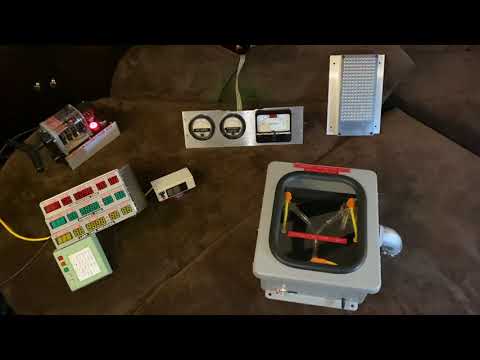](https://youtu.be/Uk1W7D6Ab9Y) |
|:--:|
| Click to watch the video |
|  |
|:--:|
| *World Clock mode* |
WC mode is toggled by typing 112 followed by ENTER. If an SD card is present, WC mode is persistent across reboots.
For logical reasons, WC mode will be automatically disabled in some situations:
- After entering a destination time. WC mode is disabled at this point, because your new *Destination Time* would be overwritten otherwise.
- Time travel. The time travel sequence runs like in non-WC mode: If a time travel is triggered while WC mode is enabled (and no new destination time was entered before), the currently shown *Destination Time* will be the travel target, and the *Last Time Departed* display will show your formerly current time. However: Both *Destination Time* as well as *Last Time Departed* become stale after the time travel as per the nature of the sequence.
#### WC/RC hybrid mode
[Room Condition (RC) mode](#room-condition-mode-temperaturehumidity-sensor) can be enabled together with WC mode. In that case, one display is used for temperature, the other for world time. If there is a time zone configured for the red display, temperature will be shown in the yellow display. If there is no time zone for the red display, it's used for temperature, and the yellow display will show world time.
|  |
|:--:|
| *WC/RC hybrid mode* |
To toggle WC/RC hybrid mode, type 113 followed by ENTER.
### Exhibition mode
In this mode, the TCD shows a fixed, pre-programmed time in the *Present Time* display. Also after a time travel, the *Present Time* display will stay fixed at the time you travelled to. This is useful for exhibitions or for filming.
To enable this mode, type 999 followed by ENTER. The default fixed time will be displayed. To change this time, type 99mmddyyyyhhMM followed by ENTER. 999 plus ENTER takes you back to normal mode.
Exhibition mode is persistent; the pre-programmed time will be stored and retrieved after a reboot/power-down.
Not strictly part of Exhibition mode, but related: If you want your TCD to display specific times in the *Destination Time* and/or *Last Time Departed* displays, you can program those times through the [keypad menu](#how-to-program-datestimes-for-the-destination-and-last-time-departed-displays). Those times will be displayed, but replaced as soon as a time travel takes place. To quickly restore the displays to your pre-programmed times, enter 998 followed by ENTER. Note that this only works if **_Make time travel persistent_** is unchecked in the Config Portal.
### Audio Output
Control boards 1.4.5 and later have two ways of audio output:
- built-in speaker, or
- line-out (at line-level, for connecting the TCD to a stereo's line-in)
By default, all audio is played over the speaker.
Entering 351 followed by ENTER enables playback over line-out for
- music and
- time travel sounds.
All other sounds, which are supposed to be emitted by the TCD itself, are always played over the built-in speaker. Note that the TCD's volume control (knob, software-selected level, rotary encoder) only has impact on the built-in speaker.
Entering 350 plus ENTER disables line-out output. This setting is persistent over reboots.
### Common usage scenarios
#### ⏩ I want my TCD to work like in the movie
In this case, head to the Config Portal and
- set the **_Time Cycling Interval_** to OFF
- check or uncheck **_Make time travel persistent_** depending on whether you care about keeping the displayed times across reboots/power cycles.
>Note that *actual* time travel is not supported.
#### ⏩ I want my TCD to show/cycle movie times
In this case, head to the Config Portal and
- set the **_Time Cycling Interval_** to the desired interval
- uncheck **_Make time travel persistent_**
Time-travelling will interrupt the cycling of movie times for 30 minutes.
#### ⏩ I want my TCD to always show my favorite *Destination* and *last time departed* times
In this case, head to the Config Portal and
- set the **_Time Cycling Interval_** to OFF
- uncheck **_Make time travel persistent_**
Then enter the [keypad menu](#how-to-program-datestimes-for-the-destination-and-last-time-departed-displays) and set your favorite *Destination* and *Last time departed* times.
Note that time-travelling will naturally lead to the displays showing other times. To bring them back without rebooting, type 998 followed by ENTER.
### Keypad reference
In the following, "pressing" means briefly pressing a key, "holding" means keeping the key pressed for 2 seconds or longer.
mm = month (01-12, 2 digits); dd = day (01-31, 2 digits); yyyy = year (4 digits); hh = hour (00-23, 2 digits); MM = minute (00-59, 2 digits)
Keypad reference: Destination time programming
(⏎ = ENTER key)
mmddyyyyhhMM⏎
Set complete date/time for Time Travel
mmddyyyy⏎
Set date for Time Travel
hhMM⏎
Set time for Time Travel
Keypad reference: Special key sequences
(⏎ = ENTER key)
Disable beep sound
000⏎
Enable beep sound
001⏎
Enable beep sound (30 seconds)
002⏎
Enable beep sound (60 seconds)
003⏎
Toggle Room Condition mode
111⏎
Toggle World Clock mode
112⏎
Toggle both World Clock and Room Condition (WC/RC hybrid)
113⏎
Toggle geolocation mode (DD/DMS/DMD)
114⏎/115⏎/116⏎
Display weekday of currently displayed present time date
33⏎
Select audio volume level
300 - 319⏎
Disable/enable line-out audio for music and time travel sounds
350⏎ / 351⏎
Enable built-in volume knob
399⏎
Show current alarm time/weekday
11⏎
Set alarm to hh:MM
11hhMM⏎
Timer: Show remaining time
44⏎
Timer: Set timer to MM minutes
44MM⏎
Timer: Delete timer
440
Reminder: Display reminder
77⏎
Reminder: Display time until reminder
777⏎
Reminder: Program reminder
77mmdd⏎
Reminder: Program reminder
77mmddhhMM⏎
Reminder: Delete reminder
770⏎
Music Player: Show currently played song
55⏎
Music Player: Shuffle off
222⏎
Music Player: Shuffle on
555⏎
Music Player: Go to song 0
888⏎
Music Player: Go to song xxx
888xxx⏎
Play "keyX.mp3" (X=1-9)
501⏎ - 509⏎
Set TT OUT LOW / HIGH
900⏎ / 901⏎
Disable / enable car mode(*)
990⏎ / 991⏎
Forbid / allow TCD to be remote controlled(*)
992⏎ / 993⏎
Forbid / allow TCD keypad to be remote controlled(*)
994⏎ / 995⏎
Release HA from Fake-Power control(*)
996⏎
Restore user destination/last time dep. times
998⏎
Enable / disable Exhibition mode
999⏎
Program time for Exhibition mode
99mmddyyyyhhMM⏎
Toggle firmware update message at power-up
53281⏎
Reboot the device(*)
64738⏎
(*) Not supported through HA/MQTT [_INJECT_](#the-inject_x-command) command
Keypad reference: Holding keys for 2 seconds
1
Toggle Alarm on/off
2
Music Player: Previous song
3
Play "key3.mp3"
4
Toggle Night mode on/off
5
Music Player: Play/Stop
6
Play "key6.mp3"
7
Re-enable WiFi
8
Music Player: Next song
9
Return from Time Travel
0
Time Travel
[Here](https://github.com/realA10001986/Time-Circuits-Display/blob/main/CheatSheet.pdf) is a cheat sheet for printing or screen-use. (Note that MacOS' *preview* application has a bug that scrambles the links in the document. Acrobat Reader does it correctly.)
#### Remote controlling the TCD's keypad
The TCD's keypad can be remote controlled through either [Flux Capacitor](https://fc.out-a-ti.me) and [SID](https://sid.out-a-ti.me), using their respective IR remote control. In order to permit keypad remote controlling, enter 995 followed by ENTER. To prohibit remote controlling, enter 994 followed by ENTER. No further configuration is required on the TCD's side. Please see the [Flux Capacitor](https://fc.out-a-ti.me) and/or [SID](https://sid.out-a-ti.me) documentation for details.
## Time travel
To travel through time, hold "0" for 2 seconds (or use an [external trigger](#external-time-travel-trigger)). The *destination time*, as shown in the red display, will be your new *present time*, the old *present time* will be the *last time departed*. The new *present time* will continue to run like a normal clock.
Before triggering the time travel, you can also first quickly set a new destination time by entering a date on the keypad: mmddyyyy, mmddyyyyhhMM or hhMM, then press ENTER. While typing, there is no visual feedback, but the date is then shown on the *destination time* display after pressing ENTER.
To travel back to actual present time, hold "9" for 2 seconds.
### Persistent / Non-persistent time travels
On the Config Portal's "Settings" page, there is an option item named **_Make time travel persistent_**. The default is off.
>Note that in order to enable this feature, an SD card is required and the option **_Save secondary settings on SD_** must be checked as well.
If time travels are persistent
- a user-programmed *destination time* is always saved, and retrieved after a reboot. It can be programmed through the keypad menu, or ahead of a time travel by typing mmddyyyyhhMM/mmddyyyy/hhMM plus ENTER. In both cases, the time is saved and retrieved upon power-up/reboot.
- *last time departed* as displayed at any given point is always saved, and retrieved upon power-up/reboot.
- *present time*, be it actual present time or "fake" after time travelling, will continue to run while the device is not powered, as long as its battery lasts, and displayed on power-up/reboot.
If time travels are non-persistent
- a user-programmed *destination time* is only saved when programmed through the keypad menu, but not if entered ahead of a time travel (ie outside of the keypad menu, by typing mmddyyyyhhMM/mmddyyyy/hhMM plus ENTER).
- a *last time departed* is only saved when programmed through the keypad menu, but not if the result of a time travel.
- *present time* is always reset to actual present time upon power-up/reboot.
If you want your device to display exactly the same after a power loss, choose persistent (and disable [Time-cycling](#time-cycling)).
If you want to display your favorite *destination time* and *last time departed* upon power-up, and not have time travels overwrite them in storage, choose "non-persistent", and program your times through the [keypad menu](#how-to-program-datestimes-for-the-destination-and-last-time-departed-displays) (and disable [Time-cycling](#time-cycling)). Later time travels will, of course, change what is displayed, but not overwrite your times in storage. To bring back your stored times to the displays, type 998 followed by ENTER.
>Note that [Time-cycling](#time-cycling), if enabled, will force the device to cycle through the list of pre-programmed times, regardless of your time travel persistence setting. So, if Time-cycling is enabled, the only effect of persistence is that *Present Time* is kept at what it was before vs. reset to actual present time after a power loss.
## Beep on the second
In the movies, the Time Circuits emit a "beep" sound every second, which is only really audible in the scene in which Doc explains to Marty how the time machine works. The firmware supports that beep, too.
The beep can be permanently disabled, permanently enabled, or enabled for 30 or 60 seconds
- after a destination time is entered (and ENTER is pressed),
- upon triggering a time travel,
- after switching on the TCD (real power-up or fake power-up),
- after changing "speed" using a [Rotary Encoder](#rotary-encoder).
The different modes are selected by typing 000 (disabled), 001 (enabled), 002 (enabled for 30 secs) or 003 (enabled for 60 secs), followed by ENTER.
For technical reasons, the beep is suppressed whenever other sounds are played-back.
## Night mode
In night-mode, by default, the *destination time* and *last time departed* displays are switched off, the *present time* display is dimmed to a minimum, and the volume of sound playback is reduced (except the alarm). Apart from considerably increasing the displays' lifetime, night-mode reduces the power consumption of the device from around 4.5W to around 2.5W.
You can configure the displays' behavior in night-mode in the Config Portal: They can individually be dimmed or switched off in night-mode.
#### Manually switching to night-mode
To toggle night-mode on/off manually, hold "4".
#### Scheduled night-mode
In the Config Portal, a schedule for night-mode can be programmed. You can choose from currently four time-schedule presets, or a daily schedule with selectable start and end hours.
The presets are for (hopefully) typical home, office and shop setups, and they assume the TCD to be in use (ie night-mode off) at the following times:
- Home: Mon-Thu 5pm-11pm, Fri 1pm-1am, Sat 9am-1am, Sun 9am-11pm
- Office (1): Mon-Fri 9am-5pm
- Office (2): Mon-Thu 7am-5pm, Fri 7am-2pm
- Shop: Mon-Wed 8am-8pm, Thu-Fri 8am-9pm, Sat 8am-5pm
The *daily* schedule works by entering start and end in the text fields below. The TCD will go into night-mode at the defined start hour (xx:00), and return to normal operation at the end hour (yy:00).
Night mode schedules are always based on actual local present time.
#### Sensor-controlled night-mode
You can also connect a light sensor to your TCD for night-mode switching: When the sensor reports a lux level below or equal the threshold set in the Config Portal, the TCD will go into night-mode.
If both a schedule and the light sensor are enabled, the sensor will overrule the schedule only in non-night-mode hours; ie it will never switch off night-mode when night-mode is active according to the schedule.
Switching on/off night-mode manually deactivates any schedule and the light sensor for 30 minutes. Afterwards, a programmed schedule and/or the light sensor will overrule the manual setting.
In order to use a light sensor, check the option _Use light sensor_ in the Config Portal. You can observe the measured lux level through the [keypad menu](#how-to-view-sensor-info) to find out about the right lux threshold for your environment.
For information on supported sensor models/types and configuration, see [here](AddOns.md#light-sensor).
## Count-down timer
The firmware features a simple count-down timer. This timer can count down from max 99 minutes and plays a sound upon expiration.
- To set the timer to MM minutes, type 44MM and press ENTER. A single-digit number of minutes must be preceded by 0.
- To cancel a running timer, type 440 and press ENTER.
- The check the remaining time, type 44 and press ENTER.
## Yearly/monthly reminder
A reminder is yearly or monthly alarm.
To program a yearly reminder, enter 77mmddhhMM and press ENTER. For example: 7705150900 sets the reminder to May 15 9am. Now a reminder sound will play every year on May 15 at 9am.
To program a monthly reminder, enter 7700ddhhMM and press ENTER. For example: 7700152300 sets the reminder to the 15th of each month, at 11pm.
You can also leave out the hhMM part; in that case the time remains unchanged from a previous setting, unless both hour and minute were 0 (zero), in which case the reminder time is set to 9am.
Note that all fields consist of two digits, and hours are entered in 24-hour notation.
Type 77 followed by ENTER to display the programmed reminder, 770 to delete it, and 777 to display the days/hours/minutes until the next reminder.
At the time the reminder is due, the TCD plays a sound. If a file named "reminder.mp3" is on your SD card, this will be played instead of the default sound.
## SD card
Preface note on SD cards: For unknown reasons, some SD cards simply do not work with this device. For instance, I had no luck with Sandisk Ultra 32GB and "Intenso" cards. If your SD card is not recognized, check if it is formatted in FAT32 format (not exFAT!). Also, the size must not exceed 32GB (as larger cards cannot be formatted with FAT32). Transcend, Sandisk Industrial, Verbatim Premium and Samsung Pro Endurance SDHC cards work fine in my experience.
The SD card, apart from being required for [installing](#sound-pack-installation) of the built-in sound-pack, can be used for substituting built-in sound effects, some additional custom sound effects, and for music played back by the [Music player](#the-music-player). Also, it is _strongly recommended_ to store [secondary settings](#-save-secondary-settings-on-sd) on the SD card to minimize [Flash Wear](#flash-wear).
Note that the SD card must be inserted before powering up the TCD. It is not recognized if inserted while the TCD is running. Furthermore, do not remove the SD card while the TCD is powered.
### Sound substitution
The TCD's built-in sound effects can be substituted by your own sound files on a FAT32-formatted SD card. These files will be played back directly from the SD card during operation, so the SD card has to remain in the slot.
Your replacements need to be put in the root (top-most) directory of the SD card, be in mp3 format (128kbps max) and named as follows:
- "alarm.mp3": Played when the alarm sounds.
- "alarmon.mp3": Played when enabling the alarm,
- "alarmoff.mp3": Played when disabling the alarm,
- "nmon.mp3": Played when manually enabling night mode,
- "nmoff.mp3": Played when manually disabling night mode,
- "reminder.mp3": Played when the reminder is due.
- "timer.mp3": Played when the count-down timer expires.
- "ping.mp3": Played when re-connecting/re-enabling WiFi by holding '7' on the keypad.
- "remoteon.mp3" / "remoteoff.mp3": Those are played back if a [Futaba remote control](#futaba-remote-control) takes over speed-control, or relinquishes it, respectively. Those sounds are played through [line-out](#audio-output), if enabled.
The following sounds are time-sync'd to display action. If you decide to substitute these with your own, be prepared to lose synchronicity:
- "enter.mp3": Played when a date was entered and ENTER was pressed.
- "baddate.mp3": Played when a bad (too short or too long) date was entered and ENTER was pressed.
- "intro.mp3": Played during the power-up intro.
- "travelstart.mp3": Played when a time travel starts (including "acceleration").
- "travelstart2.mp3": Played when a time travel starts (without "acceleration").
- "timetravel.mp3": Played when re-entry of a time travel takes place.
- "shutdown.mp3": Played when the device is fake "powered down".
- "startup.mp3": Played when the TCD is starting up.
### Additional Custom Sounds
The firmware supports some additional, user-provided sound effects, which it will load from the SD card. If the respective file is present, it will be used. If that file is absent, no sound will be played.
- "ttaccel.mp3": Will be played immediately upon triggering a time travel when a speedo is connected, during the acceleration phase (ie while the speedo counts up to 88). This sound is then interrupted by the usual time travel sound. You can use, for instance, the sound of a car accelerating for this. This sound is played through [line-out](#audio-output), if enabled.
- "ttcancel.mp3": Will be played when a time travel acceleration phase is cancelled by hitting the brake on the [Remote](#futaba-remote-control). This sound is played through [line-out](#audio-output), if enabled.
- "hour.mp3": Will be played every hour, on the hour. This feature is disabled in night mode.
- "hour-xx.mp3", xx being 00 through 23: Sounds-on-the-hour for specific hours that will be played instead of "hour.mp3". If a sound for a specific hour is not present, "hour.mp3" will be played, if that one exists.
- "key1.mp3" - "key9.mp3": Will be played on a 50x command (x=1-9); additionally, "key3.mp3"/"key6.mp3" will be played when holding the "3"/"6" key for 2 seconds. Those sounds are played through [line-out](#audio-output), if enabled.
- "ha-alert.mp3": Will be played when a [HA/MQTT](#home-assistant--mqtt) message is received.
Those files are not provided here. You can use any mp3, with a bitrate of 128kpbs or less. Examples are in the install/alt_sound folder.
### Installing Custom & Replacement Audio Files
Replacements and custom sounds can either be copied to the SD card using a computer, or uploaded through the Config Portal.
Uploading through the Config Portal works exactly like [installing the sound-pack](#sound-pack-installation); on the main menu, click "UPDATE". Afterwards choose one or more mp3 files to upload using the bottom file selector, and click "UPLOAD". The firmware will store the uploaded mp3 files on the SD card.
In order to delete a file from the SD card, upload a file whose name is prefixed with "delete-". For example: To delete "ttaccel.mp3" from the SD card, upload a file named "delete-ttaccel.mp3"; the file's contents does not matter, so it's easiest to use a newly created empty file. The firmware detects the "delete-" part and, instead of storing the uploaded file, it throws it away and deletes "ttaccel.mp3" from the SD card.
For technical reasons, the TCD must reboot after mp3 files are uploaded in this way.
Please remember that the maximum bitrate for mp3 files is 128kbps. Also note that the uploaded files are stored to the root folder of the SD card, so this way of uploading cannot be used to upload songs for the Music Player.
## The Music Player
The firmware contains a simple music player to play mp3 files located on the SD card.
In order to be recognized, your mp3 files need to be organized in music folders named *music0* through *music9*. The folder number is 0 by default, ie the player starts searching for music in folder *music0*. This folder number can be changed in the [keypad menu](#how-to-select-the-music-folder-number).
The names of the audio files must only consist of three-digit numbers, starting at 000.mp3, in consecutive order. No numbers should be left out. Each folder can hold 1000 files (000.mp3-999.mp3). *The maximum bitrate is 128kpbs.*
Since renaming mp3 files manually is somewhat cumbersome, the firmware can do this for you - provided you can live with the files being sorted in alphabetical order: Just copy your files with their original filenames to the music folder; upon boot or upon selecting a folder containing such files, they will be renamed following the 3-digit name scheme (as mentioned: in alphabetic order). You can also add files to a music folder later, they will be renamed properly; when you do so, delete the file "TCD_DONE.TXT" from the music folder on the SD card so that the firmware knows that something has changed. The renaming process can take a while (10 minutes for 1000 files in bad cases). Mac users are advised to delete the ._ files from the SD before putting it back into the TCD as this speeds up the process. _While the renaming is in progress, the TCD's display shows the number of files yet to be processed._
To start and stop music playback, hold 5. Holding 2 jumps to the previous song, holding 8 to the next one.
By default, the songs are played in order, starting at 000.mp3, followed by 001.mp3 and so on. By entering 555 and pressing ENTER, you can switch to shuffle mode, in which the songs are played in random order. Enter 222 followed by ENTER to switch back to consecutive mode. The Shuffle mode state is saved and persistent across reboots.
Entering 888 followed by ENTER re-starts the player at song 000, and 888xxx (xxx = three-digit number) jumps to song #xxx.
See [here](#keypad-reference) for a list of controls of the music player.
While the music player is playing music, most sound effects are disabled/muted, such as keypad sounds, sound-on-the-hour, sounds for switching on/off the alarm and night-mode. Initiating a time travel stops the music player, as does activating the keypad menu. The alarm, the reminder and the count-down timer will sound as usual and stop the music player.
## The keypad menu
The keypad menu is an additional way to configure your TCD; it only involves the three displays and the keypad.
The menu is invoked by holding the ENTER button for 2 seconds.
*Note that if the keypad menu is active at a time when the alarm, the reminder, the count-down timer or sound-on-the-hour are due, those events will be missed and no sounds are played.*
Menu navigation uses the ENTER key, as well as
- "2" for "up",
- "8" for "down",
- "5" for select, and
- "9" for cancel/quit.
Using the ENTER key involves *pressing* or *holding*: A "press" is shorter than 2 seconds, a "hold" is 2 seconds or longer.
Data entry, such as for dates and times, is done through the keypad's number keys and works as follows: Whenever a data entry is requested, the field for that data is lit (while the rest of the display is dark) and a pre-set value is shown. If you want to keep that pre-set, press ENTER to proceed to next field. Otherwise press a digit on the keypad; the pre-set is then overwritten by the value entered. 2 digits can be entered (4 for years), upon which the new value is stored and the next field is activated. You can also enter less than 2 digits (4 for years) and press ENTER when done with the field. Note that a month needs to be entered numerically (01-12), and hours need to be entered in 24-hour notation (00-23), regardless of 12-hour or 24-hour mode as per the Config Portal setting.
After invoking the keypad menu, the first step is to choose a menu item. The available items are
- set the alarm ("ALA-RM"),
- set the audio volume (VOL-UME),
- set the Music Player folder number ("MUSIC FOLDER NUMBER")
- select the Time-cycling Interval ("TIME-CYCLING"),
- select the brightness for the three displays ("BRIGHTNESS"),
- show network information ("NET-WORK"),
- set the internal Real Time Clock (RTC) ("SET CLOCK"),
- enter dates/times for the *Destination* and *Last Time Departed* displays,
- show light/temperature/humidity sensor info (if such a sensor is connected) ("SENSORS"),
- show when time was last sync'd with NTP or GPS ("TIME SYNC"),
- see a list of [BTTFN-Clients](#connecting-props-wirelessly-bttf-network-bttfn) currently connected ("BTTFN CLIENTS"),
- quit the menu ("END").
Pressing ENTER or "2"/"8" cycles through the list, holding ENTER or pressing "5" selects an item. "9" quits the menu.
#### How to set up the alarm:
- Hold ENTER to invoke main menu
- (Currently, the alarm is the first menu item; otherwise press ENTER repeatedly [or press 2/8] until "ALA-RM" is shown)
- Hold ENTER [or press 5]
- Press ENTER [or 2/8] to toggle the alarm on and off, hold ENTER [or press 5] to proceed
- Then enter the hour and minutes. This works as described above under "Data entry".
- Choose the weekday(s) by repeatedly pressing ENTER [or 2/8]
- Hold ENTER [or press 5] to finalize your weekday selection. "SAVING" is displayed briefly.
Pressing "9" at any point - except when entering hour and minutes - cancels and quits the menu.
When the alarm is set and enabled, the dot in the present time's minute field will light up.
Under normal operation (ie outside of the menu), holding "1" toggles the alarm on/off.
The alarm time can also quickly be set by typing 11hhMM (eg. 110645 for 6:45am, or 112300 for 11:00pm) and pressing ENTER, just like when setting a time travel destination time. (The weekday selection has still to be done via the keypad menu.) Typing 11 followed by ENTER shows the currently set time and weekday selection briefly.
Note that the alarm is recurring, ie it rings at the programmed time, unless disabled. Also note, as mentioned, that the alarm is by default relative to your actual *present time*, not the time displayed (eg after a time travel). It can, however, be configured to be based on the time displayed, in the Config Portal.
*Important: The alarm will not sound when the keypad menu is active at the programmed alarm time.*
#### How to set the audio volume:
By default, the device uses the built-in hardware volume knob to determine the desired volume. You can change this to a pre-selected level as follows:
- Hold ENTER to invoke main menu
- Press ENTER [or 2/8] repeatedly until "VOL-UME" is shown
- Hold ENTER [or press 5]
- Press ENTER [or 2/8] to toggle between "USE VOLUME KNOB" and "SELECT LEVEL"
- Hold ENTER [or press 5] to proceed
- If you chose "SELECT LEVEL", you can now select the desired level by pressing ENTER repeatedly [or 2/8]. There are 20 levels available. The volume knob is now ignored.
- Hold ENTER [or press 5] to save and quit the menu
Pressing "9" at any point cancels and quits the menu.
You can also quickly set the volume by typing a code on the keypad followed by ENTER. 300-319 select a level, 399 enables the volume knob.
If you are using a Rotary Encoder for volume, you need to disable the volume knob by pre-selecting a level (00-19). While the built-in volume knob is active, the Rotary Encoder will do nothing.
#### How to select the music folder number:
In order for this menu item to show up, an SD card is required.
- Hold ENTER to invoke main menu
- Press ENTER [or 2/8] repeatedly until "MUSIC FOLDER NUMBER" is shown
- Hold ENTER [or press 5], "FOLDER" and a number is displayed
- Press ENTER [or 2/8] repeatedly to cycle through the possible values. The message "NOT FOUND" appears if either the folder itself or 000.mp3 in that very folder is not present. "PROCESSING REQUIRED" means that the TCD will prepare the folder (eg rename files) after selection; this requires a reboot.
- Hold ENTER [or press 5] to select the value shown and exit the menu ("SAVING" is displayed briefly)
Pressing "9" at any point cancels and quits the menu.
If shuffle was enabled before, the new folder is also played in shuffled order.
Note that the Music Folder Number is saved in a config file on the SD card.
#### How to select the Time-cycling Interval:
- Hold ENTER to invoke main menu
- Press ENTER [or 2/8] repeatedly until "TIME-CYCLING" is shown
- Hold ENTER [or press 5], "INTERVAL" is displayed
- Press ENTER [or 2/8] repeatedly to cycle through the possible Time-cycling intervals. "0" disables automatic time cycling ("OFF").
- Hold ENTER [or press 5] to select the value shown and exit the menu ("SAVING" is displayed briefly)
Pressing "9" at any point cancels and quits the menu.
#### How to adjust the display brightness:
- Hold ENTER to invoke main menu
- Press ENTER [or 2/8] repeatedly until "BRIGHTNESS" is shown
- Hold ENTER [or press 5], the displays show all elements, the top-most display says "LVL"
- Press ENTER [or 2/8] repeatedly to cycle through the possible levels (1-15)
- Hold ENTER [or press 5] to use current value and proceed to next display
- After the third display, "SAVING" is displayed briefly and the menu is left automatically.
Pressing "9" at any point cancels and quits the menu.
#### How to find out the IP address and WiFi status:
- Hold ENTER to invoke main menu
- Press ENTER [or 2/8] repeatedly until "NET-WORK" is shown
- Hold ENTER [or press 5], the displays show the IP address
- Repeatedly press ENTER [or 2/8] to cycle between IP address, WiFi status, MAC address (in station mode) and Home Assistant connection status.
- Hold ENTER [or press 5 or 9] to leave the menu
#### How to set the Real Time Clock (RTC):
If you can't use network time (NTP) as a source of time, you need to manually adjust the TCD's clock. Moreover, manual clock adjustment is a required prerequisite for using [GPS](#gps-receiver). Before setting the TCD's clock, it is essential that you set the correct time zone in the [Config Portal](#the-config-portal).
Always set your actual local present time here; if you want to display some other time, use the Time Travel function.
- Hold ENTER to invoke main menu
- Press ENTER [or 2/8] repeatedly until "SET CLOCK" is displayed and the *Present Time* display shows a date and time
- Hold ENTER [or press 5], the *Present Time* display goes off except for the first field to enter data into
- The field to enter data into is shown (exclusively), pre-set with its current value
- Data entry works as described [above](#the-keypad-menu); remember that months need to be entered numerically (01-12), and hours in 24-hour notation (0-23).
- After entering data into all fields, the data is saved and the menu is left automatically.
The time you entered will be re-set/overruled/re-adjusted when the TCD has access to authoritative time via NTP or GPS.
#### How to program dates/times for the *Destination* and *Last Time Departed* displays:
- Hold ENTER to invoke main menu
- Press ENTER [or 2/8] repeatedly until the desired display is the only one lit and shows a date and time
- Hold ENTER [or press 5], the display goes off except for the first field to enter data into
- The field to enter data into is shown (exclusively), pre-set with its current value
- Data entry works as described [above](#the-keypad-menu); remember that months need to be entered numerically (01-12), and hours in 24-hour notation (0-23).
- After entering data into all fields, the data is saved and the menu is left automatically.
Your entered date/time(s) are stored, and shown until replaced by the results of time travels; you can then quickly bring your times back to the displays by typing 998 followed by ENTER.
When entering dates/times into the *destination time* or *last time departed* displays, the Time-cycling Interval is automatically set to 0.
Note: Your dates/times will be overwritten in storage after a time travel when **_Make time travels persistent_** is checked. Please see [here](#persistent--non-persistent-time-travels) for details.
#### How to view sensor info
- Hold ENTER to invoke main menu
- Press ENTER [or 2/8] repeatedly until "SENSORS" is shown. If that menu item is missing, a light or temperature sensor was not detected during boot.
- Hold ENTER [or press 5]
- Now the currently measured lux level or temperature is displayed.
- Press ENTER [or 2/8] to toggle between light sensor and temperature sensor info (if both are connected)
- Hold ENTER [or press 5 or 9] to exit the menu
>Note: Sometimes a lux value of -1 might be displayed, indicating a sensor overload. This can have the following reasons: The TCD firmware sets up the sensors for indoor usage and, as a result, sensors will overload in broad daylight. Secondly, some sensors have issues with halogen lamps (reportedly TSL2561), and most sensors also "overload" if too much IR light is directed at them, for instance from surveillance cameras.
#### How to see a list of BTTF-Network clients
- Hold ENTER to invoke main menu
- Press ENTER [or 2/8] repeatedly until "BTTFN CLIENTS" is shown.
- Hold ENTER [or press 5]
- Now one of the connected clients is displayed, or "NO CLIENTS" if currently no clients are connected.
- Press ENTER [or 2/8] to scroll through the list of connected clients.
- Hold ENTER [or press 5 or 9] to exit the menu
#### How to leave the menu:
Press "9", or
- press ENTER repeatedly until "END" is displayed.
- Hold ENTER [or 5] to leave the menu
## Peripherals

- [Fake Power Switch](#fake-power-switch)
- [Speedometer](#speedometer)
- [GPS-Receiver](#gps-receiver)
- [Rotary encoder](#rotary-encoder)
- [Temperature Sensor](#room-condition-mode-temperaturehumidity-sensor)
- [Light Sensor](#sensor-controlled-night-mode)
- [Other Props](#controlling-other-props) (Flux Capacitor, SID, Dash Gauges, VSR, Flux lights, ...)
## Fake power Switch
You probably noticed that the device takes longer to boot than would be required to re-create the movie experience where Doc turns the knob and the Time Circuits immediately turn on. As a remedy, the firmware supports a fake "power switch":
If the **_Use fake power switch_** option is checked in the Config Portal, the device will power-up, initialize everything, but stay quiet and dark. Only when the fake "power switch" is activated, the device will visually "power up". Likewise, you can also fake "power off" the device using this switch. Fake "off" disables the displays, all audio (except the alarm) and the keypad. Just like in the movie.
On Control Boards V1.3 and later, there is a dedicated header labeled "Fake PWR" to connect the switch to. The pins to be connected by the switch are labeled "GND" and "PWR Trigger":

On earlier Control Boards (1.2 and below), the switch needs connect the pins labeled "IO13" and "GND" as shown here: (The pin headers are not present on original boards)

Note that the switch needs to be a switch with a maintained contact; the pins need to remain connected for as long as the device is fake-switched-on.
In order to use the Fake Power Switch, check **_Use fake power switch_** in the Config Portal.
[Here](https://tfc.out-a-ti.me) are some hints for building a TFC Switch like this one:

Fake-Power can also be controlled through [HA/MQTT](#home-assistant--mqtt) and a modified [Futaba remote control](#futaba-remote-control).
## External Time Travel Trigger
As mentioned above, a time travel can be triggered by holding "0" on the keypad. Since this doesn't really allow for an authentic movie-like experience, the firmware also supports an external trigger, such as a button switch or even another prop to trigger a time travel. Note that, unlike the [Fake Power Switch](#fake-power-switch), this trigger must be a momentary toggle.
On Control Boards V1.3 and later, there is a dedicated header for the button labeled "Time Travel". The button needs to connect pins "TT IN" and "GND".
|  |
|:--:|
| TT_IN on TCB 1.3 |
Unfortunately, there is no header and no breakout for IO27 on TC control boards V1.2 and below. There is, however, a row of solder pads right next to the socket on the control board, where a pin header or cable can easily be soldered on:
|  |
|:--:|
| IO27 (TT_IN) on TCB 1.2 |
In order to trigger a time-travel sequence on the Time Circuits, "TT IN"/IO27 and GND must be connected for at least 200ms and then opened; the time travel is triggered upon release of the button. If the button is pressed for 3000ms (3 seconds), a ["Return from Time Travel"](#time-travel) is triggered.
The Config Portal allows configuring a delay for matching/synchronizing the TCD to another prop. The delay, if any, starts running after the button is released. The time travel sequence starts after the delay has expired.
## Speedometer
The firmware supports [CircuitSetups's speedometer display](https://circuitsetup.us/product/delorean-time-machine-speedometer-kit) as part of the time travel sequence and for other purposes.
| [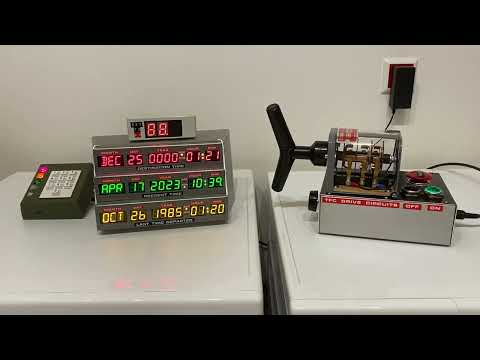](https://youtu.be/opAZugb_W1Q) |
|:--:|
| Click to watch the video |
_The video was shot before the CircuitSetup speedo became available. The speedo shown is a DIY prop and not the - much better looking - CircuitSetup speedo. The video is only meant to demonstrate how the TCD and the speedo inter-operate. (The TFC switch was made by me, see [here](https://tfc.out-a-ti.me), it uses the [Fake Power Switch](#fake-power-switch) feature of the TCD.)_
If your CircuitSetup [Speedo Kit](https://circuitsetup.us/product/delorean-time-machine-speedometer-kit/) came with a cable with 7 wires, it needs to be wired as shown below:

The SDA and SCL wires should be paired with a wire connected to GND. If you using a 4 wire twisted-pair cable, pair SCL with GND, and SDA with 5V.
If the cable is shielded, connect the shield to GND on the TCD's end (not the other!). Also see [here](AddOns.md#i2c-peripheral-wiring).
If you want to make your own speedo, see [here](AddOns.md#speedometer).
#### Software setup
In order to use the Speedometer display, select the correct model/display type in the Config Portal. This is, surprisingly, "CircuitSetup" for the CircuitSetup speedo.
## GPS receiver
A GPS receiver can be used as a source of authoritative time (like NTP), speed of movement and geolocation mode.
The CircuitSetup original [speedo](https://circuitsetup.us/product/delorean-time-machine-speedometer-kit) has a built-in GPS receiver. If you want to use a third party GPS receiver, see [here](AddOns.md#gps-receiver).
GPS receivers receive signals from satellites, but in order to do so, they need to be "tuned in" (aka get a "fix"). This "tuning" process can take a long time; after first power up, it can take 30 minutes or more for a receiver to be able to determine its position. In order to speed up this process, modern GPS receivers have special "assisting" features. One key element is knowledge of current time, as this helps identifying satellite signals quicker. So, in other words, initially, you need to tell the receiver what it is supposed to tell you. However, as soon as the receiver has received satellite signals for 15-20 minutes, it saves the data it collected to its battery-backed memory and will find a fix within seconds after power-up in the future.
For using GPS effectively as a long-term source of accurate time, it is therefore essential, that
- the correct time zone is defined in the Config Portal,
- the Time Circuit's RTC (real time clock) is initially [set to correct local time](#how-to-set-the-real-time-clock-rtc),
- and the GPS receiver has been receiving data for 15-20 mins at least once a month.
If/as long as the GPS receiver has a fix and receives data from satellites, the dot in the present time's year field is lit.
In order to use the GPS receiver as a source of time, the option [**_Use GPS time_**](#-use-gps-time) must be checked in the Config Portal (which it is by default).
### Geolocation mode
If the TCD is connected to the CircuitSetup Speedo or a third-party GPS receiver, it can display your current location.
|  |
|:--:|
| *Geolocation mode* |
Three different notations are supported:
- DD: Decimal degrees;
- DMS: Degrees, minutes, seconds;
- DMD: Degrees, decimal minutes. This is the most precise one of the three.
To toggle geolocation mode, enter 114 (DD), 115 (DMS) or 116 (DMD) followed by ENTER. Geolocation mode is mutually exclusive to World Clock and Room Condition mode, and disabled when a Time Travel is initiated. If an SD card is present, Geolocation mode is persistent across reboots.
### GPS for speed
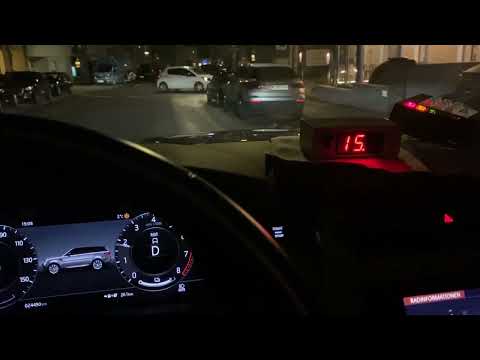
One nice feature of GPS is that the receiver can deliver current speed of movement. If the Time Circuits are, for instance, mounted in a car, and a [speedo](#speedometer) is connected, you'll have a real speedometer:
| [](https://youtu.be/wbeXZJaDLa8) |
|:--:|
| Click to watch the video |
To have GPS speed displayed on your speedo, check **_Display GPS speed_** in the Config Portal.
To let other props connected via [BTTF-Network](#connecting-props-wirelessly-bttf-network-bttfn) know about current GPS speed, check the option **_Provide GPS speed to wireless props_**.
Note that setting these options give GPS speed priority over speed from a rotary encoder, and as regards the speedo display, over other purposes (such as displaying temperature). Checking them really does not make sense when your props are permanently stationary.
## Rotary Encoder
A rotary encoder is, simply put, a turnable knob. On the TCD, rotary encoders can be used for speed and/or audio volume.
For information on supported encoder models/types and configuration, see [here](AddOns.md#rotary-encoder).
Up to two rotary encoders can be connected, one for speed, one for volume.
### Rotary Encoder for Speed
The rotary encoder, if configured for speed, allows manually selecting a speed to be displayed on the speedo, as well as to be sent to [BTTFN](#connecting-props-wirelessly-bttf-network-bttfn) clients in place of actual (GPS) speed.
| [](https://youtu.be/Y6uu1SU6YJA) |
|:--:|
| Click to watch the video |
Remarks:
- The encoder is only evaluated if no GPS receiver is connected, or if the **_Display GPS speed_** is unchecked (as this option gives GPS speed priority over the encoder).
- The encoder is also evaluated if no speedo is connected; it can be operated "blindly" to trigger time travels and its movement is sent to BTTFN clients like GPS speed (if no GPS receiver is connected, or the option **_Provide GPS speed to wireless props_** is unchecked)
- The speedo displays "0" as long as the encoder is not moved; if the encoder is turned counter-clockwise a couple of notches, the speedo will be switched off.
### Rotary Encoder for Audio Volume
The rotary encoder for volume replaces the volume knob on back of the TCD's keypad. The advantages of the rotary encoder are that it is more precise, especially at lower volume levels, and it can be relocated. In order to use the rotary encoder for volume, the TCD's own volume knob must be disabled; this is done by pre-selecting an audio level in the keypad menu, or by typing 3xx (xx being 00-19) followed by ENTER.
## Room Condition Mode, Temperature/humidity sensor
The firmware supports connecting a temperature/humidity sensor for "room condition mode"; in this mode, *destination* and *last departed* times are replaced by temperature and humidity (if applicable), respectively. To toggle between normal and room condition mode, enter 111 and press ENTER. If an SD card is present, room condition mode is persistent across reboots.

Room condition mode can be used together with [World Clock mode](#world-clock-mode); if both are enabled, only one alternative time and only temperature is shown. To toggle RC and WC mode simultaneously, type 113 and press ENTER.
Temperature on speedometer display: Unless you do time travelling on a regular basis, the [speedo](#speedometer) is idle most of the time in a typical home setup. To give it more of a purpose, the firmware can display ambient temperature on the speedo while idle.
In order to use a temperature/humidity sensor, no special configuration is required. If a sensor is detected by the firmware during boot, it will be used.
For information on supported sensor models/types and configuration, see [here](AddOns.md#temperaturehumidity-sensor).
## Controlling other props
### Connecting props wirelessly: BTTF-Network (BTTFN)
The TCD can communicate with other compatible props wirelessly, via the built-in "**B**asic-**T**elematics-**T**ransmission-**F**ramework" over WiFi. It can send out information about a time travel and an alarm, and other props can query the TCD for time, speed and some other data.
Here is a demonstration of all the props connected through BTTFN:
| [](https://youtu.be/u9oTVXUIOXA) |
|:--:|
| Click to watch the video |
BTTFN requires the props to be connected to the same network, such as, for example, your home WiFi network.

>In order to use BTTFN, all props must be connected to the same IP subnet; BTTFN does not work over the internet.
On the TCD, no special configuration is required for using BTTFN.
On the other prop, such as CircuitSetup's [Flux Capacitor](https://circuitsetup.us/product/flux-capacitor-light-sound-pcb/), [SID](https://circuitsetup.us/product/delorean-time-machine-status-indicator-display-sid/), the [Dash Gauges](https://dg.out-a-ti.me), the [VSR](https://vsr.out-a-ti.me) or the [Futaba Remote Control kit](https://remote.out-a-ti.me), the TCD's IP address or hostname must be entered into the *IP address or hostname of TCD* field on the Setup page in their Config Portal - that's all.
To see which BTTFN clients are currently known to the TCD, either check at the Config Portal's main page, or enter the keypad menu and select "BTTFN CLIENTS",
#### Car Mode
As [discussed](#connecting-to-a-wifi-network), in a car, or other places without a WiFi network, the TCD can act as WiFi access point for other props. The recommended network configuration for this use case is as follows:

When set in *Car Mode*, the TCD _always boots into AP-mode_, regardless of a configured WiFi network. Not attempting to connect to a network speeds up the boot process and allows other BTTFN-capable props to quickly connect to "TCD-AP".
To enable *Car Mode*, type 991 followed by ENTER. The TCD will reboot in AP mode. If a WiFi network to connect to is configured at that point, it is ignored; no connection attempt is made.
To disable *Car Mode*, type 990 followed by ENTER. The TCD will reboot and attempt to connect to a previously configured WiFi network.
*Car Mode* is persistent, i.e. it remains active (even across reboots and power-downs) until disabled.
>Note that the TCD has no internet access while in Car Mode; this means that, unless a GPS receiver is present, it cannot update its clock automatically. If the time runs off over time, you either need to quit Car Mode once in a while and allow the TCD connect to a internet-connected WiFi network (the iPhone's Personal Hotspot works fine), or to re-adjust time using the [keypad menu](#how-to-set-the-real-time-clock-rtc).
### Connecting props by wire
The TCD has a TT-OUT pin (marked "TT OUT (IO14)" or "IO14") which can be used to
- signal a time travel,
- signal alarm,
- or manually switching on/off connected props.
#### Signal a Time Travel
If the option [TT-OUT (IO14) pin] **_signals Time Travel_** is checked in the Config Portal, the TCD sets this pin to HIGH either 5 seconds ahead of the temporal displacement sequence, or - if the option **_Signal without 5s lead_** is unchecked - right at the start of the temporal displacement sequence. This allows third-party props to take part in time travel sequences. For more information, see [here](AddOns.md#other-props).
CircuitSetup/A10001986 original props also support a wired connection, if for whatever reason BTTFN is not an option. For detailed wiring instructions, please see the documentation for the prop ([Flux capacitor](https://github.com/realA10001986/Flux-Capacitor/tree/main?tab=readme-ov-file#connecting-a-tcd-by-wire), [SID](https://github.com/realA10001986/SID/tree/main?tab=readme-ov-file#connecting-a-tcd-by-wire), [Dash Gauges](https://github.com/realA10001986/Dash-Gauges/blob/main/hardware/README.md#connecting-a-tcd-to-the-dash-gauges-by-wire), [VSR](https://github.com/realA10001986/VSR#connecting-a-tcd-by-wire));
In case CircuitSetup/A10001986 original props are connected by wire, the option **_Signal without 5s lead_** should _not_ be set since it skips the "acceleration phase"; however, if that option is set on the TCD (for instance, if third-party props are connected by wire as well), the corresponding option must be set in the prop's Config Portal, too. This option has no effect for wirelessly connected props.
#### Signal Alarm
If the option [TT-OUT (IO14) pin] **_signals alarm_** is checked in the Config Portal, the TCD sets this pin to HIGH upon an [alarm](#how-to-set-up-the-alarm); the duration for HIGH can be between 3 and 99 seconds.
#### Switching TT-OUT manually
If the option [TT-OUT (IO14) pin] **_is controlled by commands 990/991_** is checked in the Config Portal, commands 900 (off) and 901 (on) allow switching this pin manually. The power-up state of the TT OUT pin can be set to HIGH by checking the **_Power-up state HIGH_** option.
#### Limitations
Although the options can be set freely and are not mutually exclusive, be advised that CircuitSetup/A10001986 original props connected by wire always interpret the TT-OUT signal as a trigger for a time travel sequence. It can make sense to set more than one option if your connect, for instance, flux bands or lights.
Hardware considerations: CS/A10001986 props can be connected directly. TT OUT cannot be used to supply power for third party props; please us a relay. In case of a standard "Aruino relay module", connect "C" to GND, 5V to 5V, and TT OUT to "S"(or "IN").
See also [here](AddOns.md#other-props), chapter "Other props".
## Home Assistant / MQTT
The TCD supports MQTT protocol versions 3.1.1 and 5.0 for the following features:
### Display messages
The TCD can subscribe to a user-configured topic and display messages received for this topic on the *Destination Time* display. This can be used to display the status of other HA/MQTT devices, for instance alarm systems. If the SD card contains a file named "ha-alert.mp3", this file will be played upon reception of a message (there is no default sound).
Only ASCII messages are supported, the maximum length is 255 characters.
### Control the TCD via MQTT
The TCD can be controlled through messages sent to topic **bttf/tcd/cmd**. Supported commands are
- TIMETRAVEL: Start a time travel
- RETURN: Return from time travel
- BEEP_ON: Enables the [beep](#beep-on-the-second)
- BEEP_OFF: Disables the [beep](#beep-on-the-second)
- BEEP_30, BEEP_60: Set the beep modes as described [here](#beep-on-the-second)
- ALARM_ON: Enable the alarm
- ALARM_OFF: Disable the alarm
- NIGHTMODE_ON: Enable manual [night mode](#night-mode)
- NIGHTMODE_OFF: Disable manual [night mode](#night-mode)
- MP_PLAY: Starts the Music Player
- MP_STOP: Stops the Music Player
- MP_NEXT: Jump to next song
- MP_PREV: Jump to previous song
- MP_SHUFFLE_ON: Enables shuffle mode in Music Player
- MP_SHUFFLE_OFF: Disables shuffle mode in Music Player
- PLAYKEY_x: Play keyX.mp3 (from SD card), X being in the range from 1 to 9.
- STOPKEY: Stop playback of keyX file. Does nothing if no keyX file is currently played back.
- PLAY_DOOR_OPEN, PLAY_DOOR_CLOSE: Play door sound
- PLAY_DOOR_OPEN_L, PLAY_DOOR_CLOSE_L: Play door sound on left stereo channel
- PLAY_DOOR_OPEN_R, PLAY_DOOR_CLOSE_R: Play door sound on right stereo channel
- POWER_CONTROL_ON: Take over Fake-Power control; POWER_xx commands now control Fake-Power.
- POWER_CONTROL_OFF: Release Fake-Power control
- POWER_ON, POWER_OFF: Switch Fake-Power on or off, respectively.
- INJECT_x: See immediately below.
#### The INJECT_x command
This command allows remote control of the TCD through HA/MQTT in the same way as through the TCD keypad by injecting commands into the TCD's command queue (hence the name). Commands are listed [here](#commandref); nearly all are supported. You need to specify the command exactly like when entering the code on the keypad. For example:
To enable the "beep" (001), issue the following command: **INJECT_001**
To play "key2.mp3" (502), issue **INJECT_502**
To set the alarm to 9:00am (110900), issue **INJECT_110900**
#### Fake-Power control through HA
HA can control [Fake-Power](#fake-power-switch), overruling a Fake-Power switch.
In order to let HA/MQTT control fake power, first publish POWER_CONTROL_ON to **bttf/tcd/cmd**. Subsequent POWER_ON or POWER_OFF commands switch Fake-Power on or off, respectively.
POWER_CONTROL_OFF relinquishes Fake-Power control; afterwards, if a Fake-Power switch is connected, its state becomes effective. If no switch is connected, Fake-Power will be switched on.
The initial power-up state of POWER_CONTROL and POWER can be configured in the [Config Portal](#-ha-controls-fake-power-at-startup).
Keypad command 996 works like POWER_CONTROL_OFF; it allows to separate HA from Fake-Power control. This is useful when, for instance, the broker isn't reachable.
### Notify other devices of a time travel or alarm
If both the TCD and the other props are connected to the same broker, and the option **_Publish time travel and alarm events_** is checked on the TCD's side, other compatible props will receive information on time travel and alarm and play their sequences in sync with the TCD. The topic is called **bttf/tcd/pub**.
The timing for time travel is described [here](AddOns.md#synchronized-time-travel-through-hamqtt), in short:
- "PREPARE" might be published ahead of the time travel to prepare; the timing is not specified. Used on CircuitSetup/A10001986 props to disable the "Screen Saver".
- "[TIMETRAVEL](#-enhanced-time-travel-notification)" is published [on or 5 seconds ahead](#-enhanced-time-travel-notification) of the temporal displacement sequence.
- "REENTRY" is published upon re-entry.
"WAKEUP" is published if something happens on the TCD, like destination time entry or speed changes.
When the [alarm](#how-to-set-up-the-alarm) sounds, the TCD publishes "ALARM".
#### MQTT vs BTTFN
MQTT and BTTFN can co-exist.
Remote controlling through the TCD keypad, transmission of speed, synchronized fake-power and night mode switching requires a BTTFN connection.
As regards time travel and alarm:
The TCD only sends out time travel and alarm notifications through _either_ MQTT _or_ BTTFN, never both; selection is done by checking or unchecking the option **_Publish time travel and alarm events_** on the HA/MQTT Settings page.
If you have other (third-party) MQTT-aware devices listening to the TCD's public topic (bttf/tcd/pub) in order to react to time travel or alarm messages, use MQTT (i.e. check **_Publish time travel and alarm events_**). If only BTTFN-aware devices are to be used, uncheck this option to use BTTFN as it has less latency.
### Setup
MQTT requires a "broker" (such as [mosquitto](https://mosquitto.org/), [EMQ X](https://www.emqx.io/), [Cassandana](https://github.com/mtsoleimani/cassandana), [RabbitMQ](https://www.rabbitmq.com/), [Ejjaberd](https://www.ejabberd.im/), [HiveMQ](https://www.hivemq.com/) to name a few).

The broker's address needs to be configured in the Config Portal. It can be specified either by domain or IP (IP preferred, spares us a DNS call). The default port is 1883. If a different port is to be used, append a ":" followed by the port number to the domain/IP, such as "192.168.1.5:1884".
If your broker supports protocol version 3.1.1, stick with 3.1.1. Version 5.0 has no advantages, but more overhead.
If your broker does not allow anonymous logins, a username and password can be specified.
In order to display messages on the TCD as described above, you need to specify the **_topic to display_** in the respective field.
If you want your TCD to publish messages to bttf/tcd/pub (ie if you want to notify other HA/MQTT-capable devices about a timetravel and/or alarm), check the **_Publish time travel and alarm events_** option.
Limitations: TLS/SSL not supported; ".local" domains (MDNS) not supported; maximum message length 255 characters; server/broker must respond to PING (ICMP) echo requests. For proper operation with low latency, it is recommended that the broker is on your local network. Note that using HA/MQTT will disable [WiFi power saving](#wifi-power-saving-features). MQTT is disabled when the TCD is operated in AP-mode or car mode.
## Futaba Remote Control
CircuitSetup's [kit for modifying a Futaba remote control](https://circuitsetup.us/product/futaba-remote-stanley-display-wireless-control-kit/) allows, among many features, to control the TCD's speedo. The Remote can increase/decrease speed, trigger a time travel, switch fake power, and more.
In order to permit remote controlling, enter 993 followed by ENTER. No further configuration is required on the TCD's side.
To prohibit remote controlling, enter 992 followed by ENTER.
For more information, see [here](https://remote.out-a-ti.me).
## WiFi power saving features
The Config Portal offers two options for WiFi power saving, one for station mode (ie when the device is connected to a WiFi network), one for AP-mode (ie when the device acts as an access point). Both options do the same: They configure a timer after whose expiration WiFi is switched off; the device is no longer transmitting or receiving data over WiFi.
The timers can be set to 0 (which disables them; WiFi is never switched off; this is the default), or 10-99 minutes.
The reason for having two different timers for AP-mode and for station mode is that if the device is used in a car, it might act as an access point (such as in [car mode](#car-mode)), while at home it is most probably connected to a WiFi network as a client. Since in a car, unless other props are installed that communicate wirelessly, WiFi will most likely not be used on a regular basis, the timer for AP mode can be short (eg 10 minutes), while the timer for station mode can be disabled.
After WiFi has been switched off due to timer expiration, it can be re-enabled by holding "7" on the keypad for approx. 2 seconds, in which case the timers are restarted (ie WiFi is again switched off after timer expiration).
Note that if your configured WiFi network was not available when the TCD was trying to connect, it will end up in AP-mode. Holding "7" in that case will trigger another attempt to connect to your WiFi network.
## Flash Wear
Flash memory has a somewhat limited lifetime. It can be written to only between 10.000 and 100.000 times before becoming unreliable. The firmware writes to the internal flash memory when saving settings and other data. Every time you change settings through the keypad menu or the Config Portal, data is written to flash memory.
In order to reduce the number of write operations and thereby prolong the life of your TCD, it is recommended to use a good-quality SD card and to check **_[Save secondary settings on SD](#-save-secondary-settings-on-sd)_** in the Config Portal; secondary settings (volume, alarm, reminder, car-mode state, exhibition mode data and state, time travel data and state) are then stored on the SD card (which also suffers from wear but is easy to replace). See [here](#-save-secondary-settings-on-sd) for more information.
## Firmware Installation / Firmware Update
If a previous version of the TCD firmware is installed on your device, you can update easily using the pre-compiled binary. Enter the [Config Portal](#the-config-portal), click on "Update", select the pre-compiled binary file ("**timecircuits-A10001986.ino.nodemcu-32s.bin**" for A10001986 releases, "**Time_Circuits_Display_vX.YY.bin**" for CircuitSetup releases) provided in the [Release package](https://github.com/realA10001986/Time-Circuits-Display/releases), and click on *Update*.
Installing on a fresh ESP32...
If you are using a fresh ESP32, please go here and follow the instructions, or - if you are a nerd and want to deal with source code, compilers'n'stuff - see timecircuits-A10001986.ino for detailed build and upload information.
### Sound-pack installation
The firmware comes with a sound-pack which needs to be installed separately. The sound-pack is not updated as often as the firmware itself. There will be a message in the Config Portal and the TCD will display "PLEASE INSTALL SOUND PACK" during boot when/if the sound-pack needs to be updated.
_Note that installing the sound-pack requires an [SD card](#sd-card)._
>A10001986 and CircuitSetup use different sound-packs. If you switch from one version to the other, the matching sound-pack must be re-installed. [A10001986-releases](https://github.com/realA10001986/Time-Circuits-Display/releases) use "sound-pack-twXX", while [CircuitSetup's](https://github.com/CircuitSetup/Time-Circuits-Display/releases) are named "sound-pack-csXX". The Config Portal will tell you which version is required to be installed.
The first step is to extract the zipped sound-pack (which is included in every [Release package](https://github.com/realA10001986/Time-Circuits-Display/releases)). It contains one file named "TCDA.bin".
Next, head to the [Config Portal](#the-config-portal), click on "Update", select the "TCDA.bin" file in the _bottom_ file selector and click on *Upload*.
Alternative way
Alternatively, you can install the sound-pack the following way:
- Using a computer, copy "TCDA.bin" to the root directory of a FAT32 formatted SD card;
- power down the TCD,
- insert this SD card into the slot and
- power up the TCD; the sound-pack will be installed automatically.
---
## Appendix A: The Config Portal
### Main page
##### ⏩ WiFi Configuration
This leads to the [WiFi configuration page](#wifi-configuration)
##### ⏩ Settings
This leads to the [Settings page](#settings).
##### ⏩ HA/MQTT Settings
This leads to the [HomeAssistant/MQTT Settings page](#hamqtt-settings).
##### ⏩ Update
This leads to the firmware update and audio upload page.
In order to upload a new firmware, such as published in the [Release packages](https://github.com/realA10001986/Time-Circuits-Display/releases), select the "**timecircuits-A10001986.ino.nodemcu-32s.bin**" or "**Time_Circuits_Display_vX.YY.bin**" file as contained in the Release package in the _top_ file selector and click *Update*.
You can also install the TCD's sound-pack on this page; download the sound-pack (which is included in every [Release package](https://github.com/realA10001986/Time-Circuits-Display/releases)), extract it and select the resulting TCDA.bin file in the _bottom_ file selector. Finally, click *Upload*. Note that an SD card is required for this operation.
See also [here](#firmware-installation--firmware-update).
Finally, this page is also for uploading [custom or replacement sound files](#installing-custom--replacement-audio-files) to the SD card. Select one or more mp3 file in the _bottom_ file selector and click *Upload*. (Maximum 16 files at a time.)
---
### WiFi Configuration
Through this page you can either connect your TCD to your local WiFi network, or configure AP mode.
#### Connecting to an existing WiFi network
In order to connect your TCD to your WiFi network, all you need to do is either to click on one of the networks listed at the top or to enter a __WiFi network name (SSID)__, and optionally a __password__ (WPAx). If there is no list of networks displayed, click on "WiFi Scan".
>By default, the TCD requests an IP address via DHCP. However, you can also configure a static IP for the TCD by entering the IP, netmask, gateway and DNS server. All four fields must be filled for a valid static IP configuration. If you want to stick to DHCP, leave those four fields empty.
##### ⏩ Forget Saved WiFi Network
Checking this box (and clicking SAVE) deletes the currently saved WiFi network (SSID and password) and reboots the device; it will restart in "access point" (AP) mode. See [here](#connecting-to-a-wifi-network).
##### ⏩ Hostname
The device's hostname in the WiFi network. Defaults to 'timecircuits'. This also is the domain name at which the Config Portal is accessible from a browser in the same local network. The URL of the Config Portal then is http://hostname.local (the default is http://timecircuits.local)
If you have more than one TCD in your local network, please give them unique hostnames.
_This setting applies to both AP-mode and when your TCD is connected to a WiFi network._
##### ⏩ WiFi connection attempts
Number of times the firmware tries to connect to a WiFi network, before falling back to AP-mode. See [here](#connecting-to-a-wifi-network)
##### ⏩ WiFi connection timeout
Number of seconds before a timeout occurs when connecting to a WiFi network. When a timeout happens, another attempt is made (see immediately above), and if all attempts fail, the device falls back to AP-mode. See [here](#connecting-to-a-wifi-network)
##### ⏩ Periodic reconnection attempts
Selects whether periodic re-connection attempts (between 12am and 6am) should be made after a failure to connect to a configured WiFi network.
In typical home setups with 24/7 WiFi, this option hardly matters. However, if you have connected your TCD to your WiFi network, but move it between environments (with and without WiFi access) on a regular basis, uncheck this to keep the TCD from searching for your configured WiFi network unnecessarily.
This option has no effect if the TCD is in [Car Mode](#car-mode).
##### ⏩ WiFi power save timer
See [here](#wifi-power-saving-features)
#### Settings for AP-mode
##### ⏩ Network name(SSID) appendix
By default, when your TCD creates a WiFi network of its own ("AP-mode"), this network is named "TCD-AP". In case you have multiple TCDs in your vicinity, you can have a string appended to create a unique network name. If you, for instance, enter "-ABC" here, the WiFi network name will be "TCD-AP-ABC". Characters A-Z, a-z, 0-9 and - are allowed.
##### ⏩ Password
By default, and if this field is empty, the TCD's own WiFi network ("TCD-AP") will be unprotected. If you want to protect your TCD access point, enter your password here. It needs to be 8 characters in length and only characters A-Z, a-z, 0-9 and - are allowed.
If you forget this password and are thereby locked out of your TCD, power-down, hold the ENTER key, power-up and wait until the white LED flashes, then release the ENTER key. The TCD will boot and start the access point temporarily without a password. Then connect to the TCD's AP with your computer or handheld, enter the Config Portal ( http://192.168.4.1 ) and either look up or change your AP WiFi password. Note that this ENTER-key-procedure is not persistent: When you reboot or re-power the TCD, the AP will be password protected again.
##### ⏩ WiFi channel
Here you can select one out of 11 channels, or have the TCD choose a random channel for you. The default channel is 1. Preferred are channels 1, 6 and 11.
WiFI channel selection is key for a trouble-free operation. Disturbed WiFi communication can lead to disrupted sequences, packet loss, hanging or freezing props, and other problems. A good article on WiFi channel selection is [here](https://community.ui.com/questions/Choosing-the-right-Wifi-Channel-on-2-4Ghz-Why-Conventional-Wisdom-is-Wrong/ea2ffae0-8028-45fb-8fbf-60569c6d026d).
If a WiFi Scan was done (which can be triggered by clicking "WiFI Scan"),
- a list of networks is displayed at the top of the page; click "Show All" to list all networks including their channel;
- a "proposed channel" is displayed near the "WiFi channel" drop-down, based on a rather simple heuristic. The banner is green when a channel is excellent, grey when it is impeded by overlapping channels, and when that banner is red operation in AP mode is not recommended due to channels all being used.
The channel proposition is based on all WiFi networks found; it does not take non-WiFi equipment (baby monitors, cordless phones, Bluetooth devices, microwave ovens, etc) into account.
##### ⏩ WiFi power save timer
See [here](#wifi-power-saving-features)
---
### Settings
#### Basic settings
##### ⏩ Play intro
Selects whether the animated intro should be played upon power-up.
##### ⏩ Beep mode
Selects the ["beep"](#beep-on-the-second) mode. "Auto: xx secs" enables the beep for xx seconds after entering a destination time, after triggering a time travel, and upon (real or fake) power-on. Can be changed at any time by typing 000 (off), 001 (on), 002 (Auto 30secs) or 003 (Auto 60secs) followed by ENTER.
##### ⏩ Time-cycling interval
In this decorative mode the device cycles through a list of pre-programmed, movie-accurate *destination* and *last time departed* times. This mode is enabled by setting the "Time-cycling Interval" to anything but "off". The device will cycle through named list every 5th, 10th, 15th, 30th or 60th minute, and thereby change the displays. Set the interval to "off" to disable. See [here](#time-cycling)
##### ⏩ Animate time-cycling
If this option is checked, cycling times will be animated imitating entering a new destination time.
If this option is unchecked, times are simply switched without further ado.
##### ⏩ Skip time travel display disruption
If this is checked, the TCD will not show the display disruption animation during a time travel.
##### ⏩ Date entry animation like in part 3
If this is checked, the TCD will show a different animation upon entering a Destination time, as shown in part 3 of the Series.
##### ⏩ Play time travel sounds
If other props are connected, they might bring their own time travel sound effects. In this case, you can uncheck this to disable the Time Circuit's own time travel sounds. Note that this only covers sounds played during time travel, not other sound effects.
##### ⏩ Alarm base is real present time
Selects whether the alarm and sound-on-the-hour are based on real, actual present time, or "present" time as displayed (eg after a time travel).
Note that the night mode schedules and the Reminder are always based on actual present time.
##### ⏩ 24-hour clock mode
Selects 24-hour clock mode, ie hours go from 0 to 23, "AM" and "PM" are permanently dark.
#### Time Synchronization settings
##### ⏩ Time zone
The time zone of the place where the device is operated in POSIX format. Needs to be set in order to use NTP or GPS, and for DST (daylight saving). Defaults to UTC0. See [here](#appendix-b-time-zones), [here](https://github.com/nayarsystems/posix_tz_db/blob/master/zones.csv) or [here](https://tz.out-a-ti.me) for a list of valid time zones.
##### ⏩ NTP Server
Name of your preferred NTP (network time protocol) server for time synchronization. Leave this empty to disable NTP.
##### ⏩ Use GPS time
If this option is checked (which it is by default), the TCD uses GPS as a source for authorative time, in the same way like NTP.
The issue with GPS time and the reason for this option is so-called "GPS week rollovers". Traditional GPS (L1/L1A aka "Legacy C/A") encodes time information in shape of "number of weeks" since 1980, and uses a 10 bit counter. As a result, this counter overflows every 1024 weeks, which is every about 19 years. The receivers' firmware is usually pretty dumb and only works for one of those periods (and it appears manufacturers prohibit longer periods of operation on purpose by refusing manual date/time feeds beyond the next rollover). The TCD firmware knows some measures to overcome a rollover if it were handled smartly, but I have no idea what the receivers actually are going to do (report time 19 years in the past? Report any time in the past, perhaps depending on the firmware's week-offet? Stop working at all?), and I cannot test this in any way. In case the TCD syncs to wrong time as a result of the receiver unable to properly cope with a roll-over, you can disable usage of GPS time information using this option. The next rollover is due in 2038, but trouble might come earlier, if the receiver firmware uses a week-offset to shift its working period across a rollover. According to the datasheets of some MTK3333 receivers, these might stop reporting correct time already in 2034. More modern GPS signals (L1C, L2C, L5) overcome this issue by using 13 bits for weeks, but given those signals are either not yet broadcast by many satellites and/or considered pre-operational as of this writing (2026), and rollout plans reach into the early 2030s, receivers supporting them are scarce and unreasonably expensive.
#### World Clock mode
##### ⏩ Time zone for Destination Time display
The time zone for the red display in [World Clock mode](#world-clock-mode). Default: unset. Needs to be in [Posix](https://tz.out-a-ti.me) format.
##### ⏩ Time zone for Last Time Dep. display
The time zone for the yellow display in [World Clock mode](#world-clock-mode). Default: unset. Needs to be in [Posix](https://tz.out-a-ti.me) format.
##### ⏩ City/location name
For each World Clock time zone, a city or location name can be configured. For example "SYDNEY" or "LORD HOWE". This name will be shown every few seconds alternately with time. If the name is 9 characters or less (8 on the A-Car display), it will be displayed together with time.
#### Night-mode
##### ⏩ Destination time off in night mode
Selects whether the *destination time* display is dimmed or switched off in night mode.
##### ⏩ Present time off in night mode
Selects whether the *present time* display is dimmed or switched off in night mode.
##### ⏩ Last time dep. off in night mode
Selects whether the *last time departed* display is dimmed or switched off in night mode.
##### ⏩ Schedule
Selects a schedule for night-mode. See [here](#night-mode)
##### ⏩ Daily night-mode start hour
If "Daily" is chosen in the "Schedule"-drop-down, enter night-mode start hour here.
##### ⏩ Daily night-mode end hour
If "Daily" is chosen in the "Schedule"-drop-down, enter night-mode end hour here.
##### ⏩ Use light sensor
Select whether to use a light sensor's data to enable night-mode. See [here](#night-mode).
##### ⏩ Light (lux) threshold
If the light sensor reports a number of lux below or equal to this value, night-mode is activated. See [here](#night-mode).
#### Temperature/humidity sensor settings
##### ⏩ Display in °Celsius
Selects between Fahrenheit and Celsius for temperature display. See [here](#room-condition-mode-temperaturehumidity-sensor)
##### ⏩ Temperature offset
This offset, which can range from -3.0 to 3.0, is added to the sensor measurement, in order to compensate sensor inaccuracy or suboptimal sensor placement.
#### Speedometer settings
##### ⏩ Speedo display type
Type of [speedo](#speedometer) display. Apart from [CircuitSetups's own](https://circuitsetup.us/product/delorean-time-machine-speedometer-pcb/?v=fa868488740a), several other types are also supported, mostly Adafruit or Seeed/Grove LED segment displays. For 4-digit-displays there are options to display speed left- or right-aligned. Two special options for Adafruit 828 and 1911 are at the end of the list; use these if you connect only one 2-digit-tube to the respective i2c backpack.
##### ⏩ Speedo brightness
Brightness of speedo display when displaying speed.
##### ⏩ Switch speedo off when idle
If this is checked, the Speedo is switched off when idle, i.e. when no time travel takes place, no speed from GPS or a rotary encoder and no temperature are available. If checked, the speedo shows "0." in those situations. Having this checked will wear the LEDs of your speedo in the long run.
##### ⏩ Real-life acceleration figures
This option selects the acceleration times for the time travel sequence.
If this option is checked, real-life figures are used. If unchecked, movie-like times apply.
If you are using your TCD together with a Futaba Remote Control prop, leave this unchecked.
"Movie-like" was created by measuring the times between each mph on the Remote Control shown in the very first time