https://github.com/scriptogre/functional-chatbots
The repository for the Functional LLM Chatbots workshop from DjangoCon Europe 2024.
https://github.com/scriptogre/functional-chatbots
Last synced: 3 months ago
JSON representation
The repository for the Functional LLM Chatbots workshop from DjangoCon Europe 2024.
- Host: GitHub
- URL: https://github.com/scriptogre/functional-chatbots
- Owner: scriptogre
- Created: 2024-05-30T17:49:23.000Z (about 2 years ago)
- Default Branch: 0-start-here
- Last Pushed: 2024-08-25T14:05:11.000Z (almost 2 years ago)
- Last Synced: 2025-09-29T00:29:35.550Z (9 months ago)
- Language: Python
- Size: 18.5 MB
- Stars: 15
- Watchers: 2
- Forks: 6
- Open Issues: 0
-
Metadata Files:
- Readme: README.md
Awesome Lists containing this project
README
# Functional Chatbots - DjangoCon Europe 2024
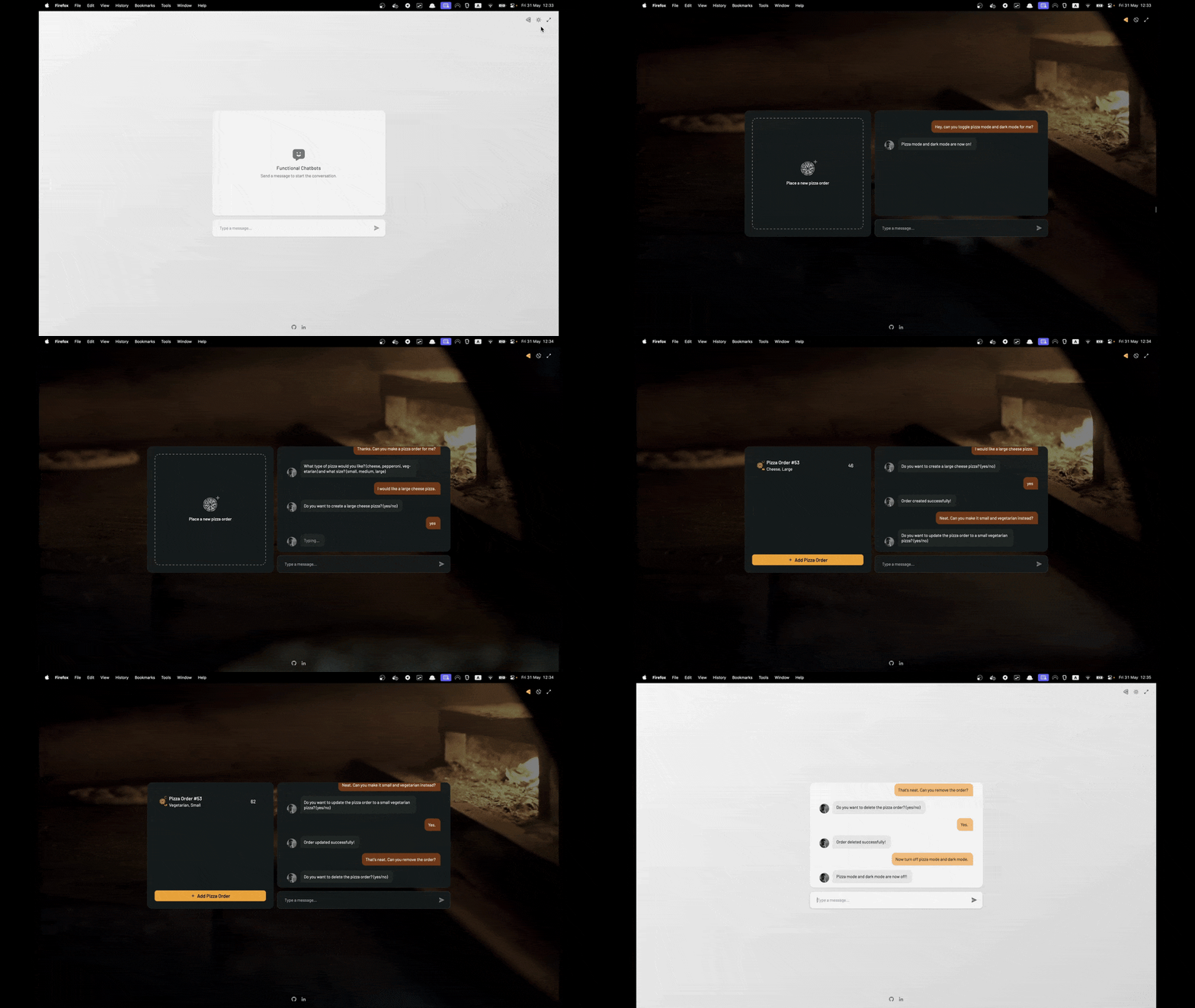
`README.md` contains:
- Setup instructions
- Project details (tools, project structure)
`PROGRESS.md` includes:
- Task at hand
- Some context
- Extra challenges
- Next steps
**Note**: Read the `PROGRESS.md` file every time you switch branches.
# Requirements
### Tools
- [Git](https://git-scm.com/downloads) (to clone the repository)
- [Docker Desktop](https://www.docker.com/products/docker-desktop/)
- [Python (if not using Docker)](https://www.python.org/downloads/)
- GroqCloud [account](https://console.groq.com/login) and [API key](https://console.groq.com/keys) (Free access to LLama 3)
### Knowledge
This workshop will be easier for you if you're familiar with:
- Django
- HTMX
- OpenAI's API
- TailwindCSS
I tried to keep things simple, but there are lots to cover in only 50 minutes.
# Getting Started
1. Clone the repository:
```
git clone https://github.com/scriptogre/functional-chatbots.git
```
2. Rename `.env.example` to `.env`
3. Update `GROQ_API_KEY` with your GroqCloud API key
4. Run `docker compose up` to start the project
5. Open browser at `http://localhost:8000`
# Project Structure
**Warning:** This project is unconventional. Enjoy the ride!
# Django-Ninja
> Wait, what?! You want to render templates with Django-Ninja?
### Why Django-Ninja?
Why not?
1. **It's less verbose**, with intuitive syntax inspired by FastAPI.
2. **It's more performant**, thanks to being built on top of Starlette.
3. **It's still Django**, so we can benefit from the included batteries when needed.
Besides, it uses **Pydantic**.
[Instructor](https://python.useinstructor.com/) also uses Pydantic. This will come in handy later.
# htmx
We'll use [htmx](https://htmx.org/) to easily add interactivity to our project, like updating chat messages, or
creating/updating/deleting pizza orders - without writing any JavaScript.
### Why htmx?

> Grug from [The Grug Brained Developer](https://grugbrain.dev/) by Carson Gross (creator of [htmx](https://htmx.org/)). Love the article.
complexity _bad_
# JinjaX
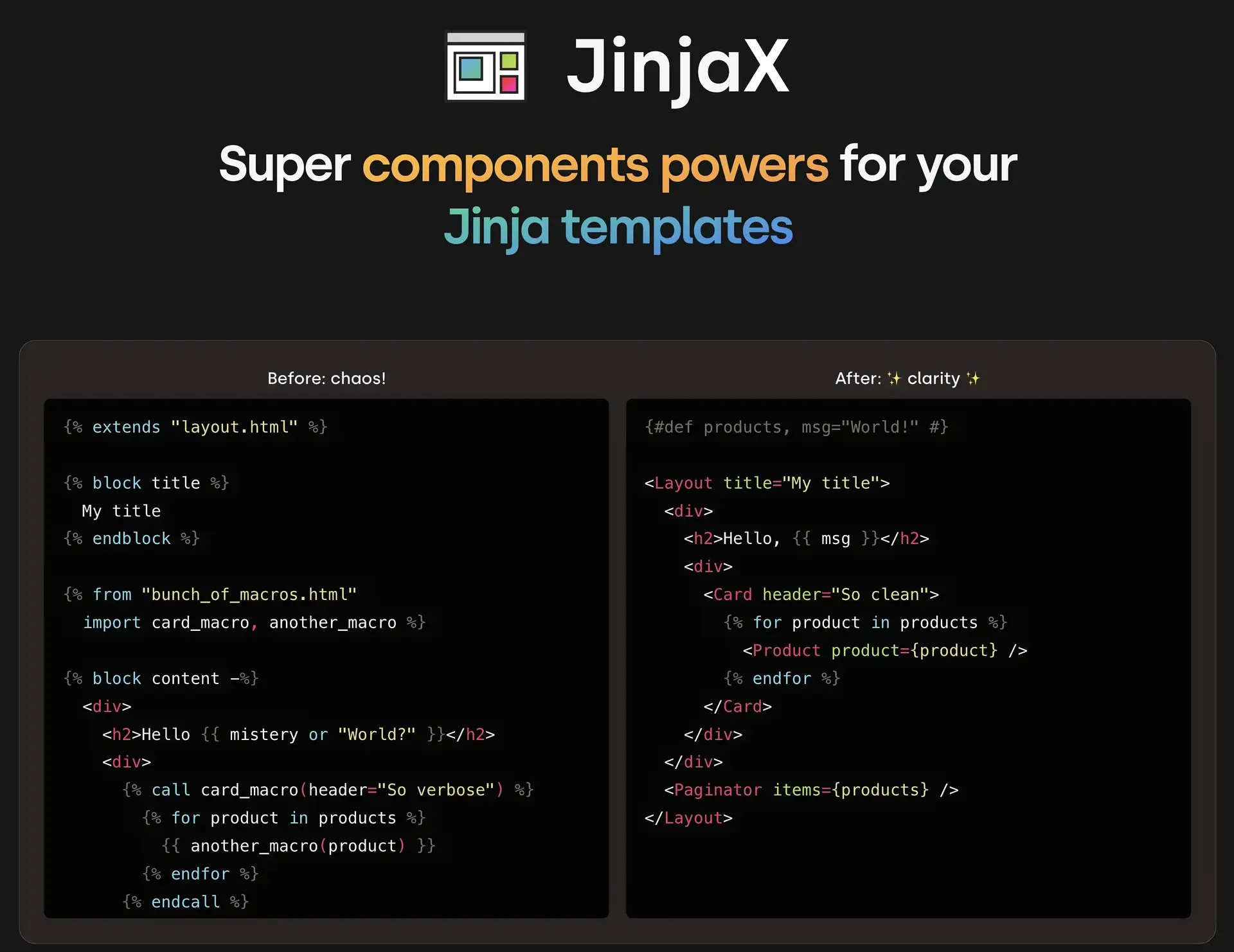
We'll use [JinjaX](https://jinjax.scaletti.dev/) in our templates, an experimental project that's essentially Jinja2 with JSX-like syntax for components.
### Why JinjaX?
Because paired with htmx, we can do stuff like:
```html
I personally love the simplicity of templates with JinjaX.
```
Which is a joy to read and write.
Most importantly, it enables keeping **behaviour** (`hx-*` attributes) explicit, while abstracting **structure**.
I've written a [blog about JinjaX](https://tanulchristian.dev/blogs/will_jinjax_replace_django_templates), if you're curious.
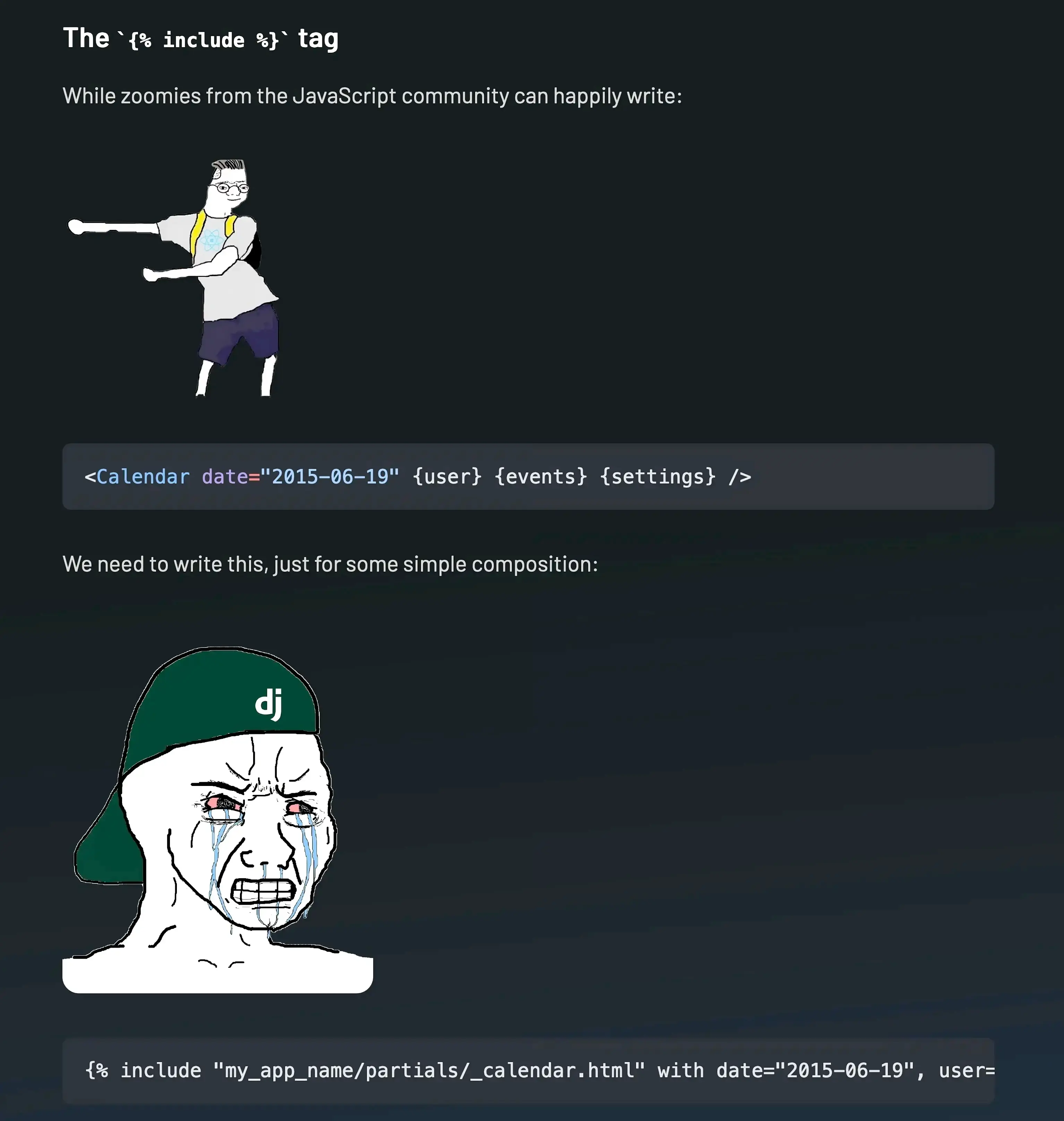
Similar projects include:
- [`django-components`](https://github.com/EmilStenstrom/django-components/)
- [`slippers`](https://github.com/mixxorz/slippers)
- [`django-template-partials`](https://github.com/carltongibson/django-template-partials) _(Hi Carlton! Love your projects 💚)_
# TailwindCSS
We'll use TailwindCSS for styling.
### Why TailwindCSS?
Because paired with JinjaX, we can do stuff like:
```html
...
```
Which is very expressive.
We can hide classes that are part of the component, while keeping context-specific classes visible.
By creating custom variants (like `hover:` or `dark:`), we can also do stuff like this:
```html
Typing...
```
CSS is very powerful nowadays.
Smooth transitions, animations, and even conditional displaying can be achieved with it (e.g. `group-has-[.chat-message]:hidden`).
TailwindCSS makes it easier to harness that power.
| Tools | Less JavaScript |
|--------------------|-----------------|
| htmx | 80% |
| htmx + TailwindCSS | 99% |
# GroqCloud API

We'll use **GroqCloud**'s free API to interact with **LLama 3 70B**, an open-source model.
### Why GroqCloud?
#### It's **FAST**.
Faster than any other LLM API I've used.
#### It's **FREE**.
Other services like OpenAI, Anthropic, or Google Gemini were paid. I didn't want you to pay for a workshop.
#### It's ENOUGH for our needs.
Their free tier offers **30 requests per minute**. That's 1 request every 2 seconds.
# Instructor
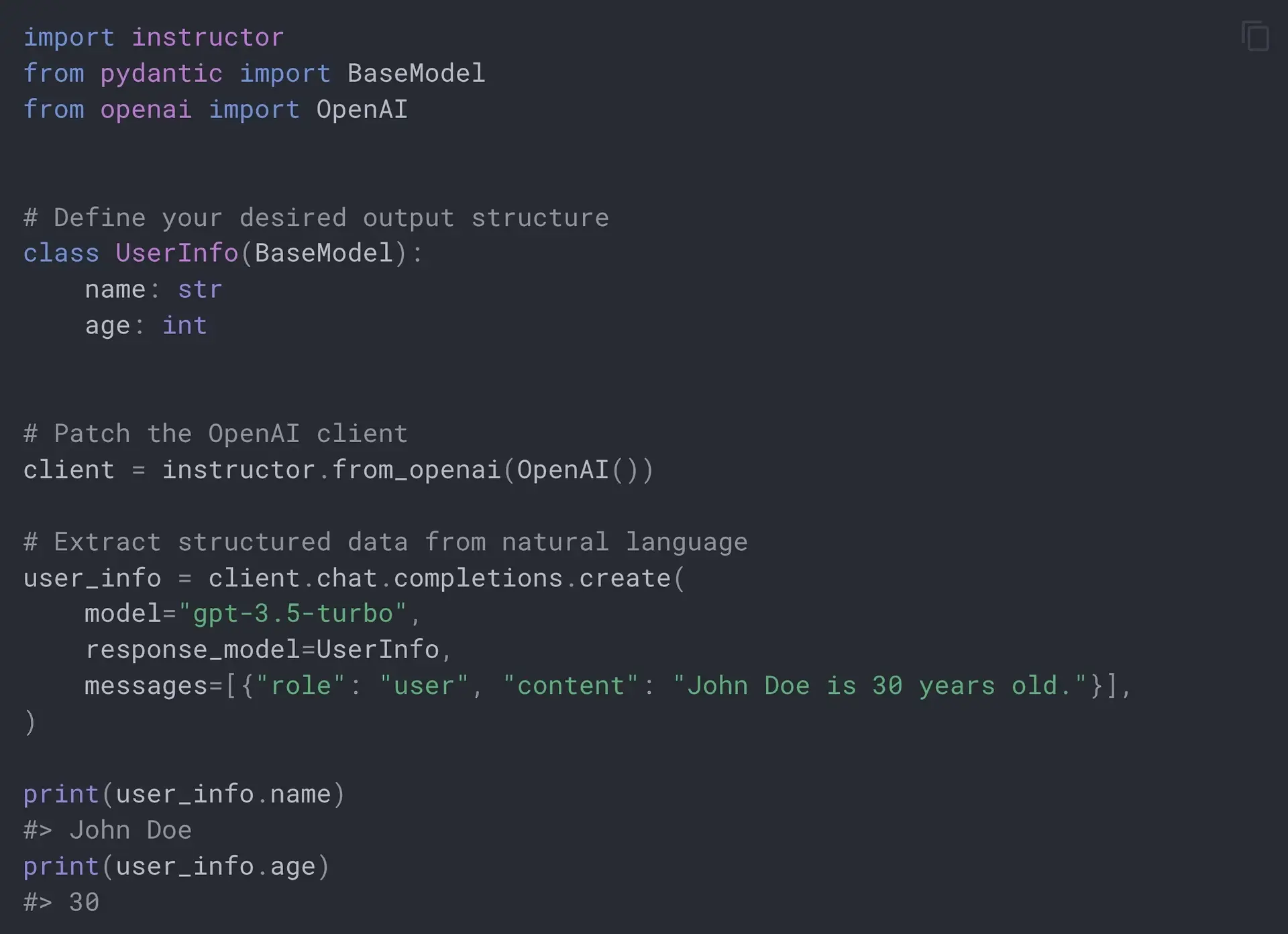
Instructor is a Python library that does the heavy lifting for getting structured responses from LLMs.
### Why Instructor?
It has support for Groq's API, and it will save us from a lot of effort (and boilerplate).
### Make sure to also check out this branch's `PROGRESS.md` file
# Feedback
This was my first workshop.
I'd love to her your thoughts. I'd appreciate to know whether I should pursue this further or stop
wasting people's time.
## Scan this QR code to provide feedback
...please 👉👈