https://github.com/somecho/polymetro
Simple polyrhythmic metronome
https://github.com/somecho/polymetro
Last synced: 3 months ago
JSON representation
Simple polyrhythmic metronome
- Host: GitHub
- URL: https://github.com/somecho/polymetro
- Owner: somecho
- Created: 2020-03-15T08:56:54.000Z (over 6 years ago)
- Default Branch: master
- Last Pushed: 2024-01-04T12:42:34.000Z (over 2 years ago)
- Last Synced: 2025-01-31T02:02:27.234Z (over 1 year ago)
- Language: Vue
- Homepage: https://polymetro.netlify.app/
- Size: 1.46 MB
- Stars: 0
- Watchers: 1
- Forks: 0
- Open Issues: 27
-
Metadata Files:
- Readme: README.md
Awesome Lists containing this project
README
# Polymetro - the PWA polyrhythmic metronome
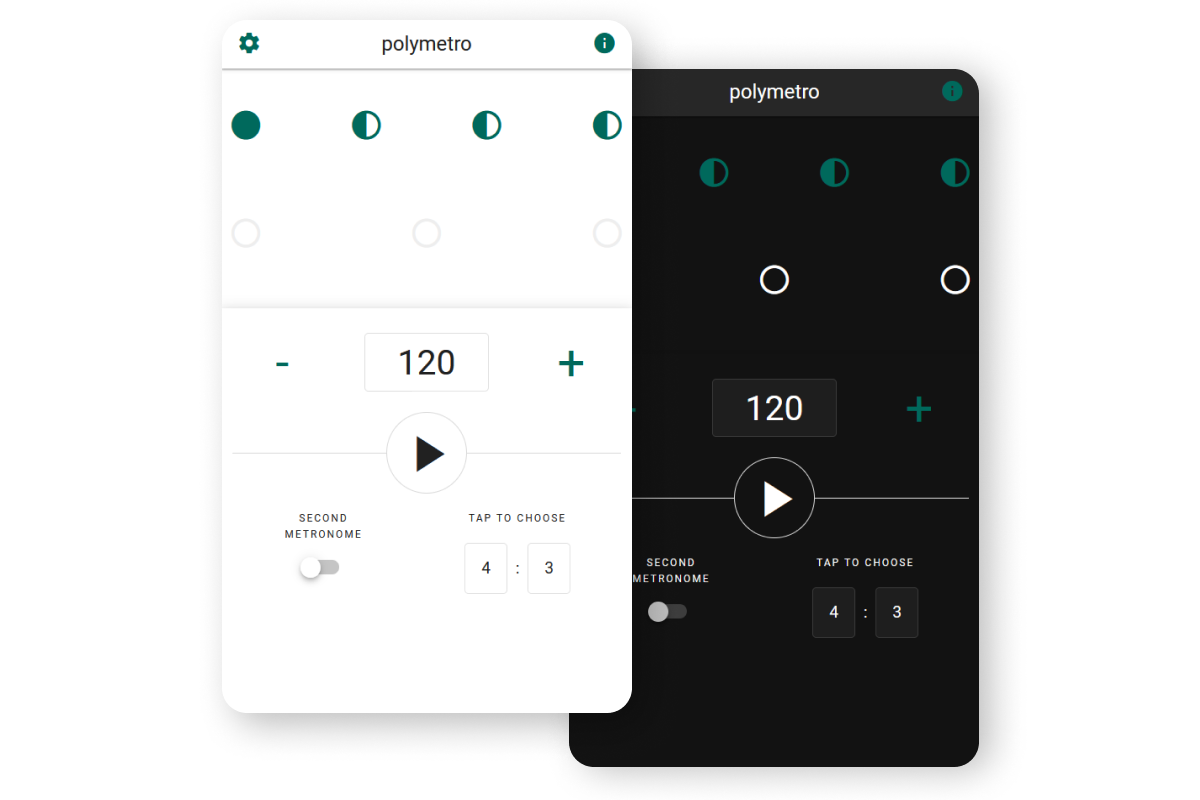
screenshots of mobile interface of polymetro in dark and light mode
[Polymetro](https://polymetro.netlify.app) is a polyrhythmic metronome built as
a PWA using Vue for the frontend and Web Audio as the sound engine. The app can
only be accessed via mobile.
## Background
I designed and developed Polymetro in March of 2020, when I was learning Magnus
Lindberg's Twine. The piece is filled with polyrhythms, many of which I have
never encountered before.
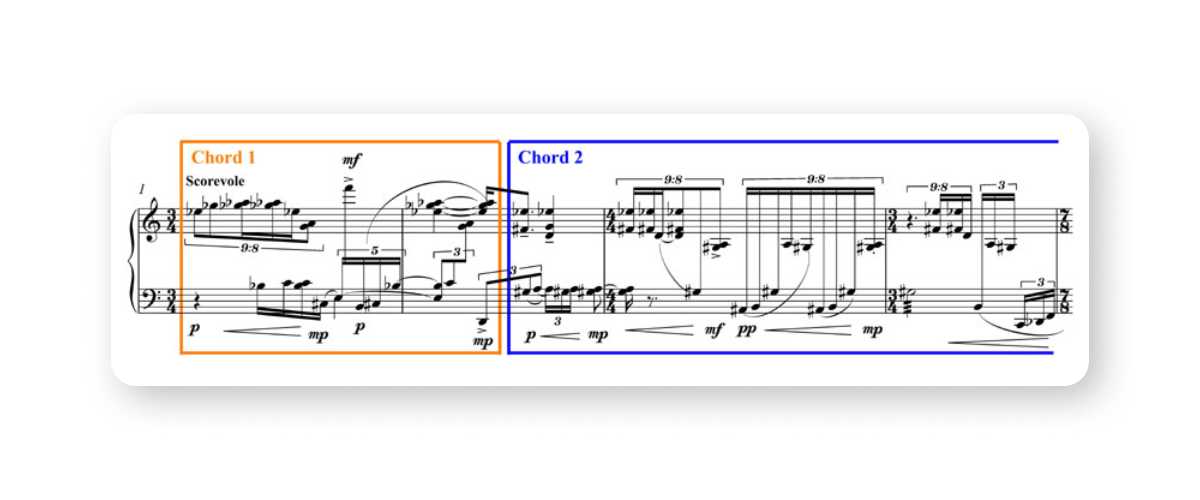
snippet of Twine
In order to learn these rhythms, it was necessary to *flatten* the polyrhythm
into one composite rhythm and subsequently learn it as a chunk. This wasn't
always easy when faced with a dense rhythm, like 9 against 8. To easy this
process for myself, I set out to create Polymetro.
## Development
The idea was to have a digital metronome that could play both single rhythms and
polyrhythms. Setting the desired metrum, the pulse grid would adjust itself to
visually show the number of beats per cycle.
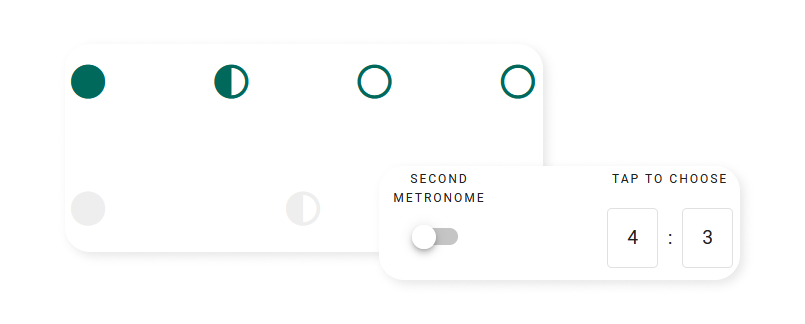
screenshot of pulsegrid
Each glyph in the pulse grid could be toggled by tapping on it, cycling between
three states: strong, weak and silent.
The metronome is also trilingual. Clicking on the settings, a modal will appear
with the option to select between English, German and Chinese.