https://github.com/steviecurran/fraud-detection-ml
Fraud Detection with Machine Learning
https://github.com/steviecurran/fraud-detection-ml
ab-testing confusionmatrix fraud-detection imbalanced-data machine-learning matplotlib pandas python recall-precision skit-learn
Last synced: 28 days ago
JSON representation
Fraud Detection with Machine Learning
- Host: GitHub
- URL: https://github.com/steviecurran/fraud-detection-ml
- Owner: steviecurran
- Created: 2026-03-18T21:01:24.000Z (3 months ago)
- Default Branch: main
- Last Pushed: 2026-03-18T23:28:20.000Z (3 months ago)
- Last Synced: 2026-03-19T10:31:30.983Z (3 months ago)
- Topics: ab-testing, confusionmatrix, fraud-detection, imbalanced-data, machine-learning, matplotlib, pandas, python, recall-precision, skit-learn
- Language: Jupyter Notebook
- Homepage:
- Size: 11.4 MB
- Stars: 0
- Watchers: 0
- Forks: 0
- Open Issues: 0
-
Metadata Files:
- Readme: README.md
Awesome Lists containing this project
README
## Fraud Detection with Machine Learning ##
**Overview**
This project builds a machine learning model to detect fraudulent transactions in a highly imbalanced dataset.
The focus is on practical model performance — balancing fraud detection (recall) with minimising false alarms (precision), rather than maximising raw accuracy.
**Key Results**
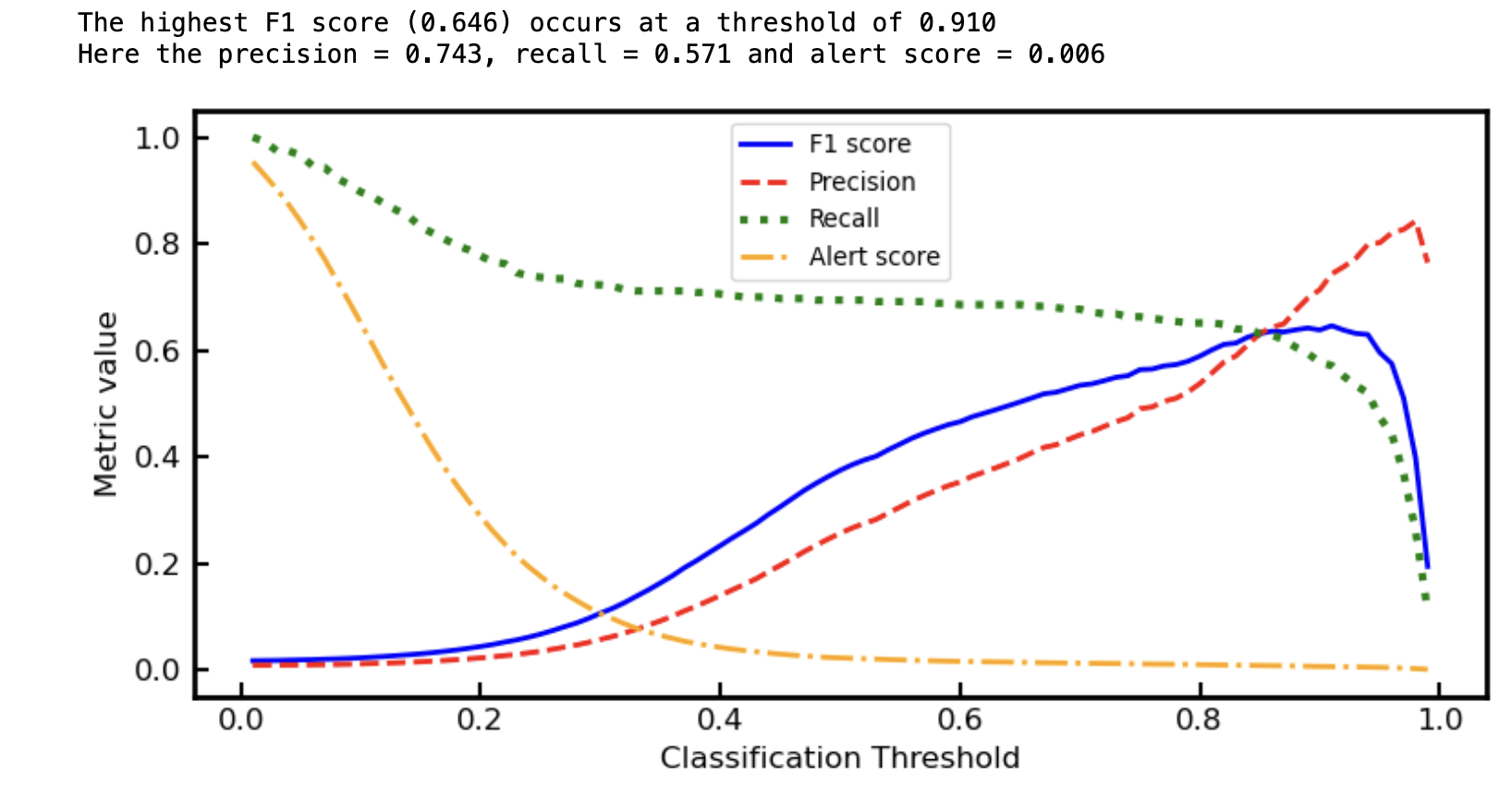
- Precision: 0.74
- Recall: 0.57
- F1 Score: 0.65
- Alert Rate: 0.6%
This means:
- ~3 in 4 flagged transactions are genuine fraud
- ~57% of fraud cases are successfully detected
- Only 0.6% of all transactions are flagged for review
**Problem Characteristics**
Fraud detection is a *highly imbalanced classification problem:*
- Fraud cases are rare
- Standard accuracy is misleading
- False positives carry operational cost
**Approach**
- Data Processing
- Removed non-informative identifier column
- Defined target variable (target_ml) as fraud (positive class)
- Train/test split performed before resampling
- Handling Class Imbalance
- Applied undersampling, oversampling (SMOTE) and class weighting to training data only
- Prevented data leakage by keeping test data untouched
- Classifiers Evaluated
- Random Forest Classifier
- Logistic Regreesion
- Support Vector
- Gradient Boosting (XGBoost)
- Model Selection
- Models evaluated using:
- Precision
- Recall
- F1 Score
- Threshold tuning used instead of default 0.5 cutoff
**Threshold Optimisation**
Rather than using a fixed threshold, the model output probabilities were tuned to optimise performance.
The optimal threshold (~0.91) was selected to:
- Maximise F1 score
- Maintain a low alert rate
- Keep precision high for operational usability
**Evaluation**
Confusion Matrix (Final Model)
| | **Predicted Legit**| **Predicted Fraud** |
| :--- | :-- | :--- |
|**Actual Legit** | 41061 | 69|
| **Actual Fraud**| 150 | 200|
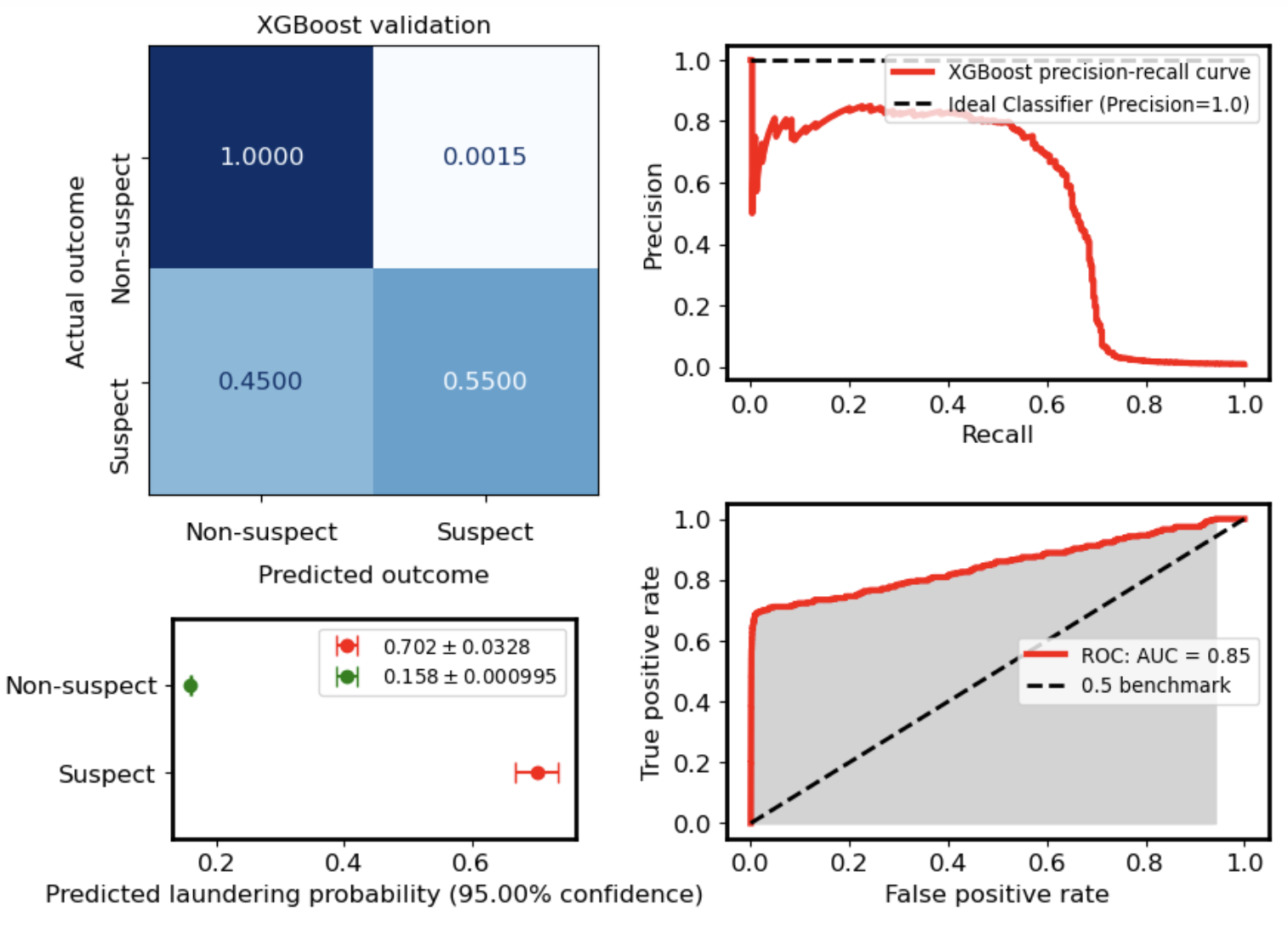
**Interpretation**
- High precision → low false alarm rate
- Moderate recall → some fraud remains undetected
- Suitable for real-world triage systems
Note: Due to class imbalance, the normalized confusion matrix shows near-perfect true negatives. This reflects dataset composition rather than perfect model performance.
**Key Insight**
This project demonstrates that *model performance in real-world ML is about trade-offs, not perfection*
A useful fraud model must:
- Catch enough fraud (recall)
- Avoid overwhelming analysts (precision)
- Operate at a realistic alert rate
**Technologies Used**
- Python
- scikit-learn
- imbalanced-learn
- pandas / numpy
- matplotlib
**Future Improvements**
- Cost-sensitive learning (fraud vs investigation cost)
- Feature engineering / domain features
- Model calibration
- Deployment as a scoring pipeline