https://github.com/tapanila/sharpcaster
Chromecast C# SDK for .net standard 2.0
https://github.com/tapanila/sharpcaster
android-platform chromecast chromecast-audio chromecast-device chromecast-receiver chromecast-sender csharp csharp-library nuget nuget-package sdk sharpcaster uwp windows-phone xamarin
Last synced: 10 months ago
JSON representation
Chromecast C# SDK for .net standard 2.0
- Host: GitHub
- URL: https://github.com/tapanila/sharpcaster
- Owner: Tapanila
- License: mit
- Created: 2016-01-15T13:59:36.000Z (over 10 years ago)
- Default Branch: main
- Last Pushed: 2025-02-10T15:14:54.000Z (over 1 year ago)
- Last Synced: 2025-05-14T23:06:19.554Z (about 1 year ago)
- Topics: android-platform, chromecast, chromecast-audio, chromecast-device, chromecast-receiver, chromecast-sender, csharp, csharp-library, nuget, nuget-package, sdk, sharpcaster, uwp, windows-phone, xamarin
- Language: C#
- Homepage:
- Size: 1.05 MB
- Stars: 315
- Watchers: 23
- Forks: 50
- Open Issues: 6
-
Metadata Files:
- Readme: README.md
- License: LICENSE.txt
- Code of conduct: CODE_OF_CONDUCT.md
Awesome Lists containing this project
README

# SharpCaster
[](https://github.com/Tapanila/SharpCaster/actions/workflows/dotnet.yml)
[](https://www.nuget.org/packages/SharpCaster/)
[](https://community.chocolatey.org/packages/sharpcaster)
[](https://github.com/Tapanila/homebrew-sharpcaster)
SharpCaster is a cross-platform toolkit for communicating with Google Chromecast devices. It includes:
- C# SDK (NuGet): A library for .NET apps to discover, connect, launch apps, and control media on Chromecast devices.
- Sharpcaster Console (CLI): A cross‑platform command-line app for controlling Chromecast from your terminal, distributed via Chocolatey and Homebrew.
C# SDK supports .NET Standard 2.0 and .NET 9 (including Native AOT).
Sharpcaster console is built with Native AOT for fast startup, low memory usage and doesn't require .NET installed, works on Windows, macOS, and Linux.
## Table of Contents
- [Features](#features)
- [Installation](#installation)
- [C# SDK (NuGet)](#c-sdk-nuget)
- [Sharpcaster Console (CLI)](#sharpcaster-console-cli)
- [Quick Start](#quick-start)
- [Comprehensive Examples](#comprehensive-examples)
- [Media Queue Management](#media-queue-management)
- [Volume Control](#volume-control)
- [Event Handling](#event-handling)
- [Custom Chromecast Channels](#custom-chromecast-channels)
- [Troubleshooting](#troubleshooting)
- [Contributing](#contributing)
- [License](#license)
## Features
✅ **Device Discovery**: Automatic discovery of Chromecast devices on your local network using mDNS
✅ **Media Control**: Complete media playback control (play, pause, stop, seek, volume)
✅ **Queue Management**: Support for media queues with navigation (next, previous, shuffle, repeat)
✅ **Application Management**: Launch and manage Chromecast applications
✅ **Custom Channels**: Extensible architecture for custom Chromecast channels
✅ **Cross-Platform**: Compatible with .NET Standard 2.0 and .NET 9
✅ **AOT Ready**: Full support for Native AOT compilation in .NET 9
✅ **Async/Await**: Modern async programming model throughout
✅ **Event-Driven**: Rich event system for real-time status updates
## Installation
### C# SDK (NuGet)
Install via NuGet Package Manager:
```bash
Install-Package SharpCaster
```
Or via .NET CLI:
```bash
dotnet add package SharpCaster
```
### Sharpcaster Console (CLI)
Control Chromecast devices from your terminal.
- Homebrew (macOS/Linux):
```bash
brew tap Tapanila/sharpcaster
brew install sharpcaster
```
- Chocolatey (Windows):
```powershell
choco install sharpcaster --pre
```
After installation, run `sharpcaster` for interactive mode, or use direct commands like:
```bash
sharpcaster list
sharpcaster "Living Room TV" play "https://example.com/video.mp4" --title "Sample"
```
For full CLI usage and examples, see `SharpCaster.Console/README.md`.
## Quick Start
### 1. Discover and Connect to Chromecast
```csharp
using Sharpcaster;
using Sharpcaster.Models;
using Sharpcaster.Models.Media;
// Discover Chromecast devices
var locator = new ChromecastLocator();
var cancellationToken = new CancellationTokenSource(TimeSpan.FromSeconds(5)).Token;
var chromecasts = await locator.FindReceiversAsync(cancellationToken);
if (!chromecasts.Any())
{
Console.WriteLine("No Chromecast devices found");
return;
}
// Connect to first found device
var chromecast = chromecasts.First();
var client = new ChromecastClient();
await client.ConnectChromecast(chromecast);
Console.WriteLine($"Connected to {chromecast.Name}");
```
### 2. Launch Application and Play Media
```csharp
// Launch the default media receiver app
await client.LaunchApplicationAsync("CC1AD845"); // Default Media Receiver
// Create and load media
var media = new Media
{
ContentUrl = "https://commondatastorage.googleapis.com/gtv-videos-bucket/CastVideos/mp4/DesigningForGoogleCast.mp4",
ContentType = "video/mp4",
Metadata = new MediaMetadata
{
Title = "Sample Video",
SubTitle = "A demonstration video"
}
};
var mediaStatus = await client.MediaChannel.LoadAsync(media);
Console.WriteLine($"Media loaded: {mediaStatus.PlayerState}");
```
## Comprehensive Examples
### Complete Media Player Example
```csharp
public class ChromecastMediaPlayer
{
private ChromecastClient _client;
private ChromecastReceiver _device;
public async Task ConnectAsync(string deviceName = null)
{
try
{
var locator = new ChromecastLocator();
var devices = await locator.FindReceiversAsync(CancellationToken.None);
_device = deviceName != null
? devices.FirstOrDefault(d => d.Name.Contains(deviceName))
: devices.FirstOrDefault();
if (_device == null) return false;
_client = new ChromecastClient();
await _client.ConnectChromecast(_device);
// Subscribe to events
_client.MediaChannel.StatusChanged += OnMediaStatusChanged;
_client.Disconnected += OnDisconnected;
return true;
}
catch (Exception ex)
{
Console.WriteLine($"Connection failed: {ex.Message}");
return false;
}
}
public async Task PlayVideoAsync(string url, string title = null)
{
await _client.LaunchApplicationAsync("CC1AD845"); // Default Media Receiver
var media = new Media
{
ContentUrl = url,
ContentType = GetContentType(url),
Metadata = new MediaMetadata
{
Title = title ?? Path.GetFileNameWithoutExtension(url),
MetadataType = MetadataType.Movie
}
};
await _client.MediaChannel.LoadAsync(media);
}
public async Task PlayAudioAsync(string url, string title = null, string artist = null)
{
await _client.LaunchApplicationAsync("CC1AD845");
var media = new Media
{
ContentUrl = url,
ContentType = GetContentType(url),
Metadata = new MusicTrackMetadata
{
Title = title ?? Path.GetFileNameWithoutExtension(url),
Artist = artist,
MetadataType = MetadataType.MusicTrack
}
};
await _client.MediaChannel.LoadAsync(media);
}
private void OnMediaStatusChanged(object sender, MediaStatus status)
{
Console.WriteLine($"Media Status: {status.PlayerState} - {status.CurrentTime:F1}s");
}
private void OnDisconnected(object sender, EventArgs e)
{
Console.WriteLine("Disconnected from Chromecast");
}
private static string GetContentType(string url)
{
var extension = Path.GetExtension(url).ToLower();
return extension switch
{
".mp4" => "video/mp4",
".mp3" => "audio/mpeg",
".wav" => "audio/wav",
".webm" => "video/webm",
_ => "video/mp4"
};
}
}
```
## Media Queue Management
SharpCaster supports advanced queue operations for playlist-style media playback:
```csharp
// Create a media queue
var queueItems = new[]
{
new QueueItem
{
Media = new Media
{
ContentUrl = "https://example.com/song1.mp3",
ContentType = "audio/mpeg",
Metadata = new MusicTrackMetadata { Title = "Song 1", Artist = "Artist 1" }
}
},
new QueueItem
{
Media = new Media
{
ContentUrl = "https://example.com/song2.mp3",
ContentType = "audio/mpeg",
Metadata = new MusicTrackMetadata { Title = "Song 2", Artist = "Artist 2" }
}
}
};
// Load queue with repeat mode
await client.MediaChannel.QueueLoadAsync(queueItems, 0, RepeatModeType.ALL);
// Navigate through queue
await client.MediaChannel.QueueNextAsync(); // Next track
await client.MediaChannel.QueuePrevAsync(); // Previous track
// Get queue information
var itemIds = await client.MediaChannel.QueueGetItemIdsAsync();
var items = await client.MediaChannel.QueueGetItemsAsync(itemIds);
```
## Volume Control
```csharp
// Get current volume
var status = await client.ReceiverChannel.GetChromecastStatusAsync();
Console.WriteLine($"Current volume: {status.Volume.Level:P0}");
// Set volume (0.0 to 1.0)
await client.ReceiverChannel.SetVolumeAsync(0.5f);
// Mute/unmute
await client.ReceiverChannel.SetMutedAsync(true);
await client.ReceiverChannel.SetMutedAsync(false);
```
## Event Handling
SharpCaster provides rich event support for real-time updates:
```csharp
// Media events
client.MediaChannel.StatusChanged += (sender, status) =>
{
Console.WriteLine($"Player State: {status.PlayerState}");
Console.WriteLine($"Current Time: {status.CurrentTime}s");
Console.WriteLine($"Duration: {status.Media?.Duration}s");
};
// Connection events
client.Disconnected += (sender, args) =>
{
Console.WriteLine("Connection lost to Chromecast");
};
// Application events
client.ReceiverChannel.StatusChanged += (sender, status) =>
{
foreach (var app in status.Applications ?? [])
{
Console.WriteLine($"Running app: {app.DisplayName} ({app.AppId})");
}
};
```
## Custom Chromecast Channels
Create custom channels for specialized applications:
```csharp
public class CustomGameChannel : ChromecastChannel
{
public CustomGameChannel(ILogger logger)
: base("custom.game", logger) { }
public async Task SendGameCommandAsync(string command, object data)
{
var message = new { type = command, data = data };
await SendAsync(JsonSerializer.Serialize(message));
}
protected override async Task OnMessageReceivedAsync(string message, string messageType)
{
// Handle custom game messages
var gameMessage = JsonSerializer.Deserialize(message);
// Process game-specific logic
}
}
// Register and use custom channel
var gameChannel = new CustomGameChannel(logger);
client.RegisterChannel(gameChannel);
```
You can also reverse engineer existing channels:
1. In Chrome, go to `chrome://net-export/`
2. Select 'Include raw bytes (will include cookies and credentials)'
3. Click 'Start Logging to Disk'
4. Cast from your favorite web app
5. Stop logging and open the log in [netlog-viewer](https://netlog-viewer.appspot.com/)
6. Search for `type:SOCKET` and find familiar JSON data
7. Collect the exchanged JSON
8. Create a new class inheriting from `ChromecastChannel` and implement your logic
## Troubleshooting
### Common Issues and Solutions
**Device Discovery Issues:**
```csharp
// Increase discovery timeout for slow networks
var cancellationToken = new CancellationTokenSource(TimeSpan.FromSeconds(10)).Token;
var devices = await locator.FindReceiversAsync(cancellationToken);
// Manually specify device if discovery fails
var manualDevice = new ChromecastReceiver
{
Name = "My Chromecast",
DeviceUri = new Uri("http://192.168.1.100"),
Port = 8009
};
```
**Connection Timeouts:**
```csharp
// Enable logging for debugging
var loggerFactory = LoggerFactory.Create(builder =>
builder.AddConsole().SetMinimumLevel(LogLevel.Debug));
var client = new ChromecastClient(loggerFactory);
```
**Media Loading Failures:**
- Ensure media URLs are publicly accessible
- Verify correct `ContentType` is specified
- Check that the Chromecast supports the media format
- Use HTTPS URLs when possible
**Network Issues:**
- Ensure device is on the same network as Chromecast
- Check firewall settings (port 8009 must be accessible)
- Verify mDNS/Bonjour is enabled on the network
### Error Handling Best Practices
```csharp
try
{
await client.MediaChannel.LoadAsync(media);
}
catch (TimeoutException)
{
Console.WriteLine("Request timed out - check network connection");
}
catch (InvalidOperationException ex)
{
Console.WriteLine($"Invalid operation: {ex.Message}");
}
catch (Exception ex)
{
Console.WriteLine($"Unexpected error: {ex.Message}");
}
```
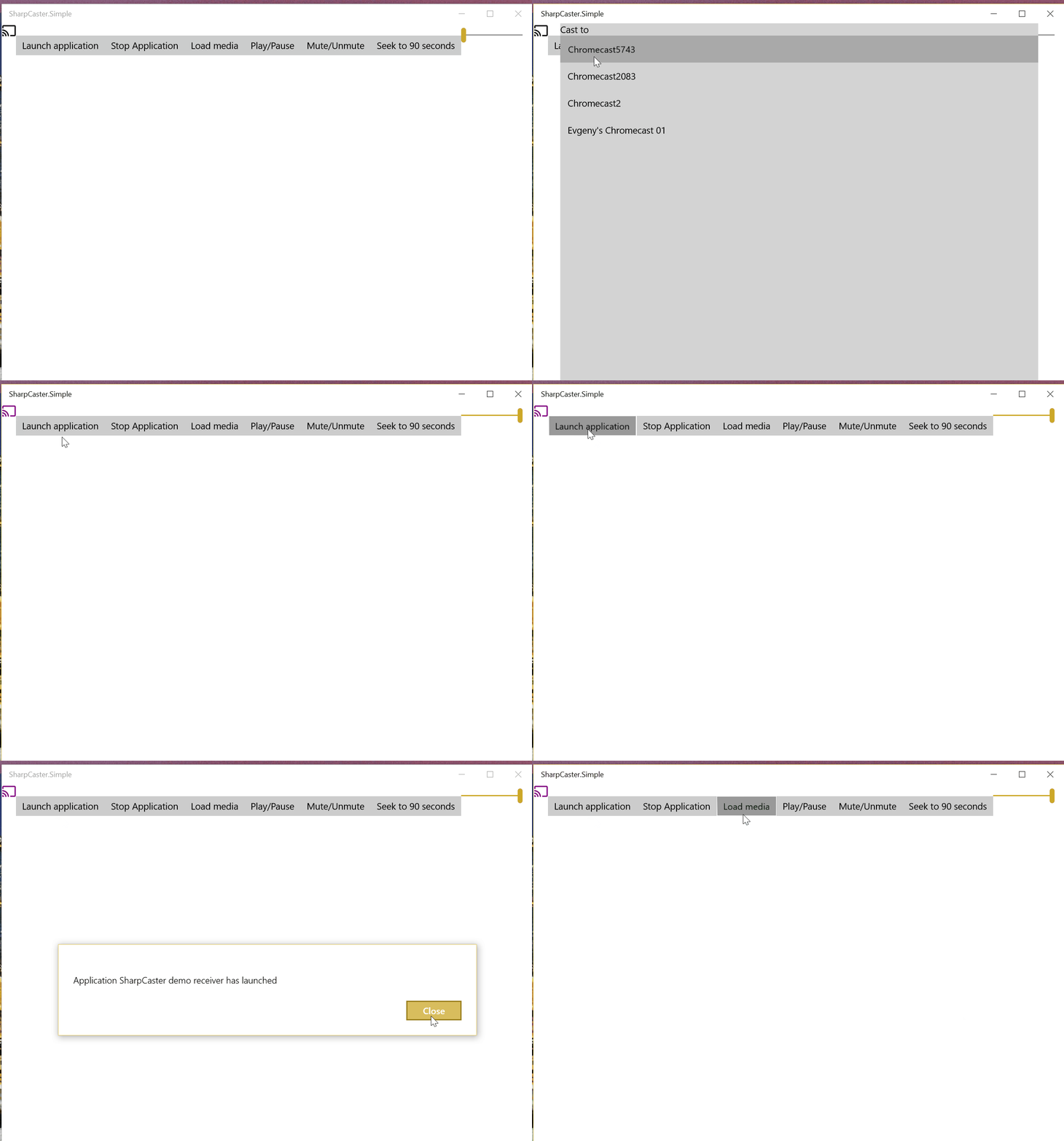
## Demo
## Supported Platforms
- **.NET Standard 2.0** - Maximum compatibility across .NET implementations
- **.NET 9** - Latest features including Native AOT support
- **Compatible with**: .NET Framework 4.6.1+, .NET Core 2.0+, .NET 5+, Xamarin, Unity
## Contributing
We welcome contributions! Here's how you can help:
1. **Fork** the repository
2. **Create** a feature branch (`git checkout -b feature/AmazingFeature`)
3. **Commit** your changes (`git commit -m 'Add some AmazingFeature'`)
4. **Push** to the branch (`git push origin feature/AmazingFeature`)
5. **Open** a Pull Request
### Development Setup
```bash
git clone https://github.com/Tapanila/SharpCaster.git
cd SharpCaster
dotnet restore
dotnet build
dotnet test
```
### Testing
Tests require a physical Chromecast device on the network:
```bash
dotnet test
```
Some of the tests may require few tries to pass due to network conditions.
## License
This project is licensed under the MIT License - see the [LICENSE](LICENSE.txt) file for details.